
What to Expect at European Airport Passport Control: A Guide for British Travellers
Oct 2, 2026
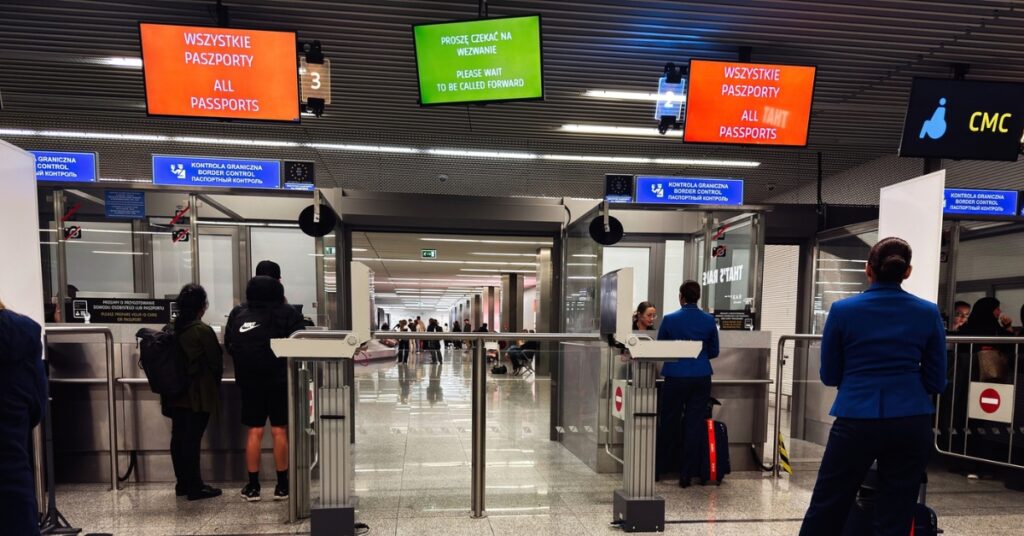
You land in Faro, Malaga or Paris and follow the signs to passport control. Since Brexit, British passport holders use the “All passports” lane rather than “EU/EEA”.
This guide explains what to expect at European airport passport control, from leaving the aircraft to exiting the airport.
The guide covers Schengen airports, Ireland and Cyprus. The latter two have different border rules for British travellers.
How Does Passport Control Work for British Travellers in Europe?
Border guards check your passport and right to enter when you arrive from outside the Schengen Area. British travellers follow the non-EU process and can usually stay for up to 90 days in any 180-day period without a visa.
Why British Passport Holders Are Treated as Non-EU Travellers
Since Brexit, UK nationals no longer have the free movement rights of EU citizens. At the border, they are classed as third-country nationals.
The same rules apply whether you spend a weekend in Prague or two weeks in Crete. Tourism, business meetings and family visits all fall within the visa-free 90-day limit.
Who Carries Out the Checks and Why
Border guards in the country where you first enter the Schengen Area carry out the checks. Airline and airport staff do not decide whether you can enter.
The officer verifies your identity, checks that your passport is genuine and confirms that you meet the entry conditions.
Schengen Airports vs Ireland and Cyprus
Schengen countries have removed checks at their shared internal borders. You usually clear passport control at your first Schengen airport, with no further checks on later flights within the area.
Ireland and Cyprus are outside the Schengen Area and operate their own border controls.
| Destination | Border process | How your days count |
| Schengen countries | Checked at your first point of entry | Count towards the 90 days in any 180 |
| Ireland | Common Travel Area arrangements apply to British citizens | No Schengen limit applies |
| Cyprus | Passport stamped by hand | Counted separately from the Schengen 90 days |
British Passport Holders With EU Family or Residence Rights
Some travellers follow different rules, including:
- Holders of a residence permit or long-stay visa
- Non-EU family members with a residence card issued through an EU national
- Northern Irish travellers using an Irish passport, who are treated as EU citizens
Other exemptions may apply. Check travel-europe.europa.eu if your circumstances are not covered here.
What Happens Step by Step When You Land
After leaving the aircraft, follow signs to passport control, join the correct queue and speak to a border officer. This process is similar at most European airports receiving flights from outside the Schengen Area.
From the Aircraft to the Border Hall
Follow signs marked “Passport control”, “Border” or “Arrivals” rather than heading straight to baggage reclaim.
Border halls usually have rows of desks behind a queuing area. Have your documents ready before you reach the front.
Keep these to hand:
- Your passport, open to the photo page
- Any supporting documents you may need
- Your phone if it contains booking details
Choosing the Right Queue as a British Passport Holder
Signs above each lane show who should use it. British passport holders normally use the non-EU lane.
| Sign above the lane | Who uses it | Your lane? |
| EU/EEA/Swiss | EU, EEA and Swiss citizens | No |
| All passports or Non-EU | Everyone else, including British travellers | Yes |
| Family or priority | Eligible families or passengers needing assistance | Yes, if you qualify |
Ask airport staff if the signs are unclear.
What the Officer at the Desk Does
The officer scans your passport, checks that the details and photo match you, and looks for signs of damage or tampering.
They may also ask questions about your trip before deciding whether you can enter. Once cleared, you continue to baggage reclaim and customs.
The desk check usually takes only a few minutes, although queue times vary by airport and time of day.

How the Entry/Exit System Changes Passport Control for Brits
The Entry/Exit System (EES) replaces passport stamps with a digital record of your entries and exits. It stores your passport details and biometrics, then updates the record each time you cross an external border.
The End of Passport Stamping for British Travellers
The EES records short-stay non-EU travellers at the external borders of 29 European countries. It has been fully operational since 10 April 2026, meaning most airports no longer stamp British passports.
Ireland and Cyprus are outside the system and still use manual passport stamps. EES records include:
- Passport details, such as your name, date of birth and nationality
- The date and place of each entry and exit
- Your facial image, fingerprints, or both
- Any refusal of entry
What Happens on Your First Trip After EES Launched
On your first crossing, an officer or self-service kiosk scans your passport, takes your photo and, where required, records your fingerprints.
Some airports use kiosks, while others complete registration at the desk. Follow the signs or ask airport staff where to go.
Faster Crossings on Return Trips
Once registered, the system already holds your details and biometrics. Future crossings usually involve checking them against your stored record rather than re-registering you.
| Step | First crossing | Later crossings |
| Passport scan | Yes | Yes |
| Photo and fingerprints | Captured and stored | Checked against stored record |
| Entry and exit record | Created | Updated |
You can check your remaining stay through the EES online tool. Some external border crossings also offer this service.
What ETIAS Will Mean for British Travellers
The European Travel Information and Authorisation System (ETIAS) is not yet operational, and applications are not open. The EU will announce the start date several months before launch.
Once it begins, visa-exempt travellers, including British passport holders, will need ETIAS travel authorisation. It will cost €20 and remain linked to your passport for up to three years or until the passport expires, whichever comes first.
What Documents to Have Ready at the Border
You need a valid UK passport and may also be asked to prove the purpose of your visit, how you will fund it and when you will leave. Keep key documents easy to reach.
UK Passport Validity Rules
Your passport must be valid for at least three months after you plan to leave the Schengen Area and must have been issued within the previous ten years. Some exceptions apply.
The ten-year rule can catch British travellers out. Older UK passports sometimes show unused validity from a previous passport, so check the issue and expiry dates before booking.
Documents You May Be Asked to Show
Border officers decide on a case-by-case basis whether to request additional documents. Useful items include:
| Document | What it shows | Format |
| Return or onward ticket | You plan to leave Europe | Booking confirmation on your phone or in print |
| Proof of accommodation | Where you will stay | Hotel booking, rental confirmation or host’s address |
| Proof of sufficient funds | You can pay for the trip | Bank card, recent statement or cash |
| Travel insurance | Cover for medical costs | Policy certificate |
Keep digital copies available offline in case airport Wi-Fi or mobile service is unreliable.
Travelling with Children
Every child needs their own passport, and the same validity rules apply.
Officers may also request additional evidence if a child travels with one parent or with an adult who is not a parent. Useful documents include:
- The child’s birth certificate
- A signed consent letter from the parent or parents not travelling
- Contact details for the absent parent or parents

Questions Border Officers Commonly Ask
Border officers may ask why you are visiting, how long you will stay, where you are staying and where you are going next. Some travellers are asked only a few questions, while others are asked none.
The Standard Questions
These questions help officers confirm that your trip meets the conditions for a visa-free stay.
| Question | What the officer checks | Typical answer |
| “What is the purpose of your visit?” | Whether your reason fits a short stay | “Holiday” or “Visiting family” |
| “How long are you staying?” | Whether you remain within the 90-in-180 limit | “Ten days, back on the 14th” |
| “Where are you staying?” | Whether you have accommodation | Hotel name or host’s address |
| “Where are you going next?” | Your route and exit plan | “Lisbon, then home from Porto” |
Extra Scrutiny for Long Stays and Second-Home Owners
Officers may ask more questions if your travel history shows long or frequent stays. Owning property in Spain, France, or Portugal does not give you extra time, so each visit counts towards the 90 days within any 180-day period.
If you visit often or stay for several weeks, carry proof of your ties to the UK and evidence of your onward travel.
How to Answer Clearly and What Further Questioning Means
Answer briefly and honestly, and make sure your answers match your documents. If your booking says Malaga but you mention Seville, expect follow-up questions.
You may be sent to another desk or room for further checks. This can include:
- More detailed questions about your trip
- Checks of your bookings, funds or return ticket
- A review of your travel history
Automated Border Control Gates (eGates)
eGates are self-service barriers that verify your biometric passport and face without an officer present. Where available, they can reduce your time at the border.
How eGates Work
Place your passport, photo page down, on the reader. The gate scans the chip, then compares your face with the passport photo.
The process is simple:
- Scan your passport
- Walk through the first barrier
- Look straight at the camera and stay still
- Continue when the exit opens
Can British Passport Holders Use eGates?
Access depends on the airport and terminal. The EES allows eligible travellers with biometric passports to use automated gates where available.
UK passports are biometric, but some gates restrict access by passport type or age. Check the signs before joining the queue.
| Factor | What to check |
| Passport type | Biometric passport with a working chip |
| Age | Some airports set a minimum age |
| Airport | Not all airports offer eGates to non-EU travellers |
| Gate signs | Symbols and text show which passports are accepted |
Ask airport staff if the signs are unclear.
When eGates Are Not Available
You may still need to see an officer, including during your first EES registration, when gates are unavailable or if you do not meet the airport’s conditions.
A gate may also reject you if it cannot match your face or read the passport chip. Remove hats and sunglasses, place the passport flat on the reader and try again.
If it still fails, staff will direct you to a manned desk. The usual border check then applies.

Connecting Flights and Transit Through European Airports
Where you clear passport control depends on whether you enter the Schengen Area or stay airside. If you enter the Schengen area and remain within it, you clear the border at your first Schengen airport.
Connecting Inside the Schengen Area
Schengen countries have no routine border checks between them. You clear passport control at your first arrival from outside the area, and your onward Schengen flight usually has no further check.
For example, on London–Frankfurt–Lisbon, you clear passport control in Frankfurt.
| Route | Where you clear passport control |
| London to Frankfurt to Lisbon | Frankfurt |
| London to Amsterdam to Madrid | Amsterdam |
| Manchester to Paris to Nice | Paris |
| London to Madrid to Lisbon | Madrid |
If your bags are checked through, you usually collect them at your final destination. With separate tickets, you may need to collect and recheck them at the connecting airport.
Airside Transit Without Entering Europe
Some connections keep you in the airport’s international zone. You stay airside, skip passport control, and continue to a destination outside the Schengen area, such as London–Frankfurt–New York.
Whether this works depends on your ticket, baggage arrangements and the airport layout. Some nationalities also need an airport transit visa even when staying airside.
Tight Connections and Missed Flights
Connections involving passport control take longer, especially if EES registration is required.
Allow at least two hours when entering the Schengen area at your connecting airport. If queues threaten your connection, ask airport staff whether a priority lane is available.
If you miss your flight:
- Contact the airline desk or app immediately
- Ask about rebooking if both flights are on the same ticket
- Keep boarding passes and receipts for any claim
Peak Times, Queues and Tips for a Faster Crossing
Passport control queues are often longest during UK school holidays, summer weekends and early-morning arrival waves. You can save time by travelling at quieter periods, choosing the right lane and having your documents ready.
When Queues are Longest
Several UK flights may arrive within the same hour, quickly filling the border hall.
| Period | Why queues build | Where you notice it most |
| UK school holidays | Family travel peaks | Spanish, Portuguese, French and Greek holiday airports |
| Friday and Saturday in summer | Package holiday changeovers | Malaga, Faro and Alicante |
| Bank holiday weekends | Short breaks cluster | Paris, Amsterdam and Barcelona |
| Early morning | Multiple flights arrive together | Major European airports |
Staffing varies by airport, so a weekday afternoon arrival may be quieter than an early Saturday flight.
Practical Ways to Save Time
A few simple steps can help:
- Have your passport ready before entering the border hall
- Remove thick covers that hide the photo page
- Join the correct lane
- Keep your phone charged for booking details
- Remove hats and sunglasses before the camera or desk
For EES checks, look straight ahead and place your fingers flat on the scanner when prompted.
Answer questions briefly and clearly. A direct exchange is usually quicker than a long explanation.
Travelling With Older Relatives or Special Assistance Needs
Airports offer assistance for passengers with reduced mobility, often including priority or assisted routes. Request help from your airline at least 48 hours before departure where possible.
Airport staff may meet you at the aircraft and guide you through passport control, sometimes allowing a companion to stay with you.
If an older relative needs a wheelchair or extra help, request it when booking. Airport assistance is generally provided free of charge.

What Happens if You Are Refused Entry
A border officer can refuse entry if you do not meet the conditions for a short visa-free stay. You receive the decision in writing, with the reasons and information on how to appeal.
Common Reasons for Refusal
Most refusals involve a small number of issues:
| Reason | What the officer finds |
| Passport problems | Less than three months’ validity after departure, an issue date over ten years ago or visible damage |
| Previous overstay | A past stay beyond the permitted 90 days in any 180-day period |
| No clear purpose or funds | Unclear travel plans, no proof of accommodation or insufficient funds |
| Security alert | A warning from a Schengen country or concerns about public order or security |
The EES makes overstays easier to identify because it records each entry and exit.
Your Rights and What the Process Looks Like
The officer must give you a written refusal stating the reasons. You can appeal under the national law of the country that refused entry, and the paperwork explains where and when to do so.
An appeal does not normally suspend the refusal, so you may still have to leave. You may be kept in a designated area until your return flight, and the airline is generally responsible for carrying you back.
You can contact your embassy or consulate and seek legal help. The refusal is also recorded in the EES, including the date, place and reason.
How to Avoid Problems Before You Fly
Check the following before travelling:
- Make sure your passport was issued less than ten years ago and remains valid for three months after departure
- Check your recent travel days against the 90-in-180 rule
- Save your return ticket, accommodation details and proof of funds offline
- Renew your passport early if either validity date is close
Passport Control When You Leave Europe
You go through passport control when leaving the Schengen Area. Your departure is recorded to show how long you stayed and close your visit in the system.
Exit Checks at the Departure Airport
When flying from a Schengen airport to a destination outside the area, you pass through passport control before reaching the departure gates. An officer or eGate scans your passport, and the EES records when and where you left.
If you connect through another Schengen country, you clear the exit check at your final Schengen airport. Ireland and Cyprus still use manual passport stamps.
The exit check may include:
- A passport scan
- A photo and, where required, fingerprints
- A match against your entry record
- A digital departure record in EES
Staying Within the 90/180-Day Limit
EES compares your entry and exit dates and shows how many days you have used. Officers can see the same information, making overstays easier to identify.
| Outcome | What it means |
| Fine | Some countries impose a financial penalty |
| Entry ban | You may be barred from Schengen countries for a set period |
| Future checks | A previous overstay may lead to more questions |
Check your remaining days before booking a longer trip, especially if you plan to split your stay across several visits.
Allowing Enough Time Before Departure
Passport control adds another step before your gate, and queues can build up when several flights depart at the same time.
Allow at least three hours before a flight outside the Schengen Area, with extra time during peak periods or when travelling with children.

Ready to Clear European Border Control With Confidence
Travel at quieter times where possible, arrange insurance and medication documents early, and check your passport before departure. It must have been issued within the last ten years and remain valid for at least three months after you leave.
Allow extra time for Entry/Exit System (EES) checks. ETIAS is not yet operational, so check the official website for its launch date.
For more help, read our guides to entry requirements for Europe and the 90/180-day rule.