
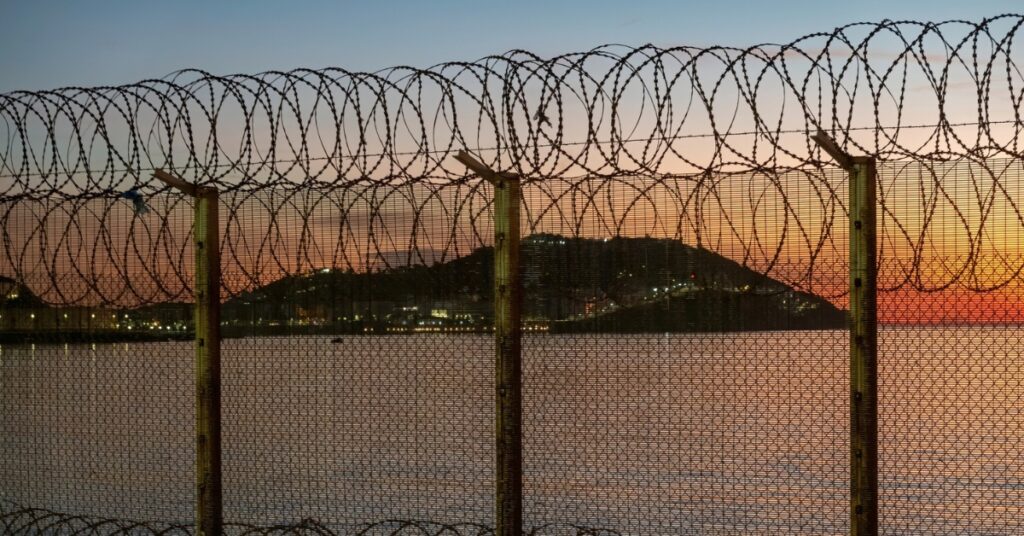
The European Parliament has called for stronger protection of the EU’s external borders in Ceuta after mass irregular crossings into the Spanish city in late July 2026. MEPs adopted the resolution on 17 September by 339 votes to 225, with 16 abstentions.
The text calls for greater EU support, closer cooperation with Morocco, and the return of people who do not have the right to remain. Parliament describes stronger external border protection in Ceuta as “of the utmost priority”.
Deaths, hybrid warfare claims
MEPs expressed sorrow over the 141 people who died at sea during the events of 30 and 31 July, describing the deaths as preventable.
Parliament also condemned what it described as the instrumentalisation of irregular migration as a form of hybrid warfare against an EU country’s territorial integrity.
Ceuta security under pressure
The resolution expresses support for Ceuta and Melilla, describing them as Spanish and European cities “whose sovereignty and territorial integrity are beyond question”.
MEPs praised residents, local authorities, the Policía Nacional, the Guardia Civil, the Spanish Armed Forces, the Spanish Red Cross, Caritas, and civil society groups for their response. They also condemned violence recorded in Ceuta since late July.
Parliament wants security forces reinforced and urged Spain to make full use of EU emergency funding and operational support from EU agencies. Spain should also cooperate with the national judicial investigation into the events of July.

Regularisation policy faces scrutiny
The resolution criticises Spain’s large-scale regularisation policy, arguing that it could encourage irregular migration and migrant smuggling.
MEPs asked the European Commission to assess whether such national schemes could increase secondary movements across borders or affect the Schengen Area.
Shared responsibility for EU borders
Parliament says protecting the EU’s external borders is a shared responsibility and warns that failures could undermine the Schengen Area. It also calls on all member states to strengthen efforts against migrant smuggling.
MEPs urged the Commission and member states to increase funding for border infrastructure, strengthen Frontex and ensure that EU resources can be deployed quickly during crises.

Migration pact put to use
The resolution notes that the Pact on Migration and Asylum has been fully in force since 12 June 2026 and urges Spain to use its legal and operational framework.
Parliament also calls for the swift return of people with no right to remain in the EU, including unaccompanied minors, in accordance with EU and international law. Spain and Morocco should accelerate cooperation on returns and readmissions for irregular migrants who arrived during the late-July crossings.
Morocco urged to cooperate
Parliament says EU relations with neighbouring non-EU countries should be based on reciprocity. It proposes linking preferential EU market access and financing to effective cooperation on border management, migrant smuggling, identification and readmission.
The resolution urges Morocco to meet its commitments on migration and border management. It also demands respect for the territorial integrity of EU countries and rejects statements that question Spanish sovereignty.

From debate to vote
MEPs debated the Ceuta situation in plenary on 15 September before adopting the resolution two days later.
Parliament’s Civil Liberties Committee had also examined the issue, with its chair holding a press conference alongside Ceuta President Juan Jesús Vivas on 8 September.
Pressure shifts to implementation
The resolution connects security in Ceuta with Spanish migration policy, Schengen border management and EU relations with Morocco.
Many of its demands rely on existing tools, including the Pact on Migration and Asylum, EU emergency funding and Frontex. Spain faces calls to fully implement those measures, while Morocco faces pressure to strengthen cooperation on border management and readmissions.
The resolution passed by 339 votes to 225, with 16 abstentions. The Commission’s assessment of national regularisation schemes and Spain’s judicial investigation into the July events remain relevant to the next steps outlined by Parliament.