
Out of Time? What to Do if EES Wrongly Flags You as Overstaying
Nov 28, 2026
Category: Border and Security EES Entry Requirements Travel Tips
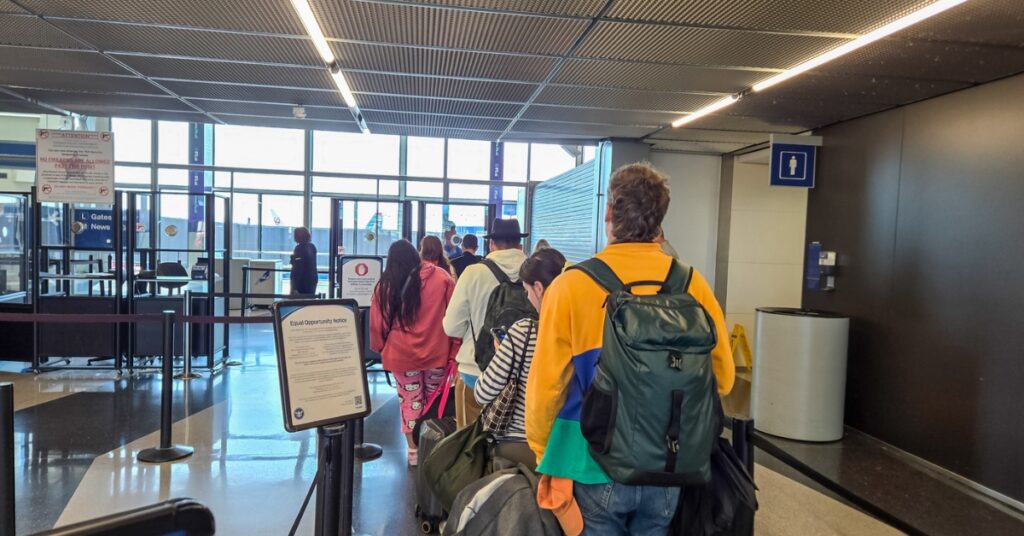
You hand over your passport at a Schengen border; the officer scans it and tells you that you overstayed your last trip. You know you left on time, but the screen says otherwise.
British travellers are reporting this more and more since the Entry/Exit System (EES) replaced passport stamping across the Schengen Area. Your 90/180-day rule count is now held in a digital record, and a single missing exit can make a legal stay look like an overstay.
A wrong record isn’t final. EU law gives you the right to correct inaccurate EES data. Here’s how to confirm the error, gather proof and request a correction, and how to keep it from happening again on future trips.
How EES Counts Your Days and Where It Goes Wrong
EES counts your days by matching each recorded entry to a recorded exit and adding up the time in between across a rolling 180-day window. It goes wrong when one of those records is missing, duplicated or attached to the wrong file, because the system counts the gap as time you spent inside the Schengen Area.
The 90/180-Day Rule in a Digital System
As a British passport holder, you can spend up to 90 days in any 180-day period across all Schengen countries combined. The window moves forward every day, so the count always looks back over the previous 180 days, and the 90/180-day rule applies to the whole area rather than to each country separately.
EES was progressively launched on 12 October 2025 at the external borders of the European countries using the system, and has been fully operational since 10 April 2026. It collects your facial image, fingerprints and travel document data, and records the time and place of every entry and exit.
The calculation then runs automatically. EES replaced manual passport stamping, which did not allow automatic detection of over-stayers, and the system is built to identify people who stay too long.
The system flags an overstay when it finds an entry with no matching exit. Until a new exit is recorded, it treats every day since your last entry as a day you spent in Europe.
Common Causes of a False Overstay Flag
Most false flags come from a record that was never created, or that was linked to the wrong person or document. The table shows how each fault appears in your file.
| Cause | What your EES record shows | Where it tends to happen |
| Unrecorded exit | An open stay that keeps adding days after you’ve gone home | Busy airports and ports where officers wave queues through, or faulty kiosks and e-gates |
| Biometric mismatch | Your travel history split across two files, one with an open stay | Any crossing where the face or fingerprint scan failed |
| Data entry error | A crossing logged against the wrong passport number or date | Manual processing at a border desk |
| Renewed passport | An exit recorded on one passport and an entry on another, never linked | Your first trip on a new passport |
| Journey cancelled after the check | An entry for a trip you never took | UK-based controls at Dover, Folkestone and St Pancras |
The rollout period added its own risk. During the phased roll-out, each country’s authorities decided at which border crossing points they would start using the system and when, so a trip that began at a crossing using EES could have ended at one that still stamped passports.
If that happened to you, your exit may exist only as an ink stamp. Keep that passport, even if it has expired.
Why British Travellers are Particularly Exposed
You probably cross Schengen borders more often than most non-EU visitors. A weekend in Paris, a ferry to Calais, a drive to the Alps and a month at a villa in Spain each add new records, and every one has to be correct.
Your EES entry is also often recorded before you leave the UK. For travellers from the UK, the first encounter with the system can be at a UK port where France carries out entry checks, which means a cancelled sailing or train after the check can leave an entry for a trip that never happened.
This is already causing real problems. Which? says increasing numbers of UK passport holders have contacted it to report being wrongly accused of overstaying.
Second-home owners and long-stay visitors have the least room for error. If your plans already take you close to 90 days, one unrecorded exit can push your count over the limit.
Signs You’ve Been Wrongly Flagged
The clearest sign is a border officer telling you you overstayed a trip you know ended on time, or an online check showing fewer days than you’ve actually used. Most travellers only find out at passport control, but you can spot a faulty record before you leave home.
At the Border
You won’t get a letter or an email when EES marks you as an overstayer. Because you aren’t contacted directly about an overstay, you often discover the problem at the border—sometimes on the way out of the Schengen Area and sometimes on your next arrival.
Look out for these warning signs at passport control:
- The officer asks why you stayed longer than 90 days on an earlier trip.
- You’re sent to a separate desk or office for extra questioning.
- You’re asked for the date you left after a past visit.
- The officer mentions a fine, a refusal of entry or a ban.
- You’re given a form or written decision that refers to an irregular stay.
Several British travellers have spoken out after their days were wrongly recorded, which left them facing travel bans or large fines. If any of the signs above happen to you, treat it as a record problem until the officer shows you otherwise.
You can ask the officer for your figures on the spot. You have the right to ask passport control officers for the maximum remaining duration of your authorised stay, and that number tells you whether the system thinks your last trip is still open.
Before You Travel
You can check your record yourself using the EU’s official Check How Long You Can Stay tool. You enter your passport number and your passport’s issuing country (for example, United Kingdom GBR), along with the dates of your planned trip.
One limit matters if you travelled earlier this year. The calculator’s remaining authorised stay does not reflect any time spent in the Schengen Area that began before 10 April 2026, regardless of whether that visit ended before or continued after that date, so you’ll need your passport stamps to count anything before then.
| Calculator result | What it could mean | What to check |
| Zero days left after a short trip | Your last exit was never recorded | The date and crossing point of your last departure |
| Far fewer days than you expected | An exit is missing from an earlier trip, or a cancelled journey was logged as an entry | Each trip since 10 April 2026, one by one |
| No travel history at all | Your crossings are on another passport or another file | Whether you renewed your passport between trips |
| Figures match your own count | Your record is probably correct | Nothing, but keep your tickets and boarding passes |
Run the check before every trip, and again after any crossing where you doubt your exit was logged. This includes airports where officers waved queues through, kiosks that didn’t seem to finish a scan and sailings or trains that were cancelled after the border check.
Your own count is the best guide to whether the calculator is wrong. Keep a simple log of every entry and exit date. The habit will stay useful once the European Travel Information and Authorisation System (ETIAS) becomes operational, because ETIAS doesn’t change the 90-day limit.
What to Do If You’re Stopped at the Border
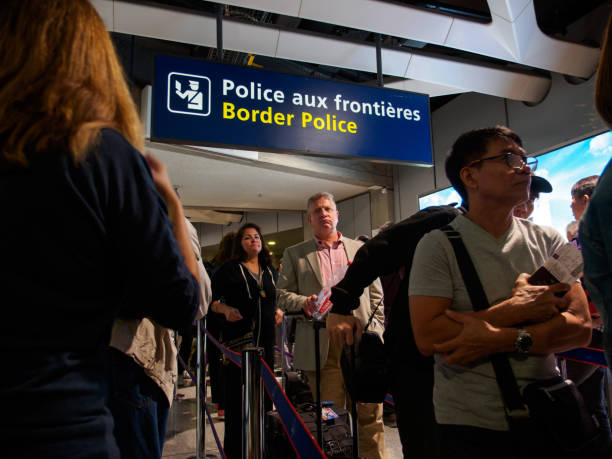
If you’re stopped, stay calm, explain when and how you left, and show proof straight away, because border officers can correct a missing exit during the check. Before you leave the desk, ask for written confirmation of any decision.
Stay Calm and State the Facts
Give the officer a short account of your last trip: the date you left, the crossing point and how you travelled. Something like “I left Paris on the Eurostar on 3 May and went home to London” gives them all the facts they need to check.
Keep your answers short and to the point. Arguing about the system won’t help, but a clear timeline will.
The law lets you show the record is wrong. Under Article 12 of the Schengen Borders Code, you can rebut the presumption of an overstay by providing credible evidence, such as transport tickets or proof of your presence outside the Member States’ territory.
Border staff are also told to give you that chance. The EU Agency for Fundamental Rights’ EES guidance for border guards asks officers to let non-EU nationals provide evidence to rebut the presumption of overstay and to tell them they can do so.
Show Your Proof Immediately
An officer can only act on what you show them at the desk, so have your proof ready on your phone or on paper. The most useful items are:
- return or onward tickets for the disputed trip
- boarding passes, including mobile versions saved in your wallet app
- Eurostar, ferry or Le Shuttle booking confirmations
- receipts or bank card payments made in the UK after the date you left
- hotel or holiday rental receipts showing when you checked out
Bring the passport you travelled on for the disputed trip if it differs from your current one. Matching travel to the right document will matter even more once ETIAS becomes operational, because the authorisation will be linked to your passport.
Know What You’re Being Asked to Sign
Read any document before you sign it, and ask the officer to explain anything you don’t understand. You can ask what the document means for future trips and how you can challenge it.
| What happens at the desk | What to ask for |
| You’re refused entry | The standard refusal form, with the reasons ticked |
| You’re told to pay a fine | A written notice or receipt showing the legal basis and the amount |
| An entry ban is mentioned | The written decision, its length and how to appeal |
| The officer corrects your record | Confirmation that your missing exit has been added |
| No decision is made | The officer’s name or badge number and the time and place of the check |
A refusal must come in writing. The decision must state the precise reasons for the refusal and be given on a standard form, and people refused entry have the right to appeal, although an appeal doesn’t suspend the refusal.
Keep photos of every page you’re given, and write down the name of the crossing point while it’s fresh in your mind. Don’t pay a fine on the spot without a receipt, because a cash payment with no paperwork leaves you with nothing to challenge later.
Build Your Evidence File
Your evidence file is a single folder of documents that proves when you left the Schengen Area and where you were on the days EES says you stayed. The more independent sources it contains, the harder the record is to dispute.
Documents That Prove You Left on Time
Start with your departure, because that’s the record EES is missing. Then add anything that shows you were back in the UK, or elsewhere outside Schengen, from the next day onwards.
| Evidence | What it proves | Where to get it |
| Boarding pass or e-ticket | You were booked on a specific departure | Airline app, Eurostar account or confirmation email |
| Ferry or Le Shuttle booking | You crossed with your vehicle on a set date | Your operator account, plus the toll or check-in receipt |
| Bank or credit card statements | You were spending money in the UK | Your banking app, as a downloaded PDF statement |
| Mobile phone records | Your phone stopped roaming in Europe | Your network’s itemised bill or account history |
| Payslips or timesheets | You worked in the UK on given dates | Your employer or payroll portal |
| GP, dental or hospital records | You attended an appointment in person | The NHS App or your surgery |
| UK border records | Your arrival back into the UK | A subject access request to the Home Office |
The UK border record is the strongest piece most travellers overlook. The Home Office’s subject access request form lets you request your UK entry and exit records, with travel history available for the past five years if you submit a passport or travel document from that period.
The request is free, and the Home Office has to reply within a set legal deadline. Send it as soon as you suspect a problem, because it takes longer to come back than anything else in your file.
Proving Where You Were, Not Just When You Travelled
A ticket proves you planned to leave, but it doesn’t prove you got on the train or plane. A strong file shows you were physically outside the Schengen Area on the disputed days.
Spread your evidence across the whole period instead of relying on one date. A card payment at your local supermarket in week one, a shift at work in week two and a GP visit in week three cover far more ground than a single boarding pass.
Put it all into a simple timeline document. List each trip in its own row with these columns:
- date you entered Schengen and the crossing point
- date you left and the crossing point
- how you travelled
- the evidence that backs up each date, labelled to match the file names
Save everything as PDFs and give each file a clear name, such as “2026-05-03 Eurostar Paris-London boarding pass.pdf”. Officials reading your file should be able to match every claim to a document within seconds.
Keep Records Going Forward
The easiest evidence file is one you build as you travel. Screenshot every boarding pass and booking confirmation, then save them to a single folder on your phone or in cloud storage.
Keep a running travel log with your entry and exit dates, and update it on the day you cross. A notes app or a basic spreadsheet does the job.
If you take the car, keep your ferry or tunnel tickets, toll receipts and fuel receipts from both sides of the Channel. The paperwork you already carry when driving to Europe from the UK, including your crossing booking and insurance documents, also helps prove when you crossed.
Hold on to old passports after you renew them, especially any with stamps from trips before EES was fully in place. Frequent travellers and second-home owners should check their file after every trip, while the details are still easy to find.

How to Request a Correction to Your EES Record
You can ask any country that uses EES to correct, complete, or erase incorrect data in your record; the country that entered the data is responsible for fixing it. Send a written request with your passport details, the disputed dates, and your evidence, then keep track of the replies.
Your Legal Right to Correct Your Data
Your right to fix a wrong record comes from Article 52 of the EES Regulation. If data in the system is factually inaccurate, incomplete or unlawfully recorded, the responsible or receiving country must rectify, complete or erase it, and confirm this to you in writing without delay.
You don’t have to send your request to the country where the error happened. You can send it to the competent authority of any Member State, although going straight to the country that made the mistake is usually quicker.
| Where you send your request | What happens next |
| The country that entered the wrong data | It must reply within 45 days of receiving your request |
| Another EES country, which can check the data itself | It must check the data’s accuracy within 30 days |
| Another EES country, which needs to consult the responsible country | It must contact the responsible country within seven days, which then has 30 days to check |
Which Authority to Contact
Start with the border authority or data protection officer in the country where your exit went missing. For many British travellers, that means France, Spain, the Netherlands, or Portugal, because Channel crossings and holiday flights most often go through these countries.
The EU explains your rights over data held in the EES and how to reach each country’s data controller. All 29 EES countries are also on the ETIAS list, so the same national authorities will handle your border data once ETIAS becomes operational.
Some countries publish their own instructions. The Royal Netherlands Marechaussee has a page on incorrect or missing EES registrations that explains what Dutch officials need from you.
What to Include in Your Request
Keep your request short and factual. Write it in English unless the authority asks for another language, and include:
- your full name, date of birth and nationality
- your current passport number, plus the numbers of any passports you used for the trips in question
- the dates you entered and left, and the crossing points you used
- a short explanation of what’s wrong, such as “exit on 3 May 2026 at Gare du Nord not recorded”
- the correction you want, for example adding the missing exit
- copies of the evidence that backs up each date
Ask for a copy of your full EES record in the same letter. Seeing exactly what was logged lets you spot any other errors and confirms whether the fix has been made.
Don’t send more personal data than the authority needs. Requests should include only the minimum information needed to identify you, and authorities may request fingerprints only in justified cases where there are serious doubts about your identity.
Response Times and Follow-Up
Expect to wait several weeks. The country handling your request must reply within 45 days of receiving it, and with high volumes of requests, authorities may use the full 45-day period before you hear back.
If the deadline passes without a reply, send a polite reminder that quotes your original request date and any reference number. Send it by email and keep the delivery receipt.
Keep copies of everything you send and receive, in date order, alongside your evidence. Once you get written confirmation of the correction, check your days again on the EU’s online tool before your next trip.
If Your Correction Request Is Refused or Ignored
If your request is refused or ignored, complain to the data protection authority in the country that handled it, and take the case to court there if the complaint doesn’t fix your record. The UK government can point you to local legal help, but only the authorities of that country can change your EES data.
Complain to the National Data Protection Authority
A refusal must be in writing. If the country doesn’t agree that your data is inaccurate, incomplete or unlawfully recorded, it must issue a written decision without delay explaining why it won’t act.
That decision should also tell you how to challenge it. The country must explain the steps you can take if you disagree, including bringing an action or complaint before its competent authorities or courts, and the help available from its data protection supervisory authority.
Send your complaint to the authority in the country that refused or ignored your request, even if you spend most of your time somewhere else. A second-home owner who usually holidays in Spain but whose exit went missing in France would complain to the French authority.
| Country | Data protection authority |
| France | Commission nationale de l’informatique et des libertés (CNIL) |
| Spain | Agencia Española de Protección de Datos (AEPD) |
| Portugal | Comissão Nacional de Proteção de Dados (CNPD) |
| Netherlands | Autoriteit Persoonsgegevens |
| Italy | Garante per la protezione dei dati personali |
| Greece | Hellenic Data Protection Authority |
You can find every other authority in the European Data Protection Board’s member list. Your complaint should include:
- a copy of your original correction request and the date you sent it
- the written refusal, or proof that the deadline passed without a reply
- your evidence and timeline
- the correction you’re asking for
Taking It Further
If the data protection authority can’t resolve it, you can go to court in the responsible country. This usually means an administrative court, and you’ll need someone who knows that country’s procedures and deadlines.
The EU also oversees the system centrally. The Coordinated Supervision Committee—a group of national supervisory authorities and the European Data Protection Supervisor (EDPS)—oversees data protection for the EES and monitors the system at European and national levels.
The EDPS route has limits for individual cases. The EDPS hears complaints when someone believes eu-LISA, the agency that runs the central system, has infringed their rights, while a wrong entry made by a national border authority remains a matter for that country.
Hire a lawyer once the stakes go beyond a wrong date in a database. Get legal advice if an entry ban has already been imposed, if you’ve been refused entry and the appeal deadline is running, or if you dispute a fine.
Contact the UK Government
The British embassy or consulate in the country concerned can help you find support. You can reach the FCDO’s consular assistance team through the nearest embassy or by calling +44 (0)20 7008 5000 and selecting “Consular services for British nationals”.
Consular staff can provide a list of local English-speaking lawyers and tell you which local organisations might help. They cannot interfere with another country’s legal system or pay for a lawyer, so they can’t overturn a border decision or correct your EES record for you.

What Happens to an Overstay Record That Isn’t Fixed
An uncorrected overstay record works like a real one, so it can lead to fines, removal or an entry ban, and it stays in EES for years. It can also follow you into later border checks, visa applications and ETIAS screening once ETIAS becomes operational.
Fines and Entry Bans
Each country sets its own penalties for overstaying. Depending on where the record was made, the response can range from a warning or a fine to removal and a ban on returning.
The border check is where the record first causes trouble. If you can’t rebut the presumption that you overstayed, you may be returned under the EU Return Directive and the national law that applies it.
A return decision can come with an entry ban. Under Article 11 of the Return Directive, return decisions must include an entry ban if no period for voluntary departure has been granted or if the obligation to return hasn’t been complied with.
These bans cover far more than one country. An entry ban prohibits entry into and stay on the territory of all Member States, and its length is set case by case and should, in principle, not exceed five years.
How Long the Record Stays on File
EES keeps overstay records longer than ordinary travel history. The timings are set out in Chapter V of the EES Regulation.
| Record type | How long EES keeps it |
| A normal trip with entry and exit recorded | Three years after the date of the exit record |
| Your individual file with photo and fingerprints | Three years and one day after your last exit record |
| A refusal of entry | Three years after the date of the refusal record |
| An entry with no exit recorded | Five years from the date of the last entry record |
The last row is the one that matters if your exit went missing. A trip you finished on time can stay on file as an open stay for five years if nobody corrects it.
Knock-On Effects for Future Travel
The flag shows up again every time you cross a border. EES generates a list of people who have exceeded their authorised stay, so each passport check can bring up questions about the same trip.
Visa decisions use the same data. Visa authorities consult the EES when examining visa applications and making decisions, which can matter if you later apply for a long-stay visa or residence permit to work, study, or retire in Europe.
ETIAS will check EES as well. ETIAS isn’t operational yet, but the ETIAS Regulation requires automated checks on whether the applicant is currently reported as an overstayer, or has been reported as an overstayer in the past, in the EES.
A match doesn’t mean an automatic refusal. When automated checks flag a match, the ETIAS National Unit of the responsible Member State processes the application manually, which can cause delays and a closer review of your travel history.
An old overstay flag is one reason an ETIAS application could be refused. Other things can also cause trouble.
- delays while your application goes to manual review
- requests for extra documents about past trips
- refusal if the national unit decides the record shows you broke the rules
- extra questions at the border even after you’re approved
Special Situations Worth Knowing About
Some British travellers run into EES problems more often than others: second-home owners, dual nationals, residence permit holders and anyone forced to stay longer than planned. Each situation comes with its own documents and habits that help prevent a false overstay flag.
Second-Home Owners and Long-Stay Visitors
If you split your year between the UK and a property in Europe, you probably use most of your 90 days. That leaves no buffer, so a single missing exit can push your count over the limit straight away.
Check your remaining days before every departure, not just before you travel out. If you plan to stay close to the limit, leave a few days early so a late flight or a ferry strike doesn’t take you past day 90.
Owning property doesn’t give you extra days. If you want to spend longer at your home abroad, you’ll usually need a long-stay visa or residence permit, and holding one takes you out of the 90/180-day count altogether.
Dual Nationals and Residence Permit Holders
EU citizens aren’t registered in EES. The EES does not apply to nationals of European countries using the system, or to nationals of Cyprus and Ireland, so a British-Irish dual national travelling on an Irish passport stays outside it.
Use the same passport in both directions. If you enter on your British passport and leave on your Irish one, EES will show an entry with no matching exit, which looks exactly like an overstay.
Withdrawal Agreement residents are outside EES too. Beneficiaries of the UK Withdrawal Agreement are exempt from EES registration, but you have to prove your status at the border every time.
The EU’s guidance for UK nationals living in an EU country says you need a passport and a residence document issued by your EU country of residence. Without it, officers will treat you as a short-stay visitor and register you.
| Your situation | What to show at the border |
| British and EU or Irish citizen | Your EU or Irish passport, on both entry and exit |
| Withdrawal Agreement resident | Your UK passport plus your Withdrawal Agreement residence document |
| Other EU residence permit holder | Your UK passport plus your valid residence permit |
| Long-stay national visa holder | Your UK passport with the visa inside |
The full list of exemptions is on the EU page on who EES does not apply to. Keep a photo of your residence document on your phone in case you lose the original while you’re away.
Stays Extended for Reasons Beyond Your Control
Sometimes you can’t leave on time. The EU recognises that you may be forced to exceed your authorised stay because of unforeseeable, serious events beyond your control, such as an accident requiring hospital treatment or serious illness or injury.
Officials must consider your reasons. The competent authority must check whether your force majeure evidence justifies the overstay, and accepting it could lead to an extension of your authorised stay.
Contact the local immigration authority before your 90 days run out, not after. Situations that usually count include:
- a hospital stay or serious illness, yours or a close family member’s
- a cancelled flight, ferry or train with no reasonable alternative
- strikes or severe weather that stop transport
- a court summons or other legal obligation
Keep every document that proves the delay. A hospital discharge letter, an airline cancellation email or a written extension decision tells border officers why your stay went past 90 days, so carry copies when you leave.

How to Avoid a False Overstay Flag on Future Trips
Make sure every exit is actually recorded, check your remaining days between trips and plan your stays with a buffer below the 90-day limit. Most false flags come from a missing exit, so most of the prevention happens at the border on your way home.
At Every Crossing
Your exit is recorded at the Schengen border, not at UK passport control. The UK officer who checks your passport on arrival home doesn’t update EES, so the Schengen side has to do the work.
| How you leave | Where EES records your visit | What to watch for |
| Flight from a Schengen airport | Passport control before your departure gate | Kiosks or e-gates that reject your scan |
| Eurostar from Paris or Brussels | The Schengen exit check at the station before the UK check | Queues that officers clear without scanning |
| Le Shuttle from Coquelles | Kiosks at the French terminal | A kiosk that times out with your car in the lane |
| Ferry from Calais or another Schengen port | The exit booth before boarding | Being waved through during busy sailings |
The exit process is quick. On exit, you only need to scan your passport and provide either fingerprints or a photograph at the border, and the UK government’s EES announcement sets out what to expect on each journey.
Confirm the check worked before you walk away. If a kiosk shows an error, a gate won’t open, or an officer waves your queue through, ask an officer to process your exit and keep your boarding pass.
Take a photo of the departure board or terminal sign showing the date and time, whether you leave by plane, train, car, or ferry. It’s a small extra record if your exit ever goes missing, and it’ll still be useful alongside the other border checks you’ll face once ETIAS becomes operational.
Between Trips
Plan each trip with a buffer below 90 days. Leaving yourself five to ten spare days covers a cancelled flight, a missed ferry or a strike without pushing you over the limit.
Use the European Commission’s short-stay calculator to test your plans before you book. It checks whether a planned short stay complies with the 90/180-day rule, which helps when you’re fitting several trips into the same six months.
Count multi-country trips as one stay. Days in Spain, France and Italy all count toward the same 90, no matter how many borders you cross inside the Schengen Area.
Be careful with trips that leave Schengen partway through. A day in Gibraltar, Andorra, or Montenegro adds an extra exit and entry, and you must record each correctly for your count to stay accurate.
Don’t Let a Glitch Ground You
You can fix a false overstay flag if you act quickly and keep a clear record of every trip. Check your remaining days after each journey, keep proof that you left on time and challenge an incorrect EES record as soon as you spot it.
Taking a few minutes at every border now protects your future trips to Europe. For the latest on EES, the 90/180-day rule, and what ETIAS will mean for British travellers, follow updates on etias.co.uk.