
Eurotunnel wins EU approval for ‘eagle eye’ camera trial at EES kiosks
Nov 24, 2026
Category: Border and Security EES EU News UK
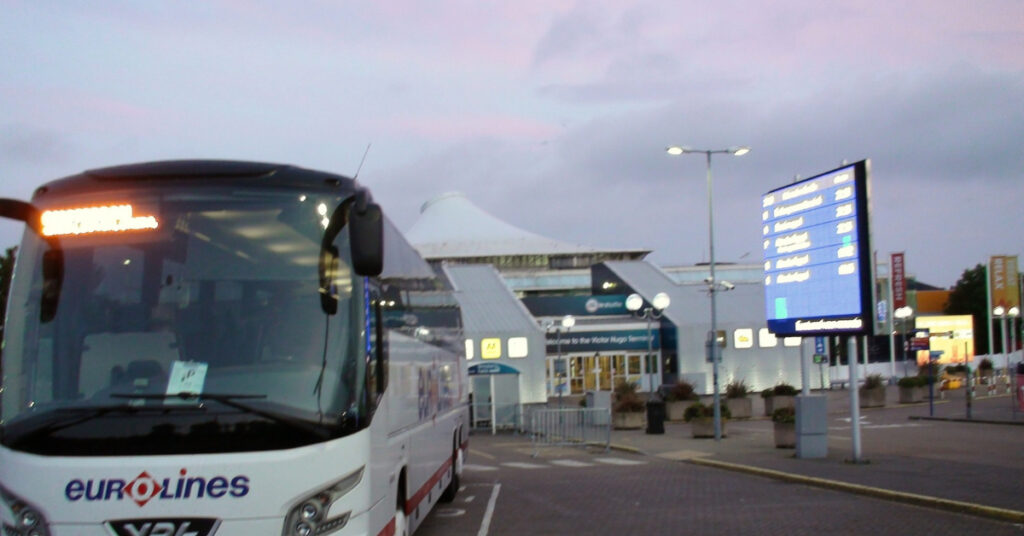
Eurotunnel has won European Commission approval to trial “eagle eye” cameras at its Folkestone and Calais terminals.
With the cameras, border police can supervise Eurotunnel EES checks from their booths, without an officer standing at every kiosk.
The two-year trial covers biometric registration under the EU’s Entry/Exit System (EES). Getlink, which owns Eurotunnel, wants the system to become permanent if the trial succeeds.
Getlink chief executive Yann Leriche said the go-ahead followed long talks with the European Commission and the French authorities. He added that the French authorities back the trial because it is more efficient for them too.
Leriche argues the cameras will “prevent the chaos in the long term and the short term.” If the experiment works, he expects the system to stay.
Cameras on duty
The high-resolution cameras watch travellers scan their passports and give fingerprints and facial images at self-service kiosks. Police monitor the process remotely, much as they do at airport e-gates, where officers don’t stand at each gate.
The same technology already runs at airports in Paris and Rome. In Paris, border guards use it from their booths to validate biometric data captured at the kiosks.
Getlink says it has installed 120 kiosks at Calais and Folkestone. Each bay holds two kiosks, and a new area at Folkestone was built to house them.
Only 75% of the kiosks have the cameras fitted so far. The rest are still waiting for the equipment.
Eurotunnel insists the cameras won’t replace police. “Border officers remain responsible for verifying and validating travellers’ identities,” a Eurotunnel spokesperson stated.
A Getlink spokeswoman added that live monitoring continues. Border guards stay on hand to deal with problems and support travellers.
Out of the car, for now
Leriche wanted to recreate the airport experience at the Channel crossing, then go further. He cited visits to the US–Mexico border, where drivers and passengers stay in their vehicles.
Eurotunnel passengers won’t get that yet. A Getlink spokeswoman confirmed that motorists will need to step out of their cars to use the kiosks once they open.
Staying in the car remains a possibility for later, depending on how the technology develops. “Right now it’s hypothetical and we’ve not experimented with it,” the spokeswoman explained.

Kiosks on standby
The kiosks are installed but unused. Leriche says they can work, yet the connection with the French system still fails.
He admitted he has no idea when France will switch the system on. The bays still need adjustments so that data reaches border guards’ booths and EU databases efficiently.
For now, Eurotunnel collects only passport data at the border for EES records. Fingerprints and facial images will come later, once the kiosks go live.
Tablets out, cameras in
Getlink initially considered handing tablets to passengers in their cars. It also considered asking travellers to park and walk into the terminal building for fingerprinting.
Both plans would have required a police officer to be physically present for every first-time fingerprint scan. That rule guards against fraud, such as a criminal using a fellow passenger’s clean fingerprint record.
Leriche says he warned the authorities that the earlier options would be a mess. Travellers would head to the wrong place, police would rush between spots, and customers would face a poor experience at peak times.
A Getlink spokeswoman noted that the older approaches would have tied up far more police officers. The UAF airports federation had also feared first-time travellers might give fingerprints twice, once at a kiosk and again at a guard’s desk.
Coach and lorry traffic already follows a separate routine. Border police take coach passengers’ biometrics in the coach hall, and lorry drivers give theirs without leaving the cab.

Border lab ambitions
Getlink wants Eurotunnel to become a testing ground for future border technology. In the coming weeks, Leriche plans to present a 40-page proposal to UK and French authorities.
The plan draws on emerging technology and lessons from projects in the US and Singapore. Leriche also intends to show UK ministries a 10-year smart borders vision brochure.
Eurotunnel calls the camera trial part of a wider investment in border technology. It says the work involves authorities on both sides of the Channel.
Stuck in low gear
The EES was due to run across the EU by 9 September 2026. Nine of the 27 member states, including France, have yet to deploy it fully because of technical problems.
France’s interior ministry says its added flexibility at border crossings lasts until the end of 2026. It remains unclear what happens if the systems aren’t ready in 2027.
The Port of Dover and Eurostar’s London St Pancras terminal have installed kiosks but haven’t fully introduced biometric checks. Technical problems and fears of long queues have slowed the rollout at UK–EU crossings.
Other ferry terminals that planned to use tablets are also reporting trouble capturing biometrics. In September, reports suggested more than 20% of passengers at Paris Charles de Gaulle airport did not have their biometric data taken or checked on arrival.
The UAF says it is unsure whether full deployment is possible by the end of the year. The EU has also filed a lawsuit against IBM and two other companies involved in implementing the EES.
Clock runs down
The approval removes the rule that tied first-time fingerprinting to an officer at every kiosk. The link between Eurotunnel’s kiosks and the French system still fails, keeping the bays empty.
France’s flexibility period ends in 2026, and the camera trial has two years to show results. Leriche’s talks with UK and French officials are still to come, and Getlink describes in-car enrolment as untested.