
EU praises Spain’s ‘swift response’ as Ceuta rift persists
Aug 10, 2026
Category: Border and Security EU Migration News Spain
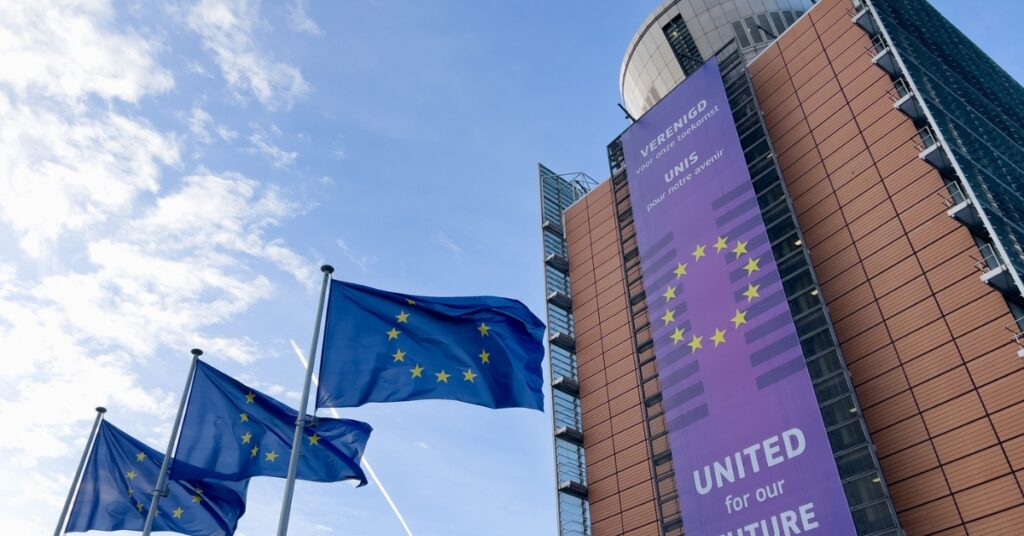
The European Union (EU) commended Spain’s handling of the Ceuta migrant crisis, while Italy maintained border controls and divisions over migration persisted.
Interior ministers joined an emergency videoconference after days of public disagreement between Madrid and 22 capitals over responsibility for the mass crossings into Spain’s North African exclave.
Irish Justice, Home Affairs and Migration Minister Jim O’Callaghan chaired the talks, as Ireland holds the EU’s rotating presidency.
“The EU stood in solidarity with Spain,” O’Callaghan told reporters, adding that migration required “a united European response.”
Solidarity on paper, controls in practice
EU Commissioner Magnus Brunner called the incident a “test” of European resilience and border security that the bloc had successfully “passed.” He confirmed that the EU had offered Spain emergency funding to strengthen its borders.
Denmark’s immigration minister, Morten Bødskov, was “very satisfied” with Spain’s swift response but stressed that “it is absolutely crucial that we have control over the EU’s borders.”
Spanish Interior Minister Fernando Grande-Marlaska insisted that the Schengen zone had not been compromised and hoped Italy would lift its additional controls “as soon as possible.”
Italy suspended Schengen free movement with Spain on 31 July, restoring some controls on air and sea arrivals for 30 days. As the countries share no land border, the measure mainly affects flights.
Italian public broadcaster RAI reported that targeted checks began on 1 August and apply only to non-EU nationals arriving from Spain. Spanish and other EU citizens face no additional requirements.
Counting the crossings
Official figures vary sharply. Grande-Marlaska estimated that about 72,000 people crossed between 30 and 31 July, with roughly 70,000 since returning to Morocco.
Spanish officials estimated that 69,500 had returned and about 2,500 remained. European Commission President Ursula von der Leyen referred to approximately 50,000 arrivals.
At least 75 people died on the Spanish side of the border, while Morocco reported 11 deaths.
Ceuta has about 83,500 residents, meaning that arrivals exceeded two-thirds of its population.
Local authorities reported that many drowned as crowds crossed by land and sea on 30 July, overwhelming border guards. Most swam around the barrier separating Ceuta from Morocco, often covering about 5km from Fnideq.
Ceuta’s top government official, Juan Jesus Vivas, estimated that 3,000 to 5,000 people remained in the city. The Spanish government’s delegate gave a slightly lower figure.

The letter war
Sánchez opened the dispute by accusing fellow member states of “selfish” attitudes and demanding emergency talks on a “common response.”
In a letter to EU institutional leaders, he condemned what he called a “selfish, polarising and unlawful reaction” driven “by prejudice, fake news, ignorance or political interest.”
Within hours, 22 countries led by Italy, Denmark, Germany and Hungary issued a counter-letter demanding urgent talks to press for tougher immigration controls.
Italian Prime Minister Giorgia Meloni described such “uncontrolled immigration” as a security threat and called for Spain’s Schengen membership to be suspended. Finland and Denmark supported Italy, while Czech Prime Minister Andrej Babiš urged a temporary suspension.
Madrid rejected the proposal, which is legally impossible under EU rules.
Italian Foreign Minister Antonio Tajani defended the position. “I understand Spain’s frustration with its failed migration policy, but we have a duty to protect Italy’s borders,” he said. “What happened in Ceuta is not a minor incident; it poses a risk to the entire union.”
France tightened checks along its Spanish border but distanced itself from the 22-country initiative, describing it as an attempt to exploit the crisis politically.
Brussels reaches for Rabat
Von der Leyen wrote to Sánchez on Monday calling for “united action” on border security.
“From this incident it is clear that we must do more to further strengthen our borders at critical points,” she wrote. “The protection of all our external borders is a shared European responsibility.”
She praised Sánchez’s “swift handling” and urged action in five areas:
- cooperation with partner countries,
- stronger external borders,
- early-warning systems,
- disruption of smuggling networks and
- reinforced returns.
She also proposed closer cooperation with Rabat. “Morocco is an important strategic partner, particularly in our efforts to combat migrant smuggling and illegal migration,” she wrote.
Von der Leyen called the talks a “first step” and promised further discussion at the EU leaders’ summit in October.

Tracing the surge
The cause of the crossings remains disputed. Brunner blamed criminal networks and social media disinformation.
Spanish intelligence sources told El País that the influx probably began with an online hoax following a Supreme Court ruling that migrants arriving by sea could not be summarily deported. Moroccan border surveillance then declined before being lifted entirely late last week.
Gerald Knaus, director of the European Stability Initiative, rejected suggestions of a structural shift. There “was a lot of false information” online, he told DW, including rumours that “Spain was opening its borders.”
Matteo Villa, a migration researcher at the Italian Institute for International Political Studies, suspected political involvement. “I mean, 50,000 people do not come overnight when usually it’s hundreds per month,” he remarked.
Economic pressures also contributed. Official figures cited by Reuters show that one in four Moroccans aged 15 to 24 is not in education, employment or training.
Beach camps and 800 children
Conditions in Ceuta also drew criticism. Images showed crowds gathering near the beach for food and water, with some holding makeshift banners reading “asylum.”
Local media reported that about 800 children were being held in facilities across the city. Grande-Marlaska maintained that all migrants’ rights, particularly those of minors, were being respected, with about €25 million allocated for their care.
Djibril, from Senegal, told Spanish broadcaster RTVE that the arrivals were not there “to cause trouble.”
“We’re not thieves… But leaving us without a response is inhumane,” he added.
Ayoub, a 23-year-old administrative assistant from Casablanca, swam across after following events online. He described it to BBC World Service Newshour as “the most traumatic experience I’ve ever had in my life.”

October looms
The videoconference produced praise, an offer of financial support and promises of unity, but resolved little.
Italy’s controls remain, while Spain must process an estimated 2,500 to 5,000 people. Discrepancies in official crossing figures also remain unexplained.
Knaus expects little progress before the next crisis, predicting more grandstanding and mutual recrimination than coordinated action.
Migration will return to the agenda at the October EU leaders’ summit. Italy is expected to continue pressing for return hubs outside the bloc, modelled on its agreement with Albania.