
Step-Free and Fancy-Free: The Ultimate Guide to Accessible Travel in Europe
Nov 19, 2026
Category: Accessible Travel European Travel Resources Travel Tips
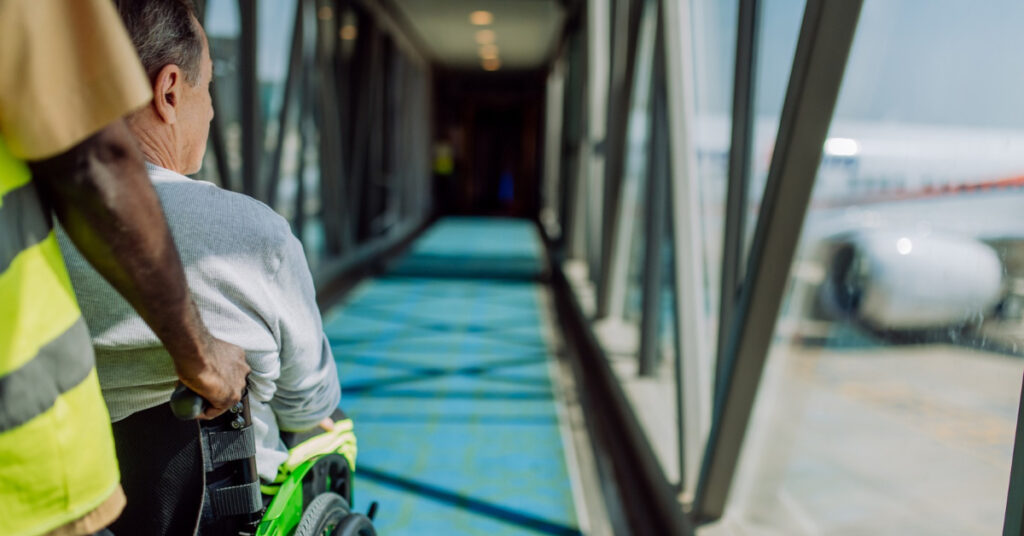
Europe is a short flight, train ride or ferry crossing away for most British travellers, but getting there is only part of the challenge. For disabled travellers, accessible travel in Europe can mean step-free access at one station and a steep flight of stairs at the next
Standards vary between countries, cities and individual hotels. A low-floor tram in Amsterdam doesn’t guarantee a working lift on the Paris Métro, and an “accessible room” in one city may not have a roll-in shower in another.
This guide is for wheelchair users, travellers with reduced mobility and people with sensory impairments. It’s also for neurodivergent travellers, people with hidden disabilities and anyone planning a trip with older relatives.
What Accessible Travel in Europe Really Means
Accessible travel in Europe means you can book, reach and enjoy a trip without barriers that stop you from using the same services as everyone else. It covers far more than ramps and lifts, because access needs differ from one traveller to the next.
Physical, Sensory and Hidden Disabilities
Step-free routes matter if you use a wheelchair or have reduced mobility. Accessibility also depends on how information reaches you, how loud or crowded a space is and how much time staff give you.
| Access need | Features to look for |
| Wheelchair use or reduced mobility | Step-free entrances, working lifts, accessible toilets, low-floor vehicles |
| Visual impairment | Tactile paving, audio announcements, braille signage, screen reader-friendly booking sites |
| Hearing impairment | Hearing loops, visual departure boards, text-based customer support |
| Neurodivergence | Quiet rooms, sensory maps, alternative queuing options |
| Hidden disabilities | Staff trained to recognise the Sunflower lanyard, seating in queues, extra time at security |
The Hidden Disabilities Sunflower started at London Gatwick in 2016 and lets you discreetly show that you may need extra time, patience, or support. It’s used by people with conditions such as autism, dementia, epilepsy, chronic pain and anxiety.
Recognition still varies across Europe. Aena recognises the Sunflower at its Spanish airports, but wearing it there doesn’t give you fast-track security, and Frankfurt Airport didn’t join the scheme until 1 January 2026.
Check the accessibility pages for your departure and arrival airports before you fly. Some hand out free lanyards, while others expect you to bring your own.
How Standards Differ Across Europe
Newer transport networks and buildings across Northern and Western Europe are usually easier to get around. Older cities can be harder, since cobbled streets, steep hills and listed buildings limit what operators and owners can change.
EU passenger rights protect disabled passengers from discrimination and provide free assistance on planes, trains, ships, buses and coaches. The European Accessibility Act took effect on 28 June 2025 and extends access rules to transport websites, apps and ticket machines.
These laws set a minimum, but each country, operator and building decides how far beyond it to go. A modern tram line and a metro built more than a century ago can offer very different access, even in the same city.
Before you commit to a destination, find out:
- how hilly the centre is and whether the main streets are cobbled
- whether key attractions publish access guides with entrance and step details
- whether historic sites offer a separate step-free entrance
- whether pavements have dropped kerbs and tactile paving
Use those answers when you plan your travel itinerary, so the places you most want to see work for your access needs.
Passports, Paperwork and Border Checks
You need a passport that meets Schengen rules, documents explaining any medical needs, and confirmations for the help you’ve booked. Your first entry into most of Europe also includes a biometric check, so have your paperwork ready before you join the queue.
Documents to Pack Before You Go
Your UK passport must have been issued less than 10 years before the date you enter the country and stay valid for at least three months after the day you plan to leave. Check both dates on the photo page, since only passports issued in October 2018 or later have issue and expiry dates exactly 10 years apart.
| Document | Why you need it |
| UK passport | Proves your identity and creates your record at the border |
| GHIC | Gives you access to state healthcare in the EU |
| Travel insurance policy | Lists emergency contact numbers and what your cover includes |
| Doctor’s letter | Explains your condition, medication and any medical equipment you carry |
| Prescriptions | Show that your medicines were prescribed to you |
| Assistance booking confirmations | Prove what help you requested from airlines, rail and ferry operators |
Keep paper copies of everything in your hand luggage and save digital versions somewhere you can open offline. Get your medical letters translated into the main language of each country you’re visiting, so staff can read them quickly at security or a pharmacy.
What to Expect at the Border
UK nationals are registered in the Entry/Exit System (EES) the first time they cross into one of the 29 European countries that use it. Border staff record your facial image and fingerprints, which replace the passport stamp.
The EU Agency for Fundamental Rights found that automated border gates are largely impractical for people with reduced mobility, particularly wheelchair users. Its guidance for border managers recommends self-service systems with adjustable-height scanners, voice assistance and tactile feedback, and allowing companions to help travellers with disabilities during biometric capture.
On your first crossing:
- allow extra time at passport control
- ask for a staffed booth if you can’t stand at or reach a kiosk
- tell the officer early if you can’t follow spoken instructions
- keep your passport and medical letters in an easy-to-reach pocket
The fingerprints of children under 12 aren’t scanned, even though they’re still registered in the EES. The EES Regulation also exempts travellers for whom giving fingerprints is physically impossible.
ETIAS isn’t operational yet, and no applications are being collected. When it starts, you can authorise somebody else to apply for you, such as a friend, a family member or a travel agency, and you can check the steps for applying for ETIAS well before your trip.

Flying to Europe With a Disability or Reduced Mobility
You can fly to Europe with free assistance at the airport and on board, along with your wheelchair or other mobility equipment. You need to book that help in advance, prepare your equipment for the hold or cabin and pick airports that handle assistance well.
Your Rights to Airport Assistance
The UK Civil Aviation Authority enforces Assimilated Regulation (EU) No. 1107/2006, which kept EU-style assistance rights in UK law after Brexit. Within the EU, Your Europe sets out the same right to free help, including getting on and off the plane.
Tell your airline at least 48 hours before departure if you need help, and ask for written confirmation of what’s been arranged. If you don’t request assistance in advance, the airline and airport still have to do their best to help you, but specialist equipment may not be available.
Your booked assistance can include:
- help at check-in and through security
- boarding by ambulift or aisle chair
- transfers between connecting flights
- a briefing for you and any companion on emergency procedures and the cabin layout
- help with stowing and retrieving baggage on the plane
Book assistance separately with each airline if your connecting flights use different carriers. Mention any extra stops when you plan travelling to multiple European countries, so the help continues at every airport on your route.
Flying With Wheelchairs and Mobility Aids
You can travel with up to two items of mobility equipment free of charge, and they don’t count towards your baggage allowance. Photograph your wheelchair before you hand it over, then attach a tag with your name, flight details and instructions for folding or dismantling it.
Powered wheelchairs and scooters need more preparation. Make advance arrangements with the airline and tell it what type of battery is installed, using the IATA mobility aid guidance to check your battery details first.
| Lithium-ion battery setup | What the rules allow |
| Battery can’t be removed | No limit on the installed battery’s capacity in watt hours |
| One removable battery | Must not exceed 300 Wh and travels in the cabin, protected from damage |
| Two removable batteries | Must not exceed 160 Wh each |
| Spare batteries | One spare up to 300 Wh or two spares up to 160 Wh each |
Check your wheelchair at the aircraft door when you arrive, before you leave the airport. Report any damage at the airline desk straight away and get a written damage report, since you have seven days to submit a written claim for damaged baggage.
Airlines may not have to compensate you in full if your equipment is lost or damaged, so consider separate insurance cover. Ask your airline about a special declaration of value at check-in if your wheelchair costs more than its standard liability limit.
Choosing Accessible Airports
The CAA’s Airport Accessibility Performance Report 2025/26 rates UK departure airports on how well they deliver assistance. Of the 28 airports assessed, 19 were rated ‘Very Good’ and nine ‘Good’, with Bristol, Edinburgh, London Gatwick, Manchester and Newcastle among the top performers.
For your arrival airport, check its assistance page for meeting points, ambulift availability, and walking distance from gate to baggage hall. Larger hubs often offer quiet routes through security or sensory rooms, which help if crowds and noise make airports hard for you.
Travelling by Rail, Ferry and Coach
You can reach and cross Europe by train, ferry or coach with free assistance, as long as you tell the operator about your needs in advance. Each mode has its own notice period, and rail has the shortest.
Eurostar and European Rail Networks
On London routes, Eurostar seats wheelchair users in Eurostar Plus or Eurostar Premier at the fixed price of a Standard ticket, which is €44 for direct services to and from London. You stay in your wheelchair for the whole journey, in a space with a table near the accessible toilet, and a companion sits next to you on a discounted companion fare.
Staff set up a ramp, help you board and get you settled. If you need help boarding, make an assistance request at least 24 hours before departure.
Across the EU, rail operators work to the same notice period. EU rail passenger rules shortened the pre-notification period for assistance requests to 24 hours, compared with 36 hours for bus and coach travel and 48 hours for sea travel.
| Operator | Assistance service | How to book |
| SNCF (France) | Assist’enGare | Online form or phone, from 90 days to 24 hours before your train |
| Deutsche Bahn (Germany) | Mobility Service Centre | Online form or by phone |
| Renfe (Spain) | Atendo | Tick the assistance box on the Renfe website |
| Trenitalia (Italy) | Sala Blu | In person at a Sala Blu office in specified stations, or online |
Without a reservation, SNCF doesn’t guarantee assistance and can only help on your chosen train, as far as possible. Reserve a wheelchair space on each train in your journey when you book your ticket, since space on high-speed services is limited.
Ferry Crossings and Driving Abroad by Sea
Maritime passenger rights under Regulation (EU) 1177/2010 were incorporated into UK law by the European Union (Withdrawal) Act 2018. UK government guidance says you should tell the ferry operator when you book if you need particular seating or accommodation on board.
For any other help, give at least 48 hours’ notice. With less notice, the operator must make all reasonable efforts to help you, but it can’t guarantee assistance.
If you’re driving to Europe from the UK, ask for these when you book:
- a parking space on the car deck close to a lift
- an accessible cabin on overnight sailings
- priority boarding and help moving from your car to the passenger decks
Long-Distance Coaches
Coach accessibility varies more than rail. The bus and coach regulation Regulation (EU) No 181/2011 requires that you notify the carrier, terminal, travel agent, or tour operator of your need for assistance at least 36 hours before you need it.
FlixBus asks you to contact its customer service at least 36 hours before departure so it can check whether it can accommodate your journey. If you can board on your own or with a companion, the driver stows your collapsible wheelchair in the baggage compartment.
Check every leg of a cross-border coach trip before you pay. When your trip includes an interconnection in another country, FlixBus may not be able to offer travel seated in your wheelchair for the whole route.

Getting Around European Cities
Most large European cities have accessible buses, trams and at least part of their metro network, but step-free coverage varies widely from one city to the next. Check how your destination’s network works, and have a backup plan for when a lift fails.
Metro, Tram and Bus Networks
Newer metro systems and modern low-floor trams are usually the easiest options if you use a wheelchair. Older underground networks can be harder, since many stations were built long before lifts were standard.
| City | Metro step-free access | Checking routes and lifts |
| Vienna | All 109 U-Bahn stations have lifts, 291 in total | Wiener Linien app and Liftboy app |
| Barcelona | Accessible except for 12 of 165 stations | TMB website and in-station maps |
| Berlin | Not every U-Bahn station is accessible, but all bus and tram stops are | BVG Fahrinfo app with accessibility settings |
| Paris | Line 14 is the only fully accessible metro line from end to end | Bonjour RATP app with reduced mobility routing |
In Paris, the RER suburban rail network gives you more step-free options than the metro. Île-de-France Mobilités says every station on RER lines A and B is accessible, 65 stations in all.
Check lift status on the morning you travel and again before you set off. A route can become inaccessible if a lift is out of order or not yet installed, so pick a second station or a bus route you can switch to.
Berlin offers a fallback for this. Its BVG Muva lift substitute lets you book a ride by app or call centre when you depend on a lift and the alternative route takes much longer.
Before you ride, look out for:
- low-floor trams and buses, which are marked on timetables in many cities
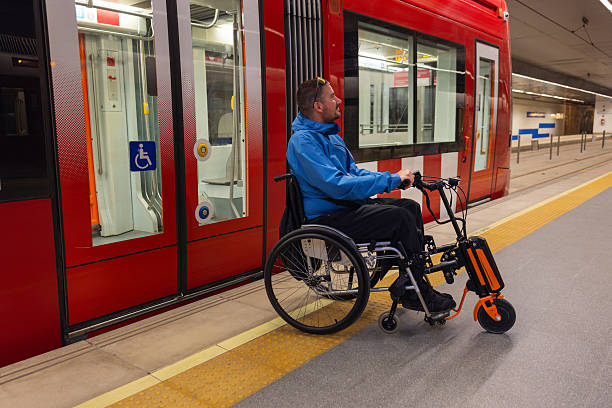
- the wheelchair space on each train or tram, usually shown by a symbol on the door
- gaps between platform and train, which vary by line and station
Taxis, Ride-Hailing and Accessible Tours
Wheelchair-accessible taxis with ramps or lifts are limited in most European cities, so book with a local firm a day or more ahead. Ask for the vehicle type, ramp length and whether you can stay seated in your own chair.
Ride-hailing apps are less reliable for wheelchair users abroad. Uber offers its WAV service where available, so coverage varies by city and time of day.
If you’re planning business trips to Europe, ask your host or event organiser to arrange accessible transfers in advance. Venues and conference organisers often have contracts with local accessible taxi firms.
City tourist boards are a good starting point for adapted tours and step-free sightseeing. visitBerlin lists assistance services and accessibility tools for getting around the city.
Sightseeing buses can work as an accessible way to see major attractions. In Barcelona, the Bus Turístic has wheelchair access and reserved spaces on the lower deck.
Driving and Parking With a Blue Badge
You can use your UK Blue Badge in many European countries, but the parking concessions change from one country to the next. Check the local rules before you set off, and book adapted hire cars well ahead.
Using Your UK Blue Badge Abroad
The UK government keeps a country-by-country Blue Badge guide for Europe. Some countries may require you to display a local parking notice in addition to your Blue Badge.
| Country | UK Blue Badge status |
| France | Recognised since August 2025 |
| Spain | Recognised since September 2025, with guidance updated in January 2026 |
| Germany and Slovakia | Recognised |
| Belgium, Croatia and Cyprus | Recognised |
| Denmark and Switzerland | Recognised, but you must use a parking disc or clock for time concessions |
| Slovenia | May not recognise a parking card issued outside the EU |
Recognition doesn’t mean the UK rules apply. Even in countries that recognise the Blue Badge, parking rules can vary in different parts of the country, and rules can change.
Before you park, check:
- how long you can stay in a disabled bay or a standard bay
- whether you need to pay at meters
- whether historic centres limit access to vehicles with local permits
- whether the country asks for a parking disc
Display the badge with the wheelchair symbol facing forward, so officials can see the expiry date from outside the car. Keep a printed copy of the local rules in your glovebox in case a parking warden asks about your badge.
Hiring Adapted Vehicles
Adapted hire cars are harder to find in Europe than in the UK, so book early. Hertz says that subject to availability and prior notice, it can arrange an adapted vehicle at major gateways in Belgium, Italy, Luxembourg, the Netherlands and Spain.
Avis offers disabled vehicle solutions in Austria, Germany, Switzerland and the United Kingdom. Ask the hire desk to confirm the car model, the type of hand controls and whether your wheelchair fits in the boot before you pay.
You don’t need an international driving permit (IDP) to visit and drive in the EU, Switzerland, Iceland or Liechtenstein with a photocard licence. GOV.UK’s driving abroad guidance says that if you have a paper driving licence, you’ll need to update it to a photocard licence or get an IDP.
If you take your own car, check your number plate. You don’t need a UK sticker if your plate includes the UK identifier with the Union flag, but in Spain, Cyprus or Malta you must display a UK sticker no matter what’s on your plate.
When you hire a car, you may need to share your driving licence information with the hire company, so get a check code from GOV.UK before you travel. Pack your licence with your passport, and read up on the ETIAS requirements for British citizens before your trip.
Booking Accessible Accommodation
You can find accessible hotels and holiday rentals across Europe, but you need to check the details yourself before you pay. Use accessibility filters to narrow your search, then confirm measurements and features directly with the property.
What “Accessible” Means in Practice
There’s no single European standard for an “accessible room”. One hotel may use the label for a room with a roll-in shower and a hoist, while another uses it for a ground-floor room with grab rails and a standard bath.
Ask for exact figures rather than a yes or no. These benchmarks give you a starting point when you compare properties:
| Feature | What to check |
| Doorways | Airbnb’s accessibility feature definitions require entrances at least 81 cm wide |
| Thresholds | Any door thresholds or pathway obstacles less than 5 cm high |
| Shower | No step or threshold greater than 2.5 cm to get into the shower |
| Grab rails | At least one grab bar at the shower and toilet that can fully bear weight |
| Bed height | The height from the floor to the top of the mattress, to match your transfer |
| Lift | Door width and the depth of the lift car, if your room isn’t on the ground floor |
Ask the property to send photos of the entrance, bathroom and bedroom, taken from where you’d sit or stand. A photo of the shower with a tape measure across the threshold tells you more than a written description.
Check the room location too. Accessible rooms are sometimes at the far end of a corridor or on a floor with a single small lift, which matters if you need help getting out quickly.
Specialist Platforms and Questions to Ask
Mainstream booking sites now offer more detailed filters. On Booking.com, you can use a “wheelchair accessible” filter when you search for a room type.
Airbnb’s Adapted category lists homes with verified accessibility features, such as step-free access, at least one bedroom and bathroom, and an additional bathroom adaptation. You can also filter search results by any combination of the accessibility features.
Specialist sites give you reviews from people with similar needs. Euan’s Guide is a disabled access charity where you can search for places and share your experiences, while Tourism for All publishes guidance on what to look for when you book.
DisabledHolidays.com lists accessible hotels and holiday homes across Europe and can arrange mobility equipment hire. That includes wheelchairs, shower chairs, hoists and electric beds.
Before you confirm, ask the property:
- whether the main entrance is step-free or uses a separate side door
- whether the breakfast room, restaurant and pool are reachable without steps
- how staff alert deaf or hard-of-hearing guests in an emergency
- whether you can borrow or hire a shower chair, raised toilet seat or hoist
- how close the nearest accessible parking or taxi drop-off point is
Get every answer in writing and save it with your booking. If you’re planning a longer stay in a rental apartment, check your total nights against the 90/180-day rule before you sign up for a monthly rate.
Healthcare, Medication and Travel Insurance
You can get state healthcare in Europe with a UK GHIC, but you still need travel insurance that covers your medical conditions and equipment. Sort your medication paperwork before you go, especially if any of your medicines contain a controlled drug.
Using the GHIC Abroad
The UK Global Health Insurance Card lets you access necessary state healthcare in the European Economic Area, and some other countries, on the same basis as a resident. It’s free, so apply through the NHS website and avoid sites that charge a fee.
| What you might need | GHIC position |
| Emergency treatment and A&E | Covered as necessary healthcare |
| Care for a long-term or pre-existing condition | Covered, including routine care for conditions that need monitoring |
| Dialysis, oxygen or chemotherapy | Covered when you arrange and book it before you go |
| Patient co-payments | You can claim back the difference between the total bill and the co-payment, but the co-payment itself isn’t refundable |
| Flights home after illness or injury | Not covered by the UK’s healthcare agreements |
Plan pre-arranged treatment well ahead of your trip. For dialysis, the NHS treatment abroad checklist says you’ll need to speak to the coordinator in your UK dialysis unit, who will contact the unit where you’ll be staying.
UK GHIC and UK EHIC cards are not a replacement for private travel insurance. Carry your card with you at all times, as hospitals may ask for it before they treat you.
Travelling With Medication
Check every medicine before you pack. GOV.UK advises you to ask your doctor or pharmacist whether your medicine contains a controlled drug, check the country’s rules with its embassy and carry a prescription or doctor’s letter to prove it’s yours.
You need an export licence before carrying a certain quantity of controlled drugs, usually three months’ supply or more, out of the UK. Apply at least 10 days before you travel.
TravelHealthPro recommends that you:
- keep medicines in their original pharmacy packaging
- carry them in your hand luggage, with some extra in the hold
- pack a copy of your prescription
- ask your prescriber for a letter listing the generic names of your medicines
Bring enough to cover delays or lost luggage. Generic names matter abroad, because brand names often differ from one European country to another.
Insurance for Pre-Existing Conditions
Declare every medical condition when you buy a policy, including ones that feel stable or minor. An undeclared condition can give your insurer grounds to refuse a claim.
Check that your policy includes:
- emergency medical cover and repatriation to the UK
- cover for wheelchairs, scooters and other mobility equipment
- cancellation if your condition worsens before you travel
- cover for a companion or carer travelling with you
Tell your insurer how long you’ll be away, especially if you’re visiting family in Europe for several weeks. Some policies limit the length of a single trip.
If mainstream insurers turn you down, use the MoneyHelper travel insurance directory. The firms listed specialise in cover for people with serious or multiple medical conditions, and most use a medical screening company that asks about your conditions and medication.

Travelling With an Assistance Dog
You can take your assistance dog from Great Britain to Europe, but it needs the same health paperwork as a pet dog. Most airlines, trains and ferries carry recognised assistance dogs free of charge, as long as you tell the operator before you travel.
Pet Travel Rules After Brexit
The GOV.UK pet travel rules for EU countries also apply to assistance dogs. Your dog needs a microchip, a rabies vaccination and an animal health certificate (AHC) from an official vet before every trip.
| Requirement | What you need to know |
| AHC for entry | Valid for 10 days after the date of issue for entry into the EU |
| Onward travel | Valid for 4 months for onward travel within the EU |
| Coming home | Valid for 4 months for re-entry to Great Britain |
| Tapeworm treatment | Required if you’re travelling directly to Finland, Ireland, Malta, Northern Ireland or Norway |
Book your vet appointment early, since only official vets can issue an AHC and slots fill up before school holidays. Your dog needs a new animal health certificate for each trip to an EU country.
EU pet passports held by people living in Great Britain are no longer an option. Since 22 April 2026, residents of England, Scotland and Wales can no longer use EU pet passports issued in the EU.
The rules are due to change. Under the planned UK-EU SPS agreement, pet owners will be able to get a multi-use pet passport valid for EU travel, rather than a new animal health certificate for each trip, with the agreement intended to take effect in mid-2027.
Rights on Transport and in Accommodation
Eurostar welcomes registered assistance dogs trained by a member organisation of Assistance Dogs (UK), the International Guide Dog Federation or Assistance Dogs International. Emotional support dogs and other animals aren’t allowed to travel on Eurostar.
To book on Eurostar:
- contact Eurostar at least 24 hours before you travel
- complete the pre-approval form about your dog when you book
- see a Eurostar staff member before you go through the ticket gates, or your dog can’t be approved
Eurostar books a spare seat next to you so your dog has enough space, and allows a maximum of four assistance animals per train. There’s no charge for your dog’s ticket.
Breed rules still apply to assistance dogs. Eurostar refuses dogs on the UK list of banned breeds and dogs in categories 1 and 2 of the French list of dangerous dogs, even if they’re registered assistance dogs.
On flights covered by UK and EU passenger rules, recognised guide and assistance dogs travel in the cabin, subject to appropriate prior notice. Tell your airline at least 48 hours before you fly, and ask where your dog will sit and where it can relieve itself at each airport.
Ferry operators set their own rules, so ask whether your dog can stay with you in passenger areas and cabins. Guide Dogs advises you to tell the operator or booking agent that you’re travelling with an assistance dog, so staff can make the right arrangements.
Recognition in hotels, restaurants and taxis varies from country to country. Carry your dog’s ID card and training certificate, plus a short note in the local language, and check the rules for each ETIAS country on your route.
The Most Accessible European Destinations for British Travellers
Spanish cities such as Zaragoza and Valencia lead Europe for accessibility right now, with step-free public transport and city-wide access plans. You’ll also find accessible beaches in Spain and Portugal, and adapted nature trails in Austria and the Netherlands.
Cities With Strong Accessibility Records
The European Commission’s Access City Award is a useful benchmark for comparing cities. Zaragoza won the Access City Award 2026, and the judges noted that its rich history and heritage create accessibility challenges, including narrow streets and older infrastructure.
Getting around Zaragoza is straightforward in a wheelchair. The tram network is fully accessible, including all 46 tram stops, and accessible taxis use pictograms to help people with intellectual disabilities communicate.
Valencia received the second prize, reporting 96% urban accessibility and a fully accessible bus and metro network. The city also uses an “inclusive QR” approach that offers content for major events and cultural sites in sign language, easy-to-read versions, pictograms and accessible PDFs.
Both cities are easy to combine on one train trip. Check the Spain ETIAS requirements for UK travellers when you plan a longer Spanish itinerary.
Accessible Beaches and Outdoor Experiences
| Destination | What’s on offer | Plan ahead |
| Portugal | 244 coastal and river bathing areas accessible to people with reduced mobility | Look for the white Praia Acessível flag at the beach entrance |
| Barcelona | Amphibious seats, floats, lifejackets, crutches and hydraulic seats, with staff qualified to help people bathe | Book the assisted bathing service, which runs in summer only |
| Hohe Tauern, Austria | A free all-terrain SwissTrac towing vehicle on a barrier-free trail towards the Grossglockner | Start from the Glocknerwinkel car park in Kals |
| De Hoge Veluwe, Netherlands | Two types of wheelchair bicycles for visitors with a disability and their carers, free of charge | Book the bikes before your visit |
Portugal’s Accessible Beach scheme checks facilities every season. Award-winning beaches have accessible pathways, adapted toilets and changing rooms, amphibious chairs and dedicated parking, and the Portugal ETIAS guide covers the entry rules for a beach break there.
In Barcelona, all city beaches have reserved parking, accessible routes, adapted toilets, wooden walkways near the water, and visual and tactile information. You can check opening dates and locations on the city’s beach accessibility page.
The Dutch park also has several walking routes suitable for wheelchair users. Its visitor guide lists accessible toilets and adapted bike options. In Austria, the Rollitour route covers 3.2 km and takes about 90 minutes.
Destinations That Need More Planning
Some of Europe’s most popular places are harder to get around. Hilltop towns in Italy and Spain, Lisbon’s steep streets and the clifftop villages of the Greek islands often mean steps, cobbles and narrow pavements.
You can still visit these places with some planning:
- stay in a central hotel close to the sights you most want to see
- book accessible taxis for steep sections instead of walking or wheeling them
- visit early in the day, when streets and viewpoints are quieter
- choose a lower part of town as your base and take day trips up
Ask local tourist offices for step-free routes before you book. Many historic centres publish access maps that show flatter streets, ramps and accessible toilets.

Your Accessible European Adventure Starts Here
Accessible travel in Europe takes some extra planning, but the rights, services and destinations are there for you to use. Book your assistance early, get your medical and travel documents in order, and choose a destination that suits your travel needs.