
What Information British Travellers Might Provide in an ETIAS Application
Jul 19, 2026
Category: ETIAS ETIAS Tips
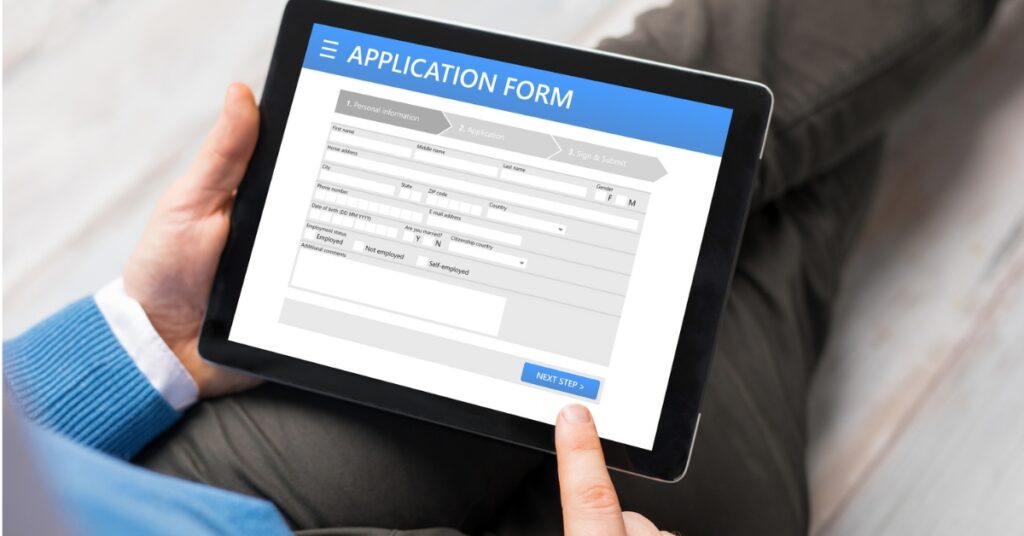
Soon, British passport holders taking short trips to most European countries will need travel authorisation before departure. The upcoming European Travel Information and Authorisation System (ETIAS) applies to visa-exempt travellers, including UK nationals.
This guide explains every field that might appear on the application form, what to prepare before applying and the mistakes British travellers most often make.
To apply, you need a valid travel document and a payment card. Gathering the required information beforehand will make the process quicker.
Apply through the official ETIAS website or mobile app. Most applications are expected to be processed within minutes.
Accuracy is essential. Your authorisation is linked to your passport number, so any mismatch with your travel document can result in refusal of boarding and entry.
No action is needed yet. ETIAS is not operating; no applications are being accepted, and the EU will announce the launch date months in advance. Right now, the Entry/Exit System (EES) is already recording border crossings.
1. Before You Start: What British Travellers Need to Hand
Have a valid British passport and a payment card ready before starting the application process. Gathering your details in advance will help you finish the form more quickly.
For most applicants from the United Kingdom, the required travel document is a standard British passport. Driving licences and other photo IDs are not accepted.
Your passport must be valid for at least three months after your planned departure and have been issued no more than 10 years before your travel date.
Check your passport’s issue date before applying. If it will be more than 10 years old on your travel date, renew it first.
The application fee is EUR 20, payable by credit card or debit card. Payment details are handled by the bank or financial intermediary and are not stored by the ETIAS central system after the transaction.
Copy your passport details directly from your passport, and double-check your phone number and email address before submitting.
Saved applications remain available for 48 hours before being deleted automatically.
Review your application carefully and download a copy before submitting.
Which British Nationals Need ETIAS
The requirement applies to UK nationals visiting for up to 90 days in any 180-day period. It also covers British overseas citizens, British protected persons and British subjects.
Withdrawal Agreement beneficiaries are exempt. UK nationals living in an EU host country under the agreement, and their family members, may travel to other European countries that require ETIAS if they hold proof of their status.
You are also exempt if you hold a residence permit or residence card issued by one of those countries. In that case, no ETIAS travel authorisation is required.
Stays longer than 90 days are subject to different entry requirements, usually a visa or residence permit. An ETIAS authorisation does not cover longer stays.
2. Your Personal Information
The form asks for your passport details, home address, email address and phone number. Copy your passport details exactly, as mismatches can cause problems at the border.
You will be asked for:
- Your full name(s) and surname
- Your date and place of birth
- Your sex
- Your nationalities
- Your home address
- Your email address and phone number(s)
Enter your name exactly as it appears in your passport, including any middle names.
List all your nationalities. If you also hold a passport from an EU country that requires ETIAS, or from Ireland, you do not need authorisation when travelling on that passport.
Dual nationals of countries such as Australia or Canada still need authorisation, which is linked to the passport used for the application.
The form accepts only the Latin alphabet. This mainly affects applicants whose names use another script.
Each traveller must submit a separate application. Authorisations cannot be shared.
Why the Email Address Matters More Than You Think
Your email address is the official contact for your authorisation. You will receive your application confirmation, ETIAS application number, decision, any request for additional information, notices of revocation or annulment, and expiry reminders by email.
If you do not receive a message, check your junk folder. Official emails are sometimes filtered.
Losing access to your inbox does not invalidate your authorisation, but you will no longer receive updates. The official advice is to submit a new application using an email address you can access.
Each adult should use their own email address rather than sharing one.
Your Parents’ First Names
The form asks only for the first name(s) of both your parents. This helps confirm your identity if someone has a similar name and date of birth.
If you are unsure of a parent’s first name or if it differs from official records, confirm it before starting the form rather than guessing.

3. Your Travel Document Details
Enter the details of the passport you will travel with. Your authorisation is linked to that document, so using a different passport will invalidate it.
The form asks for:
- The document number
- The issuing country
- The date of issue
- The date of expiry
Your passport number links your ETA for Europe to the system used by airline staff and border guards.
Enter the number carefully. A common mistake is confusing the number 0 with the letter O.
If your travel document details do not match your authorisation, you can be refused boarding and entry at border control.
British passports issued since 2006 are biometric and meet the standards set by the European Commission. Older non-compliant passports may be rejected during the application.
You can apply with a passport valid for less than three months after submission, but you will usually be refused entry unless exceptional humanitarian grounds apply.
The three-month and 10-year passport rules do not apply to eligible family members of EU citizens or non-EU nationals with free movement rights in the European Union.
What Happens if Your Passport Changes
A new passport always requires a new ETIAS authorisation, whether it is renewed, replaced after loss or damage, or updated following a change of name, gender or nationality.
You cannot transfer an existing authorisation to a new passport. You must submit a new application and pay the fee again unless exempt.
If your passport is lost or stolen while in a Schengen country that requires ETIAS, report it to the police. Your authorisation will then be cancelled automatically.
Next, obtain a replacement passport or emergency travel document from your country’s consulate and apply for a new authorisation. The cancelled authorisation cannot be used.
Your passport’s expiry date also determines the validity period of your ETIAS. It lasts for three years or until your passport expires, whichever comes first.
For example, if your passport expires in two years, your authorisation will also expire in two years. Renewing your passport before applying can give you full three-year validity and help you avoid paying the fee twice.
4. Education and Occupation
The form asks for your highest level of education and current occupation. Both are selected from a list, not entered as free text.
For education, choose your highest qualification level. You do not need to provide your institution or grades.
For occupation, select the category that best matches your current work. You do not need to enter your employer or job title.
These fields support the application’s risk assessment, not an evaluation of your qualifications.
Retirees should select “retired.” Students should choose “student,” even if they work part time.
If you are self-employed, choose the category that matches your work. If you are unemployed, select that option.
Where more than one category fits, choose the one that best reflects how you spend most of your working week.
Answer truthfully. Doubts about the accuracy of your information can lead to refusal, and there is no advantage in claiming a different occupation. Applicants from visa-exempt countries are not assessed against a preferred profession.
You also confirm that you understand the entry conditions for the European Union (EU) countries you plan to visit and may be asked to present supporting documents at the external border.
These fields take only a minute to complete if you answer them honestly.

5. Details About Your Intended Trip
The form asks for the first country you plan to visit and your intended address there. You do not need confirmed bookings. For example, listing Spain means the Spanish authorities will process your application.
Your destination can be a hotel, hostel, holiday rental or private address.
After approval, you may travel to any of the 30 European countries requiring ETIAS, regardless of what you entered on the form.
For example, you can apply to Italy as your first destination and later travel to Malta instead. Your itinerary is not checked against your application at the border.
If your plans are not final, enter your best estimate. The form records your intended trip, not a binding itinerary.
Your authorisation covers short-term stays only. It is not a residence permit or a Schengen visa, and it does not permit long-term work or study.
Business meetings and conferences are allowed, but taking up employment requires the appropriate visa. Likewise, courses over 90 days require a student visa.
The 90/180-Day Rule and the Cyprus Exception
Your authorisation allows stays of up to 90 days in any 180-day period across the Schengen Area.
Cyprus has its own limit. Time spent there does not count towards your Schengen allowance, and Schengen days do not reduce your Cyprus allowance.
For example, after spending 30 days in Malta and Greece, you can stay in Cyprus for up to 90 days. You would still have 60 Schengen days remaining.
Your authorisation must remain valid throughout your stay, and you may enter and leave multiple times while it is valid.
The EES now records entries and exits electronically, replacing passport stamps. You can check your remaining days through the EES online tool or at some external border crossing points before booking your return journey.
6. The Security and Background Questions
The form ends with three questions about criminal convictions, travel to conflict zones and orders to leave a country. Answer honestly, as false statements can lead to refusal, revocation or annulment.
The first asks about past criminal convictions. If you answer yes, you must provide further details.
The second asks whether you have travelled to a war or conflict zone.
The third asks whether you have been ordered to leave any country, including France, the Netherlands or Norway.
You must also declare that your information is accurate and confirm that you understand the entry conditions and that you may be asked for supporting documents at the external border.
An application may be refused if:
- You use a travel document that is reported lost, stolen, misappropriated or invalidated.
- You are considered a security risk, an illegal immigrant or a public health risk.
- You fail to provide the requested information, documents or attend an interview within the deadline.
- You have a previous refusal of entry and stay recorded in the relevant information system.
- There are reasonable doubts about the accuracy of your information or documents.
A yes answer does not automatically mean refusal. Declaring a conviction or conflict-zone travel may lead to additional checks, requests for information or an interview. Many applicants still receive authorisation.
Problems usually arise when your declaration does not match official records. An undeclared conviction or trip is more likely to result in refusal than one disclosed honestly.
If your application is refused, you will receive the reasons and instructions for appealing. Appeals are handled by the authorities of the country that refused your application under its national procedures.
A refusal does not permanently bar you from applying again.
If your circumstances may require additional checks, apply well in advance. Requests for extra information can add up to 14 days, while interviews can extend processing by up to 30 days.
Read each question carefully and answer with clear, factual information.

7. Family Member Status
Declaring family member status waives the fee and exempts your application from certain screening rules. However, the eligibility criteria are narrower than many British applicants expect, and an incorrect declaration can put your authorisation at risk.
Eligible family members include a spouse, including a same-sex spouse, a registered partner where recognised as equivalent to marriage, direct descendants under 21 or who are dependent, and dependent parents or grandparents.
If you declare this status, you must provide your relative’s details and explain your relationship to them.
To qualify, all three conditions must apply:
- Directive 2004/38/EC applies to you, or you are the family member of an Icelandic, Liechtenstein, Norwegian or Swiss national with equivalent free movement rights.
- You do not need a visa.
- You do not hold a residence card under Directive 2004/38/EC or a residence permit under Regulation (EC) No 1030/2002.
The key requirement is that your relative has exercised free movement rights by living in a country other than their own.
For example, visiting your French spouse in France does not qualify, so you pay the fee. Visiting the same spouse after they have moved to Spain may qualify, allowing you to claim family member status.
You must be able to prove the relationship at the border. If you cannot, you may be refused entry and your authorisation may be revoked. False declarations can also lead to revocation and refusal at the border.
An authorisation issued with family member status is valid only for travel to the country where your relative has exercised their free movement rights. It cannot be used for trips to other ETIAS countries under the same exemption.
If you also plan to visit other ETIAS countries, you must submit a separate application without claiming family member status and pay the fee.
Before completing this section, confirm where your relative lives. Their country of residence—not their nationality—determines whether you qualify.
8. What Someone Applying on Your Behalf Must Provide
Someone else can complete and submit your application, but they must also provide their own details. Both of you must also sign a declaration of representation and keep a copy.
The representative may be a friend, a family member or a commercial intermediary, such as a travel agency. They use the official ETIAS website or mobile app.
They must provide:
- Their surname and first name(s)
- Their organisation’s name and contact details, if applicable
- Their relationship to you
- Confirmation that both parties have signed the declaration of representation
The declaration authorises them to submit the application on your behalf, or on behalf of a minor or someone under legal guardianship. Each traveller needs a separate declaration, including every child in a family.
Both you and the representative should keep a signed copy. Use your own email address on the application so you receive all updates about your authorisation directly.
Ask to review the completed application before submission. You remain responsible for the accuracy of all information, even if someone else submits it.
The representative is authorised to process your personal data in accordance with the relevant legal rules. If you are unsure about the arrangement, seek legal advice before signing.
Applying directly costs EUR 20. Commercial intermediaries may charge a reasonable additional service fee.
Choose a representative you trust, as they will handle your personal information. Excessive fees or fraudulent intermediaries can be reported anonymously.
Applications for Under-18s
Applications for minors must be submitted by a parent or legal guardian. Children cannot apply themselves.
Each child must have their own application linked to their own travel document. Family or group applications are not available.
Applicants under 18 and over 70 are exempt from the fee.
If a child receives authorisation before turning 18, it remains valid until its expiry date.

9. Where Your Information Goes and Who Can See It
Your application is stored in the ETIAS central system and is accessible only to authorised officials whose roles require it.
Applications are handled by the national authorities of the countries requiring ETIAS, together with eu-LISA, Frontex and Europol, working with EU Member States.
eu-LISA manages the ETIAS IT system and official website. Frontex supports border management, while Europol helps check applications against security records. These organisations use role-based access controls and security measures to protect your information from unauthorised access.
Your payment details are handled separately by the bank or financial intermediary processing the transaction. The ETIAS central system does not store your card information after payment.
The official ETIAS website is the only European Union site where you can apply directly in accordance with EU data protection standards. Other websites offering ETIAS applications are intermediaries. They submit applications through the official website and usually charge an additional fee.
Using an intermediary is legal, but your passport details and other personal information pass through that company’s systems before reaching the EU. Before using an intermediary, check the services provided, any fees above the application charge, and how your personal data will be protected.
Be cautious with search results. Websites that appear official or use EU-style branding are not necessarily operated by the European Union.
The official advice is simple: be careful who you share your personal data and payment details with.
Applying through the official ETIAS website sends your information directly to the EU. Using an intermediary means trusting an additional organisation with your data and paying extra for the service.
10. Fixing Mistakes and Filling Gaps
Review your application carefully before submitting. Correcting mistakes afterwards is often slower than submitting a new application.
Before you apply, review and download a copy. Double-check your passport number, name and date of birth against your passport. Errors can lead to the refusal, revocation, or annulment of your authorisation, or to refusal of entry at the border.
For significant mistakes, such as an incorrect email address, nationality, passport number or name, submit a new application with the corrected information.
Minor typos may be corrected on request, but this can take up to 30 days. In most cases, a new application is faster than requesting a correction.
If you need help while completing the form, use the support request form within the application.
The main processing timelines are:
| Stage | Time |
| Standard processing | Usually within minutes |
| Longer processing | Decision within four days |
| Additional information or documents requested | Up to 14 extra days |
| Deadline to provide requested information | 10 days |
| Interview required | Up to 30 extra days |
| Decision after interview | Within 48 hours |
Interviews take place online or at the consulate nearest your place of residence.
Apply well before you travel in case additional checks delay your application. The fee is non-refundable, even if your application is refused.
You will receive an email before your authorisation expires and can apply for a new one up to 120 days before expiry.
Set your own reminder as well, since expiry emails can end up in your junk folder.

Get Your ETIAS Details Right the First Time
The ETIAS form is straightforward. You will provide your identity details, parents’ first names, travel document, education and occupation, first destination and address, and three security declarations, plus family member or third-party details if relevant.
Before submitting, double-check your passport number and email address, as both are essential to your application. Applying before booking travel also gives you time if processing takes longer than expected.
There is no need to apply yet. ETIAS is not operating, and the EU will announce the launch date several months in advance.
In the meantime, check the issue date of your passport. When applications open, use only the official ETIAS website or official ETIAS mobile app.