
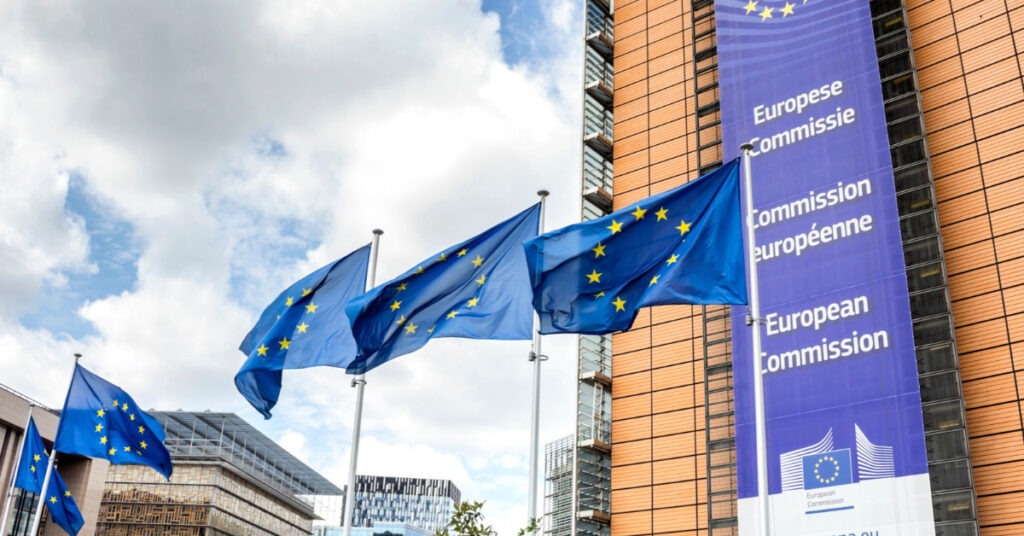
The European Commission has named 15 member states at risk of migratory pressure and found four more already under it. The findings come from its second Annual Migration Management Cycle, launched on 6 November 2026.
The assessment maps EU migratory pressure across the bloc and will shape how the new solidarity system works in 2027. European Commissioner Magnus Brunner presented the accompanying asylum and migration report in Brussels the same day.
Fifteen on the watchlist
Belgium, Czechia, Germany, Estonia, Ireland, France, Croatia, Latvia, Lithuania, Luxembourg, the Netherlands, Poland, Romania, Slovenia and Finland are all at risk of migratory pressure. The list stretches well beyond the Mediterranean, from Ireland in the west to Finland in the north.
According to the Commission, the risk can come from relatively high numbers of illegal arrivals, unauthorised secondary movements, asylum applications or beneficiaries of temporary protection. It can also come from a risk of migrants being instrumentalised, if that could create disproportionate obligations in the coming year.
The 15 states get priority access to the Permanent EU Migration Support Toolbox. Brussels will monitor their situation and re-evaluate it if necessary.
Frontline four
Greece, Spain and Cyprus are under migratory pressure because of a disproportionate level of arrivals over the past year. Italy joins them because of a disproportionate number of arrivals following search-and-rescue operations at sea.
Greece and Cyprus are near major migration routes, while Spain faces extra strain along its own external borders. All four can draw on the Solidarity Pool, as long as the responsibility rules continue to apply.

Five years of strain
A third group carries a longer burden. Bulgaria, Czechia, Estonia, Croatia, Austria and Poland face what the Commission terms a “significant migratory situation”, caused by cumulative pressures over the last five years.
The causes include sustained high numbers of temporary protection beneficiaries, applications for international protection, strains on the return system and duties to protect the external borders. These six states can ask for a full or partial deduction from their Solidarity Pool contributions for the coming year.
Czechia, Estonia, Croatia and Poland appear on this list and on the at-risk list. In total, 21 member states now fall into at least one of the three categories.
Fewer crossings, uneven load
The EU-wide numbers point the other way. According to the Commission, illegal border crossings fell by more than one third in the first half of 2026, after dropping by more than 50% over the previous two years.
Secondary movements and asylum applications have also decreased significantly, while returns continue to rise. The Commission credits new migration rules, assertive migration diplomacy and what it describes as “the world’s most advanced border management system”.
Falling totals do not lift the load evenly. Arrivals, accommodation availability and the speed of asylum decisions still vary from country to country, so administrative and financial burdens can persist within individual states.
Pool without numbers
The Commission has also proposed a second Solidarity Pool, this time for 2027. In line with the Pact’s rules, the proposal has not been made public.
The Council must now agree on the pool’s size and each member state’s contribution. Governments can relocate asylum applicants, offer “responsibility offsets”, provide financial support, take alternative measures, or combine these options.
Once the Council adopts its decision, every contribution becomes public and legally binding. The system does not require each country to take the same number of people.
It also moves away from the emergency measures of earlier years, which often hinged on difficult negotiations between national governments. According to the Commission, implementation of the first Solidarity Pool is progressing.
Pact’s loose ends
The Pact on Migration and Asylum entered into application on 12 June 2026 and now fully applies. The annual report includes the fourth assessment of implementation progress.
The Commission reports that the new Eurodac system is running in all member states. Most governments screen all irregular migrants and have started the border procedure, which processes applicants at the border.
Member states report enough reception capacity and are working to cut asylum backlogs and speed up returns. Gaps remain over responsibility rules and transfers of asylum applicants between member states.
The Commission plans to raise any shortcomings with the High-Level Solidarity Forum and, if they persist, with the Council. It says it will keep supporting member states alongside EU agencies.
The European Union Agency for Fundamental Rights has found gaps in the monitoring systems meant to protect fundamental rights during screening and border procedures. Failures in efficiency or legal protection could lead to court challenges, political disputes, and difficulties transferring applicants between countries.

Rulebook behind the ranking
The yearly assessment is required by the Asylum and Migration Management Regulation. The Commission must review the migratory situation in the EU and in every member state, using information from national governments, Eurostat, EU agencies and the European External Action Service.
That evidence underpins each country’s classification and the Solidarity Pool proposal. The second cycle builds on the first year’s results.
Governments remain split on the wider approach. One side wants tougher external border controls and more returns to curb unauthorised movement within the Union, while the other stresses shared responsibility and help for states facing disproportionate arrivals.
Council’s move
The 2027 burden-sharing plan now rests with the Council. Its decision will set the size of the pool and each government’s share, and those commitments will then be published and become binding.
Bulgaria, Czechia, Estonia, Croatia, Austria and Poland may request deductions. Large deductions could reduce the support available to Greece, Spain, Cyprus and Italy.
The 15 at-risk states will be monitored and possibly re-evaluated. Unresolved problems with the responsibility rules and transfers could go to the High-Level Solidarity Forum or the Council, and the monitoring gaps found by the Agency for Fundamental Rights are still open.