
Eurostar to Europe: Routes, Tickets and the New Border Checks Explained
Jul 31, 2026
Category: EU European Travel Resources
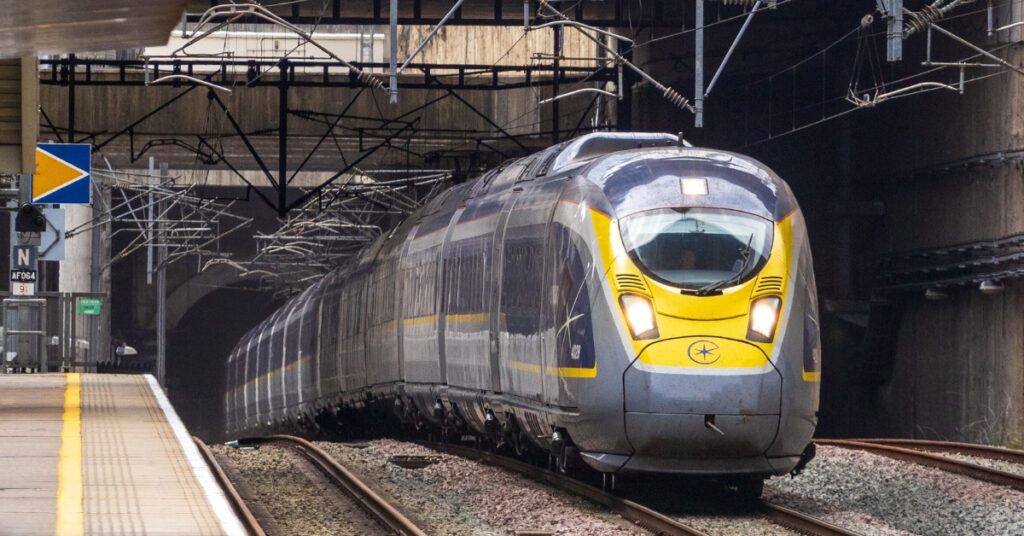
London St Pancras to central Paris takes just over two hours by Eurostar, with no airport transfers. You arrive in the heart of the city.
That convenience now comes with more formalities. Brexit ended free movement for UK passport holders, and the EU’s Entry/Exit System has replaced passport stamps with a digital record of each crossing using a facial image and fingerprints.
ETIAS travel authorisation is still to come. The old advice to arrive 45 minutes before departure and board quickly no longer applies at St Pancras International Station, especially at busy times.
This guide explains what has changed, covering Eurostar routes, fares, and booking; passport and entry rules; check-in and border control; the onboard experience; and how rail compares with flying.
It is written for UK passport holders travelling to France, Belgium or the Netherlands, and for anyone using Eurostar as the first stage of a longer European journey.
Eurostar and How it Works
Eurostar is a high-speed rail operator linking London with mainland Europe through the Channel Tunnel. Trains leave from London St Pancras International and arrive in the centres of major European cities.
Majority-owned by France’s state railway, SNCF, Eurostar carried more than 19.5 million passengers in its latest full reporting year. St Pancras is its only London terminal.
In 2023, Eurostar merged with Thalys, bringing high-speed services in France, Belgium, Germany and the Netherlands under one brand. The merger means:
- One booking platform across the network
- One loyalty scheme, Club Eurostar, for earning and spending points
- Simpler connections under a single operator
Eurostar, Eurotunnel Le Shuttle and the Channel Tunnel — known informally as the Chunnel — are often confused, but they are different:
| What it is | What it carries | Where you board | Operator |
| Eurostar | High-speed passenger rail | Foot passengers | London St Pancras International |
| Eurotunnel Le Shuttle | Vehicle shuttle train | Cars, coaches, motorbikes and passengers | Folkestone terminal, Kent |
| Channel Tunnel | The tunnel itself | Neither | Not applicable |
The undersea section takes about 35 minutes. Your phone signal disappears, but otherwise the journey feels much like any other train ride.
Where You Can Go: Eurostar Routes and Destinations
Eurostar runs direct services from London to France, Belgium and the Netherlands, plus seasonal trains to the French Alps and southern France. With one change, you can continue across Germany, Switzerland and much of France.
Direct routes from London St Pancras
Eurostar serves five cities directly: Paris Gare du Nord, Brussels-Midi/Zuid, Lille Europe, Rotterdam Centraal and Amsterdam Centraal.
The Amsterdam route has returned to full service after works at Amsterdam Centraal, with up to five daily departures.
From 14 December, Eurostar will also run four daily services to Antwerp. The journey takes about 2 hours 41 minutes, compared with around 3 hours 15 minutes via Brussels, although no direct return service is planned.
Seasonal services
Eurostar also operates:
- The Eurostar Snow train to the French Alps during the ski season
- A summer service to Avignon, Aix-en-Provence and Marseille
These services have limited dates and often sell out months in advance.
Connecting onwards
Many destinations require just one change. You can book the entire journey through Eurostar or arrange the onward leg separately.
| Destination | Change at | Onward operator |
| Cologne, Düsseldorf, Dortmund | Brussels-Midi/Zuid | Eurostar network, Deutsche Bahn |
| Bruges, Ghent, Antwerp | Brussels-Midi/Zuid | SNCB |
| Zurich, Geneva, Basel | Paris | TGV Lyria |
| Lyon, Bordeaux, Marseille | Paris | TGV |
| Disneyland Paris (Marne-la-Vallée–Chessy) | Lille Europe or Paris | TGV, or RER A from central Paris |
Belgium is the easiest add-on. Bruges and Ghent are both under an hour from Brussels-Midi/Zuid on frequent domestic trains run by SNCB, the Belgian national operator, and tickets can be bought on the day without a reservation. Cologne is roughly two hours from Brussels on the Eurostar network or on Deutsche Bahn’s ICE services, making a London–Cologne day of travel entirely realistic.
For Switzerland, Zurich is reached with a single change in Paris onto TGV Lyria, though the transfer is between stations rather than platforms.
Disneyland Paris no longer has a direct Eurostar from London; that service was withdrawn permanently in 2023. Families now either change at Lille Europe onto a TGV to Marne-la-Vallée–Chessy, which avoids crossing Paris altogether, or travel to Gare du Nord and take the RER A eastwards, which takes about 45 minutes.
Changing in Paris takes more planning. Eurostar arrives at Gare du Nord, while most TGV trains leave from Gare de Lyon or Gare Montparnasse, so allow at least 90 minutes for the transfer. At Brussels-Midi/Zuid, onward trains for Bruges, Ghent and Cologne depart from the same station, so 45–60 minutes is sufficient.
What’s coming
Eurostar plans to launch direct services to Frankfurt and Geneva in the early 2030s, with journey times of about five hours and five hours 20 minutes respectively.
The routes depend on a new fleet of up to 50 trains costing around €2 billion. Eurostar has not yet confirmed whether they will include intermediate stops.

Journey Times, Fares and How to Book Well
London to Paris takes just over two hours, while Amsterdam is the longest direct route at about four hours. Ticket prices depend more on when you book than where you travel.
| Route | Fastest direct journey |
| London–Lille Europe | About 1 hour 30 minutes |
| London–Brussels-Midi/Zuid | From about 1 hour 50 minutes |
| London–Paris Gare du Nord | From about 2 hours 16 minutes |
| London–Rotterdam Centraal | About 3 hours 13 minutes |
| London–Amsterdam Centraal | About 4 hours |
Eurostar offers three ticket types:
- Eurostar Standard: Two large bags and one hand item; no food included; cheapest fares have the strictest change rules.
- Eurostar Plus: An extra bag, a light meal and drink served at your seat, and more spacious seating.
- Eurostar Premier: A meal with wine, lounge access, and flexible exchange and refund options.
Fares rise with demand rather than staying fixed. Tickets usually go on sale about six months in advance, with the lowest prices selling out first.
Midweek and off-peak departures are often much cheaper than Friday evenings, Sunday afternoons and school holiday periods. Changing your travel day by one day can save more than booking a month earlier.
Cheapest fares are usually non-refundable and costly to change. If your plans are uncertain, a more flexible ticket can offer better value.
Book directly with Eurostar or through resellers such as Trainline. Prices are generally similar, but booking direct earns Club Eurostar points, and booking connecting journeys on one ticket means you will be rebooked free if your first train is delayed.
Passports, Entry Requirements and the New Border Systems
UK travellers need a passport that meets two validity rules and must stay within the Schengen Area’s 90-day limit. Border records are now digital rather than stamped in your passport.
Passport rules for UK travellers
Your passport must:
- Have been issued within the previous 10 years on the day you enter the Schengen Area
- Be valid for at least three months after the day you leave
Older passports renewed before September 2018 may fail the 10-year rule, even if their expiry dates appear valid.
The 90/180-day limit
You can stay in the Schengen Area visa-free for up to 90 days in any rolling 180-day period. The limit applies across all Schengen countries combined, not to each country separately.
Biometric registration under the EES
The EU’s Entry/Exit System (EES) replaced passport stamping. Fully operational since 10 April 2026 across 29 European countries, it records:
- Full name, date of birth, nationality
- Date and place of every entry and exit
- Facial image and fingerprints
- Any refusal of entry
Your first post-EES crossing takes longer because your biometrics are collected. Later crossings use your existing record.
You can check your remaining Schengen days using the EES calculator at travel-europe.europa.eu.
What ETIAS will mean
The European Travel Information and Authorisation System (ETIAS) is an online travel authorisation costing €20. It will be linked to your passport and remain valid for up to three years, or until your passport expires.
ETIAS is not yet in operation. The EU will announce its launch several months in advance. Avoid websites claiming to process ETIAS applications now.
Non-UK passport holders
If you travel on a non-UK passport, entry requirements depend on your nationality. Some travellers still need a Schengen visa.
The following travellers are exempt from EES registration:
- Holders of residence permits or long-stay visas issued by an EES country
- Non-EU nationals with a residence card as a family member of an EU citizen
- Nationals of Andorra, Monaco and San Marino, and holders of Vatican City State passports
Check the rules for your nationality and immigration status before booking.

Check-In, Security and Border Control at St Pancras
At St Pancras, you complete ticket checks, security and French border control before boarding, so you arrive with no further checks. Allow around an hour on quiet weekdays and at least 90 minutes during peak periods. Eurostar will not hold trains for late passengers.
| Order | Checkpoint | What happens |
| 1 | Ticket gates | Scan your ticket or phone to enter the check-in area |
| 2 | Security screening | Bags are scanned and you pass through a detector. There is no airport-style liquid limit, but prohibited items still apply. |
| 3 | French border control | Officers check your passport and complete EES registration. |
| 4 | Departure lounge | Wait for your platform, then board the train. |
French officers carry out border checks under the 2003 Le Touquet Treaty, so you clear French immigration before leaving London.
Eurostar has installed 49 self-service EES kiosks to capture fingerprints and a facial image, although some registrations are still completed manually. You may also be asked to show:
- A return or onward ticket
- Proof of sufficient funds
- Your accommodation details
- Medical insurance for your trip
Priority lanes are available for:
- Priority lanes are available for:
- Carte Blanche holders
- Étoile Club Eurostar members
SmartCheck, Eurostar’s app-based facial recognition check-in, closed on 13 February 2025, and its dedicated lane is now used for priority boarding.
On Board: What the Journey Is Actually Like
Once aboard, you stow your luggage and stay in your seat until arrival. The journey feels more like a long-distance train than a flight, with fewer restrictions and more space.
All luggage stays with you, either in the overhead racks or larger storage areas at the end of each coach. Bags can be up to 85 cm long.
Seats are available in airline-style rows or groups of four around a table, which are ideal for working or eating.
A café bar serves hot drinks, snacks, sandwiches and alcohol, although you are welcome to bring your own food and drink.
Free Wi-Fi is suitable for messaging but not streaming. Wi-Fi and mobile signals drop in the Channel Tunnel, and many UK mobile providers have reintroduced EU roaming charges, so check your plan before travelling.
| Item | How it travels |
| Folding bike | Bagged and carried as standard luggage |
| Full-size bike | Booked in advance as registered luggage for an extra fee |
| Pushchair | Fold and store in the luggage rack |
| Pets | Not permitted, except registered assistance dogs |
| Registered assistance dogs | Travel free when booked in advance |
Before you travel:
- Children under 4 travel free on an adult’s lap; child fares apply from ages 4–11.
- Book assistance with Eurostar in advance if required.
- Reserve seats together when booking, as busy services often fill up.
Paris, Brussels and Amsterdam are one hour ahead of London. Arrival times on your ticket are shown in local time.

Arriving and Getting Around at the Other End
You arrive in the city centre with no further border checks. Every Eurostar station connects directly to local public transport.
Paris Gare du Nord is the busiest station. Métro lines 4 and 5 and RER lines B and D are below the concourse. Be alert for pickpockets, especially near the entrances.
Brussels-Midi/Zuid is about 2 km from the city centre and is best reached by Metro lines 2 and 6, as well as trams and buses.
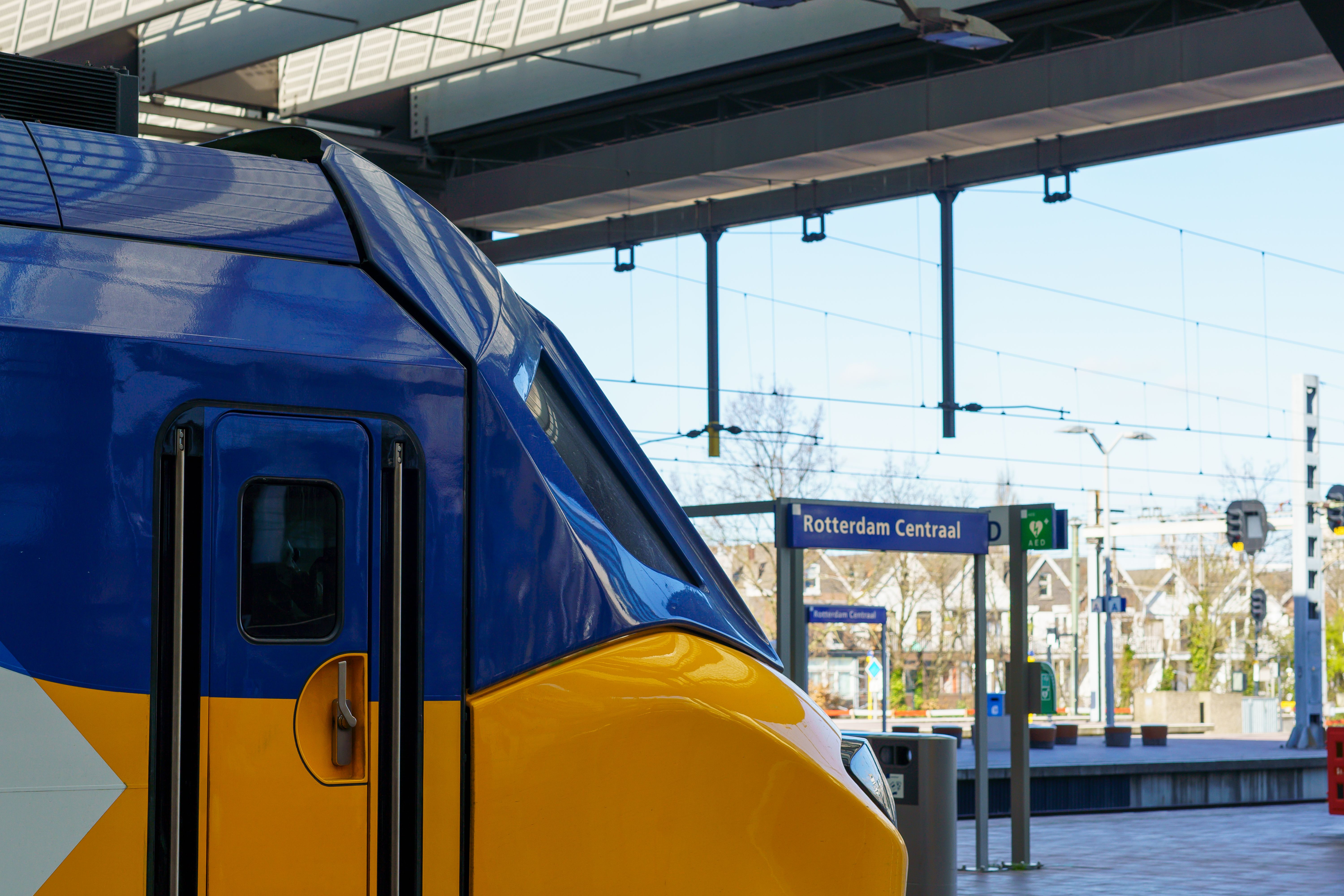
Amsterdam Centraal and Rotterdam Centraal both connect directly to trams and the metro. Dutch services also stop at Schiphol Airport, making rail-to-flight connections straightforward.
| Arrival station | Transport | How to pay |
| Paris Gare du Nord | Métro lines 4 and 5, RER B and D | Navigo Easy card or the Île-de-France Mobilités app |
| Brussels-Midi/Zuid | Metro lines 2 and 6, trams, buses | Contactless bank card or a MOBIB Basic card |
| Amsterdam Centraal | Trams, metro, ferries | Contactless bank card via OVpay |
| Rotterdam Centraal | Metro, trams, buses | Contactless bank card via OVpay |
To save time:
- In the Netherlands, always tap in and out to avoid the maximum fare.
- In Belgium, contactless payment is usually sufficient unless you plan several journeys in a day.
- In Paris, buy and load a Navigo Easy card, as contactless bank cards are not widely accepted on public transport.
- Use official taxi ranks rather than unsolicited drivers.
Left-luggage lockers are available at all four stations, although they can fill up in summer. Gare du Nord also operates a separate security check for stored bags.
The Return Journey and What Differs Coming Home
The return trip is different. Before boarding, you clear both EU exit checks and UK border control at your departure station.
Arrive earlier than you would at St Pancras, especially during busy periods.
| Departure station | Recommended arrival time |
| Paris Gare du Nord | 90 minutes; up to 2 hours at peak |
| Brussels-Midi/Zuid | 75–90 minutes |
| Amsterdam Centraal | 90 minutes |
| Rotterdam Centraal | 75–90 minutes |
Amsterdam Centraal has a dedicated Eurostar terminal on Platform 15 with a separate entrance. Arrival cut-off times are strictly enforced.
Your EES exit record closes your trip and updates your remaining Schengen allowance. If it shows an overstay or incorrect travel dates, you may be asked to provide evidence.
Useful documents include:
- Boarding passes, tickets and hotel bookings from earlier trips
- Older passports with pre-EES entry and exit stamps
- A screenshot of your remaining Schengen allowance from the EES online tool
You must also comply with UK customs rules. If you exceed your personal allowances, you must declare the goods and pay duty.
- Alcohol: 42 litres of beer, 18 litres of still wine, and 4 litres of spirits or 9 litres of fortified wine
- Tobacco: 200 cigarettes, 50 cigars or 250 g of tobacco
- Other goods: Up to £390 in value
- Food: Meat, dairy, and most fresh fruit, vegetables and plants cannot be brought into the UK from the EU.
Food restrictions often catch travellers out. Items such as vacuum-packed cheese and charcuterie are prohibited and may be confiscated.

Eurostar Versus Flying, Driving and the Ferry
For Paris and Brussels, Eurostar is usually the fastest door-to-door option, despite shorter flight times. Driving or taking the ferry makes more sense if you need a car or are carrying bulky items.
| London to Paris (centre to centre) | Typical door-to-door time |
| Eurostar | About 4 hours |
| Flying | About 5–6 hours |
| Eurotunnel Le Shuttle (with a car) | About 6–7 hours |
| Ferry via Dover and Calais | About 8–9 hours |
Budget airlines may advertise lower fares, but extra charges for baggage, seat selection and airport transfers often reduce the savings, especially for travellers with luggage.
Eurostar also has a lower environmental impact, operating on electric trains with no direct carbon emissions and aiming to source all electricity from renewables by the end of 2026.
Comfort is another advantage. Standard fares include two large bags, more legroom than economy class, tables, and no seatbelt restrictions.
Reliability varies. Disruption is usually caused by strikes, signalling faults or Channel Tunnel issues, and cancelled services are typically rebooked onto the next available train.
Eurostar is less suitable if you:
- Need to take a car
- Are travelling with a cat or dog
- Are carrying large items such as family ski equipment, sports gear or household belongings
In these cases, Le Shuttle or the ferry is often the better choice. Costs are charged per vehicle rather than per passenger, making them economical for groups travelling together.
Practical Tips Before You Travel
Most Eurostar problems start before departure. A few simple steps when booking can save time and money later.
Book as soon as tickets go on sale, usually about six months ahead, especially for seasonal services. If your dates are flexible, sign up for Eurostar fare alerts.
Buy travel insurance when you book, not just before departure. Early cover protects prepaid costs if you need to cancel.
A GHIC is not travel insurance. It provides access to state healthcare in EU countries but does not cover private treatment, repatriation or trip cancellation.
If your train is delayed, Eurostar offers compensation:
| Delay on arrival | Compensation |
| 60–119 minutes | 25% of the single fare for that leg |
| 120 minutes or more | 50% of the single fare for that leg |
| Cancellation | Refund or the next available service |
Submit claims through Eurostar’s website using your booking reference. Compensation covers your ticket, not missed hotels or onward transport.
Cards are widely accepted in France, Belgium and the Netherlands, but carrying €20–30 in cash is useful for small purchases. If a payment terminal offers to charge you in pounds instead of euros, decline the conversion to avoid poor exchange rates.
Before you leave, check:
- Your passport meets the 10-year issue rule and is valid for at least three months after departure from the Schengen Area.
- You remain within the 90 days in 180-day Schengen limit.
- The name on your ticket exactly matches your passport.
- Your ticket is downloaded to your phone, with a screenshot as a backup.
- You know when to arrive at the station.
Keep your passport and ticket easily accessible, as you will need both several times before boarding.
Check Your Passport, Then Book Your Seat
Eurostar remains the quickest way to travel from London to Paris, Brussels, Lille, Rotterdam and Amsterdam, provided you plan for the new border procedures. Most problems stem from three issues: a passport that fails the 10-year issue-date rule, arriving too late for border checks, or exceeding the Schengen 90-day limit.
For the latest information on the EES and ETIAS, check travel-europe.europa.eu rather than third-party websites. Before booking, confirm your passport meets the entry rules, then reserve early to secure the lowest fares.