
ETIAS for UK Citizens Visiting Family in Europe
May 28, 2026
Category: ETIAS

Since Brexit, British citizens have become visa-exempt third-country nationals for short stays across European countries. And from the last quarter of 2026, most will need an ETIAS travel authorisation to enter.
If you are planning to visit a spouse, parent, child or partner living in the European Union, you may be wondering whether having family there changes the rules at all.
It can. In certain cases, visiting a relative who is an EU, Norwegian, Icelandic, Liechtenstein or Swiss national lets you waive the EUR 20 ETIAS fee under “family member” status.
However, this applies only if you meet strict conditions. Declare that status incorrectly and your authorisation can be revoked, leaving you refused entry at the border.
This guide explains exactly when UK family visitors need ETIAS, how the 90-days-in-any-180-day-period limit works, why Cyprus is counted separately, and how to get the family-member rules right.
One reassuring note first: ETIAS is not yet operational, so no action is required until the European Union confirms the launch date.
What is ETIAS and Why Does it Affect UK Travellers?
The European Travel Information and Authorisation System (ETIAS) is an entry requirement that visa-free travellers, including British citizens, will need for short trips to 30 European countries.
It now affects you because Brexit moved the UK off the list of countries whose nationals can cross those borders without prior authorisation.
ETIAS is not a visa. It is a digital authorization linked to your passport, and it does not replace a residence permit if you already live in one of these countries.
Your authorisation stays valid for up to three years, or until your travel document expires, whichever comes first. Get a new passport, and you apply again.
A valid ETIAS lets you enter as often as you want for short stays, usually up to 90 days in any 180-day period. It does not guarantee entry, since a border guard still checks that you meet the conditions when you arrive.
One detail worth knowing early is Cyprus. Time you spend there is counted separately and does not eat into your 90-day allowance for the other countries.
The application process is built to be fast. Most decisions land within minutes, though the EU asks you to apply well before you book anything.
Why Brexit Changed the Position for British Citizens
Before Brexit, your UK passport gave you free movement and no border authorisation to think about. Now you are a visa-exempt third-country national, which puts you in the same bracket as travellers from the US, Australia and dozens of other countries.
This change reaches further than you might expect. It covers British overseas citizens, British protected persons and British subjects, not just ordinary British citizens.
When British Citizens Need an ETIAS
If you are a British national heading to one of the 30 ETIAS countries for a short stay of up to 90 days in any 180-day period, you must hold a valid ETIAS before you travel.
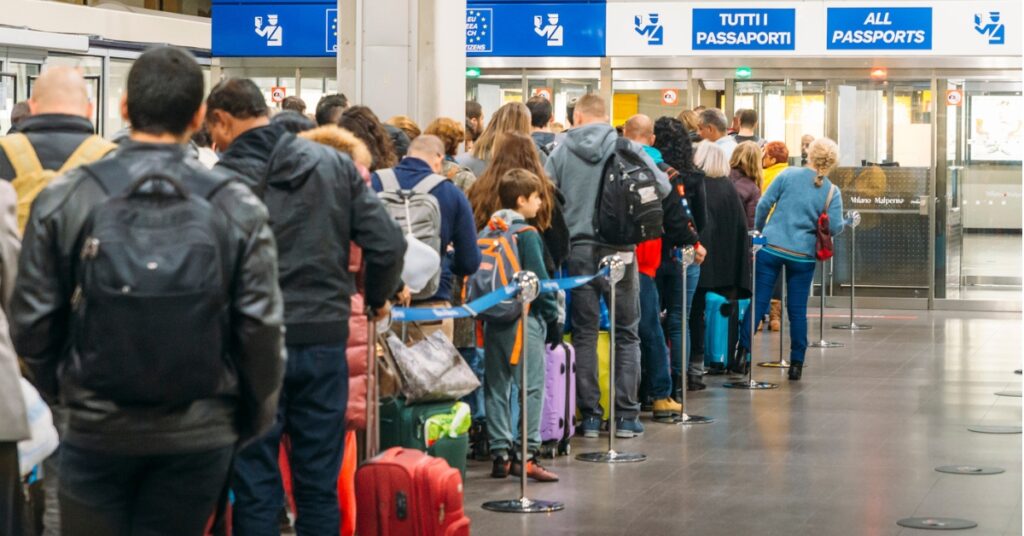
The rule is firm at the border. Turn up without a valid authorisation and you can be refused entry, even with a flight already booked.
This applies whether you are visiting Spain for a week, popping over to France for a weekend, or hopping between several EU countries on one trip. The short-stay limit covers your time across the whole Schengen Area combined, not per country.
ETIAS is built for short visits only. It does not let you live, work long-term or study long-term in these countries.
If you plan to stay longer or work, you need a visa or residence permit instead. Attending a business conference or a meeting is fine on ETIAS, but taking a job is not.
Ireland is not part of the Schengen Area and does not use ETIAS, so trips there follow separate rules and are not affected by this system.
Applying is straightforward once the system launches. You complete a single ETIAS application through the official online application form or the mobile app, then pay the EUR 20 application fee unless you qualify for an exemption.It helps to know that ETIAS is one of two new border systems. The Entry/Exit System (EES) handles your registration at the border itself, while ETIAS is the authorisation you sort out in advance.
The Big Exception: UK Withdrawal Agreement Beneficiaries
If you are a UK national covered by the Withdrawal Agreement, you do not need ETIAS at all. Your family members covered by the same agreement are exempt too, which sets you apart from ordinary British travellers.
This exemption exists because the Withdrawal Agreement protected the rights of UK citizens who were already living in EU member states before the end of the Brexit transition. You keep those rights, including the freedom to travel without applying for a separate authorisation.
So if you settled in Italy, France or any other ETIAS country under that agreement, you are not bound by the ETIAS rules. You can reside in your host country and travel to other countries that require ETIAS without filing an application.
There is one condition you cannot skip. You must carry documents that prove your Withdrawal Agreement status whenever you travel.
Think of the proof as your key document. Without it, a border guard has no way to confirm you fall under the exemption, and your travel plans could stall.
This is not the same as a Schengen visa or any application you submit online. Withdrawal Agreement beneficiaries skip the process that applies to other visa-free visitors, so you will not use the official ETIAS website to register before a trip.
It also has nothing to do with the United States ESTA, which some travellers confuse with ETIAS. The two systems share a similar name and purpose, but neither one connects to your Withdrawal Agreement rights in Europe.
If you are unsure whether you qualify, check the status you were granted when you settled in your host country. The exemption rests on that legal standing, not on how long you have lived there or how often you cross between EU citizens’ home countries like Norway or Switzerland.
When British Citizens Qualify for “Family Member” Status
You qualify for “family member” status when you are related to an EU national, or to a national of Iceland, Liechtenstein, Norway or Switzerland, and you meet a set of strict conditions.
This status changes the ETIAS requirements in your favour, mainly by waiving the fee and sparing your application from certain checks.
The status sits within the wider ETIAS system as a special category. It rewards genuine family ties, not just any connection to someone living in Europe.
The two main perks are worth knowing. You skip the EUR 20 fee, and your application is not screened against the rules on illegal immigration.
Who Counts as a “Family Member”
The definition is specific, and a casual relationship will not pass. The European Commission sets out exactly who qualifies, and your eligibility rests on the type of bond you have.
These relationships count:
- A spouse, including a same-sex spouse, as confirmed by the Court of Justice in its Coman judgment
- A registered partner, where local law treats the partnership like marriage
- Direct descendants under 21 or who depend on you, including those of your spouse or partner
- Dependent direct relatives in the ascending line, such as a parent or grandparent who relies on you
So a partner you are not married to and who is not a registered partner under the relevant law will not meet the test.
The Three Conditions You Must All Meet
Qualifying is not just about the relationship. You must tick all three boxes below, with no exceptions.
The conditions are these:
- You are a family member of an EU citizen covered by Directive 2004/38/EC, or of an Iceland, Liechtenstein, Norway or Switzerland national with equivalent free-movement rights.
- You are not required to hold a visa.
- You do not already hold a residence card under Directive 2004/38/EC or a residence permit under Regulation (EC) No 1030/2002.
Miss any single condition and the status falls away. The relationship alone is never enough.
The Crucial “Other Country” Catch
This is the part most people get wrong. Family member status only applies when your EU, EEA or Swiss relative is travelling to or living in a country that is not their own country of nationality.
Picture it this way. Visiting your French spouse in France does not qualify, because France is their home country.
Visiting your French parent who lives in Spain can qualify, because they are an EU national settled in a different EU country. The catch turns on where your relative is, not just who they are.If you come from one of the visa-exempt countries like the UK or Canada, this rule applies to you the same way it applies to other EU nationals’ relatives. Check reliable FAQs before your trip, and confirm the details well before any expiry date on your documents leaves you short.

How to Apply for ETIAS and What British Citizens Need
You apply online through the official ETIAS website or the official mobile app, and nowhere else. Have your passport and a payment card ready, since the form asks for your travel and personal details in one sitting.
ETIAS works as a visa waiver for short-term stays, so the process is lighter than a full visa. It still asks for accurate information, and small errors can cause problems at the border.
Your passport is the core document. It must be no older than 10 years and valid for more than three months beyond the date you plan to leave the Schengen countries.
That passport-validity rule does not apply if you qualify as a family member of an EU or EEA national. The rest of the form works the same way for everyone.
Here is what the application asks for:
- Your name, date and place of birth, and home address
- Your parents’ first names
- Your passport number and travel document details
- Your education and current occupation
- The first country you intend to visit, such as Germany or the Netherlands
- Security questions about convictions and past travel
You pay the EUR 20 fee with a payment card unless you fall into an exempt group. The fee is the same whether you apply from the United Kingdom or anywhere else.
Applying on Behalf of a Relative
You can apply for someone else if they ask you to. This helps if you are sorting travel for an elderly parent or a child who cannot manage the form alone.
Both you and the traveller sign a declaration of representation, and you keep a copy. You need one declaration for each person, so a family of four means four separate forms.
A few rules shape this:
- Applications for under-18s must be submitted by a parent or legal guardian.
- Each traveller needs their own application linked to their own passport.
- You cannot combine several people into one group or joint application.
So even close family members each get their own ETIAS. The system never bundles travellers together, whether they are visa-exempt or visa-required for other trips.
Use an email address that the traveller can actually access. All updates about the authorisation go to that address, and losing access means missing important notices.
Processing Times, Validity and Compliance
Most ETIAS applications clear within minutes, though some take longer and can stretch to several weeks. Once granted, your authorisation lasts up to three years or until your passport expires, whichever comes first.
Apply well before you book flights or accommodation. A quick decision is likely, but you do not want a delay to derail your trip.
Here is how the timing can play out:
- Most Cases: A decision within minutes
- Some Cases: A decision within four days
- Extra Documents Requested: Up to 14 more days
- Interview: Required up to 30 days
The system is run by eu-LISA, the EU agency that manages these large-scale border databases. A longer wait does not mean a problem, and it often comes down to routine checks against records such as a criminal record flag.
Get a new passport and you apply again, since your ETIAS is tied to that exact document. You can start a renewal up to 120 days before your current authorisation runs out.
Staying compliant means respecting the 90-day limit across the countries that use the system. Time spent in Belgium, Denmark, Greece, Hungary or any other participating country all counts towards the same allowance.
One country breaks from that pattern. If you visit Cyprus, your stay there is counted separately and does not eat into the 90 days you can spend elsewhere.
This matters if you are visiting relatives in more than one place. You could, for example, use your full allowance on the mainland and still have a separate window for a trip to Cyprus.
A valid ETIAS gets you to the border, not past it. Border guards still run border checks at the external borders, and they make the final call on whether you enter.
Carry the same passport you used in your application. The check-in staff and guards match your details against the system, and a mismatch can see you refused boarding or entry.

Common Mistakes That Lead to Refused Entry
The most common mistakes come down to mismatched details, dud email addresses and missed deadlines. Each one can see you refused boarding or turned away at the border, even with a valid authorization in hand.
A small slip on the form carries real weight. Your ETIAS is tied to your passport, so the data has to line up exactly.
The classic error is mixing up the number zero with the letter O when typing your passport number. If the characters do not match your passport details, you will be refused boarding and entry.
Use an email address you personally control. Every update about your authorisation lands there, and losing access means missing notices about checks or cancellations.
Here are the slips that catch people out:
- Typing your passport number wrong, including the zero and O mix-up
- Using an email you cannot access
- Travelling on a different passport from the one in your application
- Ignoring a request for more information until the deadline passes
For substantial changes, reapplying is usually faster than waiting on a correction. You reuse your old details, fix the error, and submit again.
A refusal is not the end of the road. The decision tells you why you were turned down, and it explains how to appeal through the country that refused you.
The appeal goes to the authorities of the country that made the call, whether that is Latvia or anywhere else in the system. You cannot travel while you hold no valid authorisation.
If you need to travel urgently for a funeral, a court date or medical reasons, you can request an authorisation with limited validity. Keep any supporting documents ready, since you may need to back up the reason.
Knowing the refusal grounds helps you avoid them. An application is refused if you use a lost or stolen travel document, pose a security or immigration risk, or skip a requested interview.
This is separate from long-stay travel, which runs on a visa rather than ETIAS. The short-stay rules here apply the same way to visa-exempt travellers, whether they come from the UK, New Zealand or elsewhere.
Get Ready for Your Next Family Trip
For most British travellers visiting relatives in Europe, the path is simple: a short stay means you will need ETIAS.
Withdrawal Agreement beneficiaries are exempt, and if you are visiting an EU, EEA or Swiss relative who lives in a country other than their own, you may qualify for fee-free family-member status, as long as you meet every condition and can prove the relationship at the border.
Whatever your situation, apply early through the official channels only, never declare family-member status unless it genuinely applies, and make sure your passport and ETIAS details match exactly.
ETIAS is not yet live, so keep an eye out for the EU’s official launch announcement before you make firm plans. Bookmark this guide and check the official sources close to your travel date, so you are ready the moment the system goes live.