
All Aboard the Continent: Every Ferry Route from the UK to Europe (and How to Pick One That Floats Your Boat)
Nov 4, 2026
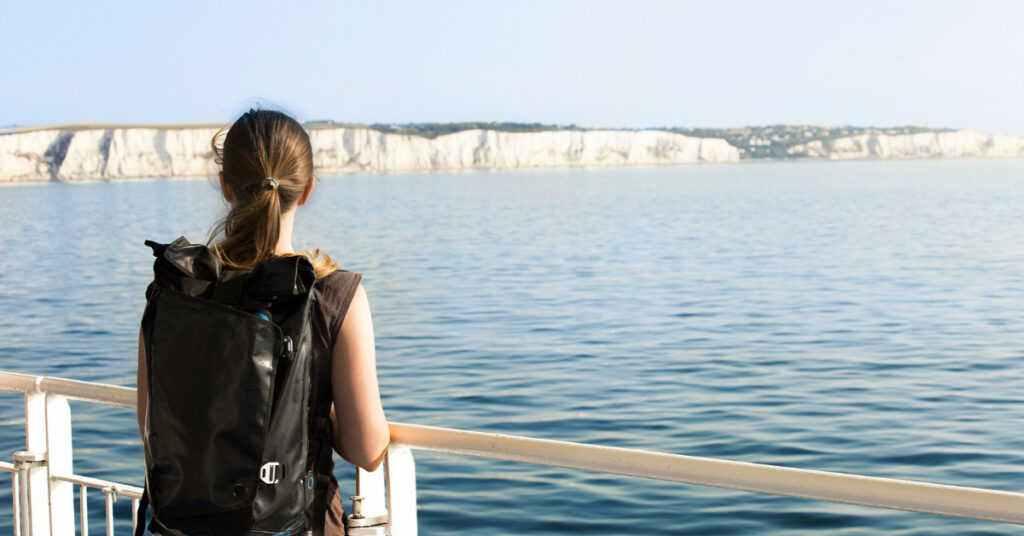
Skip the baggage fees, liquid limits, and scramble at the departure gate. When you take a ferry from the UK to Europe, you pack what fits in the boot and drive your own car off at the other end.
Your holiday starts the moment you roll up at the port. You can stretch your legs on deck, eat a proper meal, or sleep in a cabin while the coastline slips away.
This guide covers every passenger ferry route from England to France, Spain, and the Netherlands. Routes are grouped by departure region, so you can find the nearest crossing, whether you live in Kent, Cornwall, Essex or the North East.
The map has also changed. Brittany Ferries reshaped its network in late 2026, so a route you sailed a few years ago may no longer run.
Crossing the Channel or the North Sea now also involves the EU’s digital border registration, which replaces passport stamps. You’ll find what to expect at the port in the border section below.
Why Take the Ferry to Europe?
The ferry lets you bring your own car, carry all your luggage and relax on the way. It costs less than flying for many families and groups, and it suits trips where the journey is part of the holiday.
Ferry vs Flying vs LeShuttle
You have three main ways to reach mainland Europe from the UK. Each one works best for a different kind of trip.
| Ferry | Flying | LeShuttle | |
| Foot passengers | Yes, on most routes | Yes | No, vehicles only |
| Bring your own car | Yes | No | Yes |
| Luggage | Whatever fits in your vehicle | Airline allowance, often with fees for hold bags | Whatever fits in your vehicle |
| Pets | Allowed, with rules that vary by route | Very limited | Allowed, staying in your vehicle |
| Time on board | About 90 minutes to 30 hours | One to three hours to most of western Europe | About 35 minutes |
| Facilities | Restaurants, shops, lounges, cabins | Seat and trolley service | You stay in your car |
Flying wins on speed for a city break in Rome or Barcelona. The time saved shrinks once you add the trip to the airport, security queues, baggage reclaim, and a hire car at the other end.
The cost picture changes with the number of people. Airlines charge per seat, while a ferry fare for a car covers the vehicle and often several passengers, so a family of four can pay less by sea than by air.
LeShuttle is the fastest way to get your car across the Channel. You stay with your vehicle for the whole journey, which suits drivers in a hurry but offers little chance to stretch out, eat a hot meal, or let the children run off some energy.
The ferry gives you a break from the driving. On longer routes, you can book a cabin, sleep through the crossing and start the next day close to your destination instead of hundreds of miles away.
Who the Ferry Suits Best
The ferry makes the most sense when you need your own transport or more space than an aircraft seat allows. A road trip around France or a fortnight in a Spanish villa works far better with your own car than with a hire car and a strict baggage allowance.
These travellers tend to get the most from a crossing:
- Families with young children, who can move around the ship, use play areas and avoid the stress of airport security with pushchairs and car seats.
- Drivers planning stays of two weeks or longer, who can pack bikes, camping kit or a roof box without extra charges.
- Pet owners, since flying a dog or cat to Europe is expensive and most UK airlines restrict it.
- Travellers avoiding flights, either to cut their carbon footprint or because they find flying stressful.
Foot passengers can benefit too. If you live near a port, you can walk on board with a rucksack and connect to trains on the other side.
The ferry is a weaker choice for short breaks far from the coast. A weekend in Prague or Vienna means too many hours on the road to justify skipping the plane.
Short Channel Crossings from Dover
Dover runs the shortest and most frequent ferry crossings from the UK to mainland Europe, with sailings to Calais and Dunkirk in northern France. You can reach the French coast in about 90 minutes to two hours, which makes Dover the first choice for most drivers heading to France, Belgium, or Germany.
Dover to Calais
Dover to Calais is the UK’s busiest passenger ferry route, with three operators competing. DFDS, Irish Ferries, and P&O Ferries all sail the route, with about 236 weekly departures between them.
The crossing takes around 90 minutes. Ships run through the night, with the first departure shortly after midnight and the last just before midnight, so you can choose a sailing that fits your drive to Kent.
Calais connects straight onto the French motorway network. You can reach the A16 within minutes of leaving, with Paris about three hours away and Brussels closer still.
Competition between operators keeps fares in check. If your preferred time sells out, you can often switch to another company’s sailing.
Dover to Dunkirk
DFDS is the only operator on the Dover-Dunkirk route, and the crossing takes about two hours. Fares are often lower than on Calais sailings, and the terminal tends to be calmer, even in summer.
The ferry port is at Loon-Plage, west of Dunkirk, about 40 minutes by road from the Belgian border. That position saves time if you are driving to Bruges, Ghent, the Netherlands, or western Germany.
The extra half hour at sea shortens the drive once you reach France. For trips heading east, Dunkirk can get you to your destination sooner than Calais.
Getting the Most from Dover
Traffic around the port can be more stressful than the crossing itself. During busy periods, Kent Police and National Highways use the Traffic Access Protocol on the A20, holding port-bound vehicles in a queue lane before they reach the docks.
Plan around the busiest days if you can:
- The first Saturday of the school summer holidays
- Saturday mornings throughout July and August
- The start of Easter and October half-term
- Friday evenings before bank holiday weekends
Each operator sets its own check-in deadline, and missing it means losing your place on the sailing. P&O Ferries closes check-in at these times:
| Traveller type | Check-in closes |
| Car or other vehicle | 60 minutes before departure |
| Foot passenger | 90 minutes before departure |
| Travelling with a pet | 90 minutes before departure |
In peak season, operators advise you to arrive at least two hours before departure. A buffer protects you from M20 motorway delays and port queues.
Your ticket type decides what happens if you miss your sailing. A flexible fare usually lets you board the next available departure at no extra cost, while a standard fare may require a change fee or a new ticket.

Western Channel Routes to Normandy and Brittany
The western Channel routes sail from Newhaven, Portsmouth, and Plymouth to ports in Normandy and Brittany. They take longer than the short Dover crossings but put you much closer to western France, the Loire Valley, and the Atlantic coast.
| Route | Operator | Typical crossing time | Sailing type |
| Newhaven to Dieppe | DFDS | About 4 hours | Day and night |
| Portsmouth to Caen (Ouistreham) | Brittany Ferries | About 7 hours | Day and overnight |
| Portsmouth to Cherbourg | Brittany Ferries | 3 to 5 hours, depending on the ship | Day |
| Portsmouth to St Malo | Brittany Ferries | 9 to 11 hours | Day and overnight |
| Plymouth to Roscoff | Brittany Ferries | About 6 hours by day | Day and overnight |
Newhaven to Dieppe
Newhaven is the nearest western Channel port for drivers in Sussex, Surrey, and south London. You avoid the M20 entirely and reach the docks via the A26 or A27.
Dieppe opens up Normandy without a long coastal drive. Rouen is about an hour away, and Paris is around two and a half hours by road, using a route that bypasses the traffic around Calais.
Fares on this route are often competitive. French local authorities support the service, which keeps it running year-round.
Portsmouth to Caen, Cherbourg, and St Malo
Portsmouth is Brittany Ferries’ main hub. Caen sailings run up to three times a day, and the Ouistreham port is a short drive from the city.
Each French port suits a different trip:
- Caen for the D-Day beaches, Bayeux, Mont-Saint-Michel, and fast access to the Loire Valley
- Cherbourg for the Cotentin peninsula and a quick start on roads heading south-west
- St Malo for Brittany’s north coast, Dinan, and the drive to Rennes and Nantes
An overnight sailing to Caen or St Malo lets you sleep in a cabin and drive off in the morning. You save a hotel night and start the day already in France.
The network shrank in 2026, and some routes you may have used before no longer run. Brittany Ferries ended Portsmouth to Le Havre in September 2026, earlier than planned, after a technical fault on the Commodore Clipper, and Poole to Cherbourg closes in November 2026, with a daily Portsmouth to Cherbourg service taking its place.
If you used to sail from Poole or to Le Havre, Portsmouth to Cherbourg or Caen gives you the closest replacement. From 1 November 2026, the Islander also runs a triangular Portsmouth-Guernsey-Cherbourg route, replacing the weekly Portsmouth-St Malo sailing via Guernsey.
Plymouth to Roscoff
Plymouth to Roscoff is the natural choice if you live in Devon or Cornwall. Sailing from Plymouth saves you a long drive east along the A30 and A38 to Portsmouth.
Roscoff is on the northern tip of Finistère, at the far western edge of Brittany. You can reach the Crozon peninsula, Quimper, and the beaches of southern Brittany within two hours.
The route suits a slower road trip down the Atlantic coast. Many drivers head south from Roscoff to La Rochelle, Bordeaux, or the Vendée instead of crossing all of France from the north-east.
Sailings drop in winter, so check the timetable if you plan to travel between November and March. Summer brings more frequent day and overnight crossings.
Long-Haul Sailings to Spain
You can sail direct from England to northern Spain on Brittany Ferries’ routes from Portsmouth and Plymouth to Santander and Bilbao. The crossings take between 20 and 36 hours, with one or two nights on board, and save you the long drive through France.
| Route | Weekly sailings | Season |
| Portsmouth to Santander | Two | Year-round |
| Portsmouth to Bilbao | Two from April to November, one in winter | Year-round |
| Plymouth to Santander | Two | Late March to early November |
Portsmouth to Santander and Bilbao
Portsmouth offers the only year-round ferry link between England and Spain. Santander sailings keep running through winter, which makes this route useful for second-home owners and travellers escaping the British cold.
These crossings feel closer to a mini cruise than a ferry trip. You get a cabin, restaurants, bars, and time on deck watching the Bay of Biscay, so build the journey into your holiday instead of treating it as dead time.
The port you choose shapes the first day of your trip:
- Santander for Cantabria, the Picos de Europa, Asturias, and the motorway west towards Galicia and northern Portugal
- Bilbao for the Basque Country, San Sebastián, the Rioja wine region, and a fast route south to Madrid
Both ports connect straight onto Spain’s motorway network. Madrid is about four to five hours by road from either city, and Porto is within a day’s drive of Santander.
Plymouth to Santander
Plymouth to Santander is the shortest ferry crossing between the UK and Spain, at around 20 hours. Brittany Ferries runs the route with its flagship, Pont-Aven.
The service suits travellers from Devon, Cornwall, Somerset, and South Wales. Sailing from Plymouth spares you the drive east to Portsmouth and cuts several hours off your time at sea.
The route runs only from spring to autumn. If you plan a winter trip, you will need to sail from Portsmouth instead.
Is the Long Crossing Worth It?
Driving to northern Spain through France usually means two days on the road. The route from Calais to Bilbao covers around 1,100 kilometres, and you pay French motorway tolls, fuel, and at least one hotel night on the way.
Tolls on the main route south through France often exceed €100 each way for a car. Add fuel, food, and a night’s accommodation, and a cabin on a direct sailing starts to look reasonable.
The sailing also changes how you arrive. You drive off rested in Spain, instead of crossing the Pyrenees after two long days behind the wheel.
The long crossing makes most sense for these travellers:
- Drivers heading to northern Spain, central Spain, or Portugal
- Families who want to avoid long stretches of French motorway with children in the back
- Pet owners, since pet-friendly cabins let your dog stay with you
- Travellers who get seasick less often on large ships than they fear, and want a calmer start to the trip
If your destination is southern France, Catalonia, or the Mediterranean coast, a short Channel crossing and a drive may still work out quicker. Compare the total door-to-door time before you book.

North Sea Routes to the Netherlands
Three ferry routes cross the North Sea from England to the Netherlands, sailing from Harwich, Hull, and Newcastle. They serve England’s east and north, giving you direct access to Rotterdam, Amsterdam, and the motorways into Germany and Scandinavia.
| Route | Operator | Sailings | Crossing time | Best for travellers from |
| Harwich to Hook of Holland | Stena Line | Two a day each way, day and night | About 7 to 8 hours | London, Essex, East Anglia |
| Hull to Rotterdam (Europoort) | P&O Ferries | One overnight sailing each way | About 11 hours 30 minutes | Yorkshire, the Midlands, northern England |
| Newcastle to Amsterdam (IJmuiden) | DFDS | One overnight sailing each way | Up to 15 hours 45 minutes | The North East, Cumbria, Scotland |
Harwich to Hook of Holland
Harwich is the closest North Sea port to London, about a two-hour drive from the capital via the A12 and A120. It is the only route to the Netherlands with both day and night sailings, so you can choose the one that suits your schedule.
On the overnight crossing, a cabin is compulsory. Day sailings let you book a cabin at a lower rate if you want somewhere to rest.
Foot passengers get one of the easiest rail connections on any UK ferry route. A combined Rail and Sail ticket covers your train to Harwich International, the crossing, and onward rail travel in the Netherlands.
Hook of Holland is linked to Rotterdam by metro, and The Hague is a short train ride away. Drivers can reach Amsterdam in about an hour and Utrecht in a similar time.
Hull to Rotterdam
Hull to Rotterdam is the main North Sea option if you live in Yorkshire or the Midlands. The terminal is at the end of the M62 and A63, which saves you a long drive south to Harwich or Dover.
P&O Ferries runs the route with Pride of Hull and Pride of Rotterdam. Both ships carry restaurants, bars, and cabins, and the route also sells mini cruises with a day in Rotterdam.
With only one departure each way per day, missing check-in means you have to wait until the next evening. Leave plenty of time for the drive to the port.
You arrive at Europoort, west of Rotterdam, early in the morning. The A15 takes you east towards Germany, and Belgium and the Dutch cities are within easy reach.
Newcastle to Amsterdam (IJmuiden)
DFDS sails from North Shields, on the north bank of the Tyne, to IJmuiden on the Dutch coast west of Amsterdam. It is the closest route to mainland Europe for drivers in the North East and Scotland.
The ship departs in the afternoon and arrives the next morning. You can eat dinner on board, sleep in a cabin, and drive off ready for the day.
IJmuiden is around 30 minutes by road from central Amsterdam. Foot passengers can take a connecting coach into the city.
Scottish travellers still need to drive south to board. Edinburgh is about two and a half hours from North Shields, and Glasgow is around three hours away.
A direct ferry from Scotland is not coming soon. Forth Ports ended its talks with DFDS on 16 September 2026, so the proposed Rosyth to Dunkirk service will not go ahead for now.
How to Choose the Right Ferry Route
The right ferry route depends on where you live, where you want to end up, and how much driving you want to do on each side of the water. Start with the nearest port, then check whether a different crossing gets you closer to your destination.
Start from Where You Live
Your home postcode quickly narrows your options. Most travellers have one or two ports within a sensible drive:
- Kent, London, and the South East: Dover or Newhaven
- Hampshire, Dorset, Wiltshire, and the Thames Valley: Portsmouth
- Devon, Cornwall, and Somerset: Plymouth
- Essex, Suffolk, Norfolk, and Cambridgeshire: Harwich
- Yorkshire, Lincolnshire, and the Midlands: Hull
- The North East, Cumbria, and Scotland: Newcastle
A cheaper fare from a distant port can cost you more once you add the drive. From Manchester, Hull is about two hours away by road, while Dover takes around five, so the longer trip south adds six hours of driving and a full tank of fuel to your return journey.
Factor in tiredness as well as money. Driving five hours to Dover and then several more hours in France makes a hard first day, especially with children in the car.
Weekend motorway traffic changes the maths too. The M25 and M20 can add hours on a summer Saturday, which makes a port on the other side of the country more attractive than it looks on a map.
Work Back from Your Destination
The French or Dutch port you sail to shapes the rest of your trip. Pick the arrival port that cuts the most driving on the continent, then see which UK port serves it.
| Where you’re heading | Routes to compare |
| Paris and Champagne | Dover to Calais, Newhaven to Dieppe |
| Normandy and the Loire Valley | Portsmouth to Caen, Newhaven to Dieppe |
| Brittany | Portsmouth to St Malo, Plymouth to Roscoff |
| Bordeaux, the Dordogne, and the Atlantic coast | Portsmouth to St Malo or Caen, Plymouth to Roscoff |
| The Alps and the Mediterranean | Dover to Calais or Dunkirk |
| Belgium and western Germany | Dover to Dunkirk, Harwich to Hook of Holland, Hull to Rotterdam |
| Amsterdam and northern Germany | Newcastle to IJmuiden, Harwich to Hook of Holland |
| Denmark and Scandinavia | Newcastle to IJmuiden, Hull to Rotterdam |
| Northern Spain and Portugal | Portsmouth to Santander or Bilbao, Plymouth to Santander |
A longer sailing often replaces a full day on the road. If you are heading to Bordeaux from London, sailing to St Malo puts you about five hours from the city, compared with roughly eight from Calais.
For destinations in southern and eastern France, the short crossing usually wins. French motorways from Calais run straight towards Reims, Lyon, and the Alps.
Day Sailing or Overnight?
Overnight sailings work best when the crossing is long and your drive continues the next morning. You sleep in a cabin, skip a hotel night, and start the day close to your destination.
An overnight crossing suits you if:
- You have a long drive ahead after you arrive
- You want to save the cost of a roadside hotel
- You are travelling with young children who sleep well in a cabin
Day sailings make sense for shorter crossings and for travellers who would rather not pay for a cabin. You arrive in daylight, which helps if you are new to driving on the right.
Cabins are compulsory on some overnight routes, so check before you book. That extra cost can make a day sailing a better value, even if it means an evening drive on the return.

Ferry Fares and the Best Time to Book
Ferry fares depend mostly on when you travel, what you drive, and how much flexibility you need. Book early for school holidays and choose midweek or off-peak sailings whenever your dates allow for the best prices.
When Prices Peak
Fares follow the school calendar on both sides of the Channel. Demand is highest at these times:
- The English school summer holidays, from late July to early September
- Easter, May half-term, and October half-term
- Christmas and New Year
- The French summer holidays, which add to the crowds from mid-July to mid-August
The day of the week matters as much as the month. Saturday sailings out of the UK and Sunday sailings back tend to cost the most, while Tuesdays, Wednesdays, and Thursdays are usually cheaper.
Time of day changes the price on frequent routes too. Early morning and late-night departures from Dover often cost less than mid-morning sailings.
Spring and autumn give you the best balance of price and weather. Late September and early October are popular with couples and retirees for that reason, with lower fares and quieter ports.
Fare Types and Extras
Most operators sell at least two fare types, and the cheapest one comes with restrictions. Check the terms before you pay, especially if your plans might change.
| Standard fare | Flexible fare | |
| Price | Lowest | Higher, often by a noticeable margin |
| Changing your sailing | Allowed for a fee, plus any fare difference | Usually free, paying only any fare difference |
| Cancelling | Rarely refundable | Often refundable, depending on the operator |
| Best for | Fixed dates you are sure of | Long trips, unsure return dates, tight connections |
Your vehicle has a big effect on the price. Operators charge by length and height, so a roof box, bike rack, or roof tent can move a standard car into a higher price band.
Many operators add a charge for cars taller than about 1.85 metres. Measure your car with everything fitted before you book, since declaring the wrong size can mean paying extra at the port.
Other extras add up quickly:
- Cabins, priced by size, berths, and whether you want a sea view
- Pets, charged per animal and per crossing
- Reserved seating or lounge access on day sailings
- Onboard meal packages on longer routes
Foot passengers pay far less than drivers. If you live near the port and plan to use trains on the other side, walking on board can sharply cut a trip’s cost.
Booking Tips
For summer travel, book as early as you can. Operators release schedules a year or more in advance, and the cheapest August fares sell out first.
Off-season travel rewards waiting. Operators often release sale fares in January and run short promotions in quieter months, so you can snag a bargain for spring or autumn trips.
These habits help you pay less:
- Compare operators on the same route, since prices can differ by a wide margin on the same day
- Price a return against two single tickets, which can be cheaper on some routes
- Check package deals that bundle a crossing with campsite or hotel stays
- Look at cashback sites and bank reward schemes that list ferry operators
Brittany Ferries runs Club Voyage, a paid membership for frequent travellers. It pays off mainly for second-home owners and people who travel several times a year, especially outside peak season.
Arriving at the Port: Check-In and Border Control
Arriving at the port means checking in with your operator, passing security, and clearing EU border control before or after the crossing. Give yourself more time than you think you need, especially on your first trip since the EU’s new digital border system came in.
Check-In Times and What to Have Ready
Every operator sets its own check-in deadline, and your booking confirmation lists the exact time. Miss it, and you can lose your place on the sailing.
Plan to arrive well before the deadline in school holidays. Queues at check-in, security, and passport control all build at the same time on busy days.
Keep these within reach in the car, not packed in the boot:
- A passport for every traveller, including babies and children
- Your booking reference or QR code
- The registration number of the vehicle you booked, which must match the car you arrive in
Security staff at UK ports can search your vehicle and luggage. Campervan and motorhome drivers should expect questions about gas bottles, which usually need to be switched off before boarding.
Passport Rules for British Travellers
Your passport must meet two date rules to enter the EU. It must have been issued within the last 10 years, and it must be valid for at least three months after you plan to leave.
Passports issued before September 2018 may be valid for more than 10 years, so check both the issue date and the expiry date.
British travellers can stay up to 90 days in any 180-day period across the Schengen countries. The count is a rolling window, so days from a trip in spring still count against your allowance in summer.
Short stays in France, Spain, and the Netherlands all count towards the same total. You can check how many days you have left using the EU’s official online tool.
Border Checks Before and After Boarding
Where your EU entry check happens depends on your route.
| Route | Where your EU border check takes place |
| Dover to Calais or Dunkirk | In Dover, before you board |
| Newhaven to Dieppe | In Dieppe, on arrival |
| Portsmouth or Plymouth to France | At the French port, on arrival |
| Portsmouth or Plymouth to Spain | In Santander or Bilbao, on arrival |
| Harwich, Hull, or Newcastle to the Netherlands | At the Dutch port, on arrival |
At Dover, French border police check your passport on British soil. The wait in the port includes your entry to the EU, so you can drive straight off the ship once you reach France.
The Entry/Exit System (EES) has been fully operational since 10 April 2026. It replaces passport stamps with a digital record of each entry and exit from the Schengen area.
On your first crossing since the system started, border officers register your passport details, a facial image, and your fingerprints. Children under 12 don’t provide fingerprints, and later trips are quicker because your record is already on file.
Allow extra time if this is your first registration, particularly when the whole car needs processing. Ireland and Cyprus do not use the system and still stamp passports by hand.
The European Travel Information and Authorisation System (ETIAS) will add another step for British travellers in future. It is not yet in operation and no applications are being accepted, so ignore any website asking you to pay for one now.

Taking Your Car, Pet, or Bike Across
You can take your car, motorbike, bicycle, or pet on every passenger ferry route from the UK to Europe. Each has its own paperwork and kit rules, so sort them out before you leave home.
Driving in Europe After the Crossing
Your UK photocard driving licence is valid for driving in France, Spain, and the Netherlands without an international driving permit. Drivers with an older paper licence, or one issued in Gibraltar, Guernsey, Jersey, or the Isle of Man, should check whether they need a permit.
Carry these documents in the car:
- Your driving licence
- The original V5C logbook, or a VE103 certificate if the car is hired or leased
- Your insurance certificate, with cover confirmed for driving abroad
If your number plate shows the UK identifier with the Union flag, you don’t need a separate sticker in most EU countries. Spain is the exception and requires a UK sticker regardless of what your plate shows.
| Country | Kit to carry | Other rules |
| France | Warning triangle, hi-vis vest within reach of the driver | Headlamp beam adjustment; Crit’Air sticker where low-emission rules apply |
| Spain | Warning triangle, hi-vis vest | UK sticker required; headlamp beam adjustment |
| Netherlands | Warning triangle recommended | Headlamp beam adjustment |
Spain’s new V16 flashing beacon rule applies only to cars registered in Spain. British-registered cars can keep using warning triangles.
France voted in April 2026 to scrap its low-emission zones, but local authorities can still restrict older cars during pollution peaks using the Crit’Air system. Buy a sticker only from the official French government website, since copycat sites charge several times the price.
Travelling with Pets
Pet rules changed on 22 April 2026. If you live in England, Scotland, or Wales, you can no longer use an EU pet passport to take a dog, cat, or ferret into the EU, even one issued by an EU vet.
You need an animal health certificate for every trip, issued by a vet no more than 10 days before you travel. It now covers onward travel within the EU and your return to Great Britain for up to six months.
Before the vet can issue it, your pet needs:
- A microchip
- A rabies vaccination given at least 21 days before travel
- Tapeworm treatment, for dogs, between one and five days before you return to Great Britain
You can carry up to five pets in one private vehicle. If someone else travels with your pet, they must carry your written permission.
Facilities on board vary by route. On short crossings, pets usually stay in your vehicle, while many longer routes offer pet-friendly cabins or onboard kennels that you book in advance.
Bikes and Motorbikes
Cyclists check in at the vehicle lanes and usually board before or after cars. Crew direct you to a marked spot on the car deck where you secure your bike before heading upstairs.
Some operators charge a small fee for a bike, and space can be limited in summer. Book your bike on your ticket instead of turning up and hoping for room.
Several crossings connect to long-distance cycle routes. Newhaven to Dieppe links to the Avenue Verte towards Paris, St Malo is on the Vélomaritime coastal route, and Roscoff marks the start of La Vélodyssée down the Atlantic coast.
Motorbikes board through the vehicle lanes, often first. Crew help lash your bike to the deck, though many riders bring their own soft straps to protect the paintwork.
Motorbike fares cost less than car fares on most routes. The check-in deadlines match those for cars.
Set Sail for Your Next European Adventure
The best ferry route from the UK to Europe cuts driving on both sides of the water. Match your nearest port to your destination, then book early if you plan to travel in the school holidays.
Before you leave, check your passport expiry date and allow extra time at the port for your first registration under the EU’s Entry/Exit System. For the latest entry rules for British travellers, visit etias.co.uk before you book your crossing.