
Underrated European Destinations Brits Are Overlooking in 2026
Sep 6, 2026
Category: Destination Guides EU
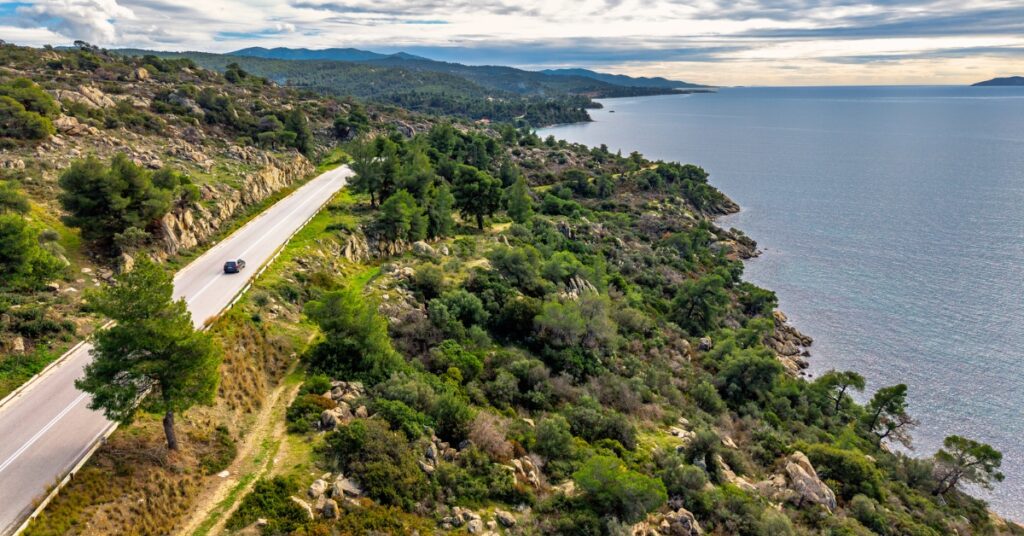
British holidaymakers return to the same favourites each year, with Spain, France, Italy and Greece dominating bookings while equally accessible alternatives remain overlooked.
That popularity comes at a price. Accommodation costs are rising, crowds fill every old town square, and tourist levies are common in cities such as Paris, Venice and Barcelona.
Travel an hour or two further along the coast or rail line, however, and you can find a similar experience with lower prices, fewer queues and easier reservations.
This guide highlights second cities, quieter coastlines, islands, mountain valleys and shoulder-season escapes, plus routes from London and regional UK airports and current border requirements.
These hidden gems are accessible, affordable destinations that remain under-booked by British travellers.
What Makes a European Destination Underrated in 2026
A destination is underrated when British demand falls below what its access, cost and quality justify. Cheap flights and quiet streets rarely coexist for long, so timing matters.
Direct access without the price tag
Underrated does not mean hard to reach. New routes from Bristol, Leeds Bradford, Manchester, Belfast and airports across Scotland have made destinations such as Tirana in Albania and Kraków in Poland easy to reach directly.
Check routes from your nearest airport, as many are seasonal, and watch the arrival airport. A cheap fare can lose its value if the transfer takes hours.
Value that holds up on the ground
A cheap flight does not guarantee a cheap holiday. Compare everyday costs such as hotels, meals, taxis and attractions.
Central and eastern Europe still offer strong value. A meal in Sofia, Bulgaria, or Bucharest can cost far less than in Rome or Amsterdam, with similar savings on hotels.
Poland uses the złoty, Hungary the forint, Albania the lek and Romania the leu. Bulgaria adopted the euro in January 2026, although its cost of living remains lower than in much of western Europe.
Avoid dynamic currency conversion when paying by card, as being charged in pounds often adds a mark-up. Carry some cash in the Balkans and rural areas, where card acceptance can be patchy.
Crowd pressure and the overtourism shift
Popular cities are increasingly controlling visitor numbers. Venice charges some day trippers, Dubrovnik limits cruise arrivals, Barcelona is phasing out short-term tourist lets, and Amsterdam has reduced cruise capacity and raised its tourist tax.
As crowds and prices rise, travellers are moving towards second cities. Prague and Kraków now face heavy summer demand, while the underrated European cities in this guide generally remain one step behind: well-connected destinations with old towns, good food and fewer queues.
A useful test is accommodation. If a central room in August still costs roughly what you would accept in May, the destination probably still has room to breathe.
That advantage rarely lasts. The Albanian Riviera and Kraków both became more expensive as visitor numbers grew.
Underrated City Breaks Within Three Hours of the UK
The best-value city breaks for British travellers combine historic centres, good public transport and lower prices. These five are within roughly three hours of the UK by air and cost far less than Amsterdam for a weekend.
Wrocław, Poland
Wrocław has one of Poland’s largest medieval market squares, Gothic churches and more than 600 brass dwarf statues scattered across the city.
Its student population keeps food affordable and nightlife lively. Prices are generally lower than in Krakow, with direct flights from London and several regional airports taking around two and a half hours.
Ghent, Belgium
Ghent offers canals, guild houses and a medieval centre without Bruges’ crowds. Highlights include Gravensteen castle, Saint Bavo’s Cathedral and Belgium’s strong vegetarian food scene.
Take the Eurostar to Brussels, then a 30-minute local train. The journey from London takes roughly four hours.
Trieste, Italy
Trieste’s Habsburg heritage gives it grand architecture and a café culture closer to Vienna than Rome. Piazza Unità d’Italia opens directly onto the Adriatic.
Coffee has its own local vocabulary: a “nero” is an espresso, while a “capo in b” is a macchiato served in a glass.
The border is just minutes away, making day trips into Slovenia easy. Direct flights from London take around two and a half hours.
Aarhus, Denmark
Denmark’s second city is compact and walkable, with attractions including ARoS art museum, Den Gamle By and a free harbour bath.
It is pricier than the other destinations here, with a mid-range dinner for two costing around £70. Direct flights from Stansted take under two hours.
Tirana, Albania
Tirana is the cheapest capital on this list, known for colourful communist-era buildings, Bunk’Art and the Dajti Ekspres cable car.
Coffee can cost less than £1, while a meal with wine often costs less than £15 per person. Direct flights from Luton, Stansted and Manchester take around three hours.
Coastal Escapes Beyond the Costas and the Amalfi
Europe still has stretches of the Mediterranean and Atlantic coasts with fewer British visitors and lower prices. These five offer similar water, food and sunshine to busier resorts for much less.
The Albanian Riviera
South of Vlorë, the Ionian coast has clear water, pebble coves and steep mountains. Dhërmi and Himarë are the main bases, while Ksamil is busiest in August.
Ferries run from Corfu to Sarandë in about 30 minutes, while Tirana is roughly four hours away by car via the Llogara Pass.
Visit in June or September for lower prices and fewer crowds, as July and August are increasingly busy.
The Alentejo coast, Portugal
Between Lisbon and the Algarve, the Alentejo offers cliffs, protected dunes and Atlantic surf with far fewer visitors.
Comporta is the pricier option, while Vila Nova de Milfontes and Zambujeira do Mar are more affordable and lie along the Rota Vicentina.
Fly into Lisbon and drive south for about two hours. Public transport is limited, so hiring a car is useful.
The Rías Baixas and Costa da Morte, Galicia
Galicia’s inlets produce much of Spain’s shellfish, while summer temperatures typically stay in the mid-20s.
Santiago de Compostela is a convenient gateway, with its cathedral and old town forming a UNESCO World Heritage Site about an hour from the coast.
For seafood, try Cambados or O Grove, where percebes, razor clams and octopus cost less than in San Sebastián.
Le Marche, Italy
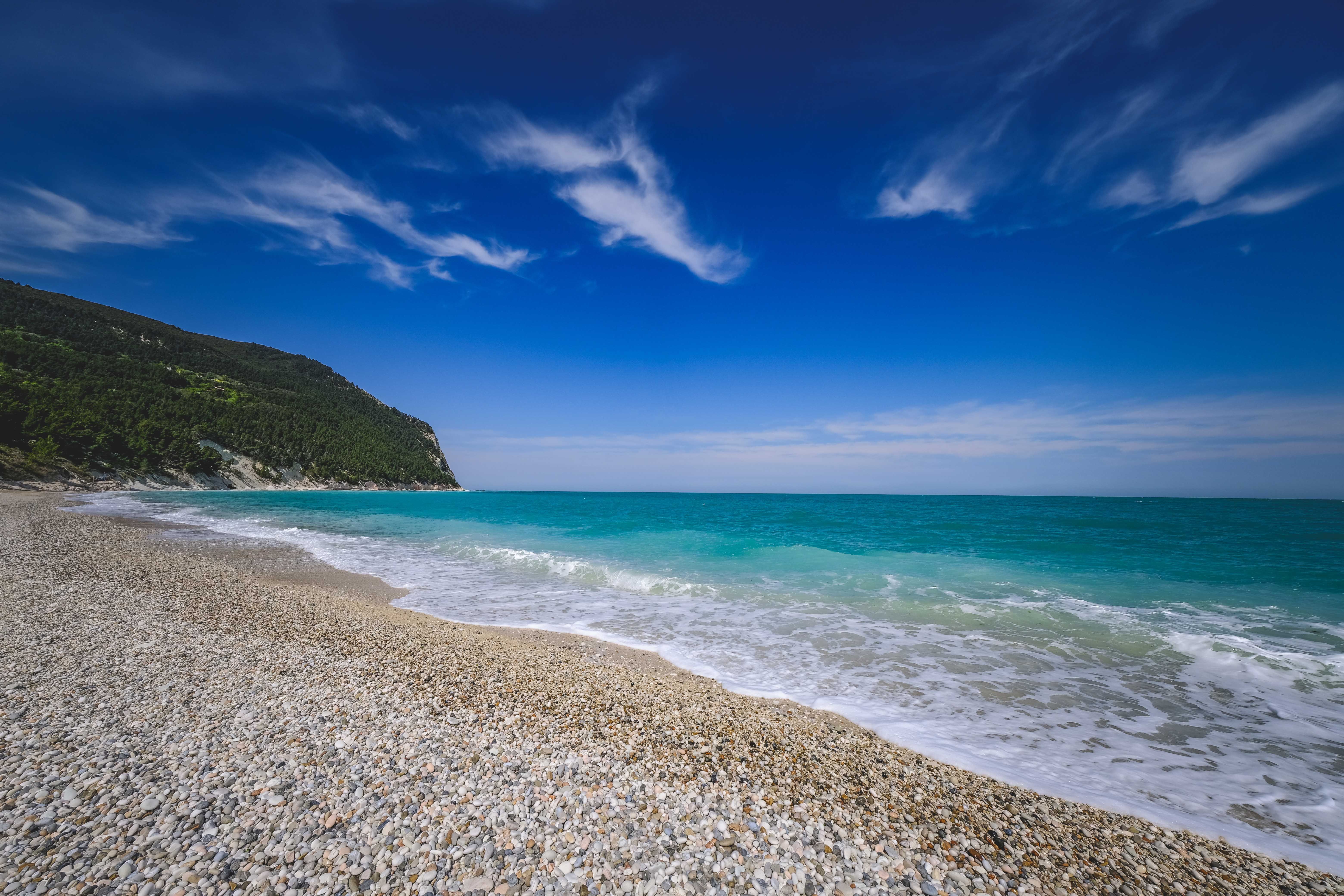
Le Marche offers Adriatic beaches and hill towns with fewer visitors than Tuscany. The Conero peninsula is the highlight, with white cliffs and beaches reached by boat, foot or shuttle.
Sirolo and Numana make good coastal bases, while Osimo and Loreto lie just inland.
Ancona is the main gateway, with seasonal flights and fast trains from Bologna and Rome. A car is useful beyond the coast.
Ulcinj and the southern Montenegrin coast
Ulcinj in southern Montenegro is known for Velika Plaža, a 12-kilometre sandy beach popular for kitesurfing.
Its walled old town overlooks a small beach and has roots dating back to the Illyrians.
Unlike Dubrovnik in July, where cruise crowds pack the centre, Ulcinj remains quieter outside August and is almost empty by late September.
Fly into Tivat or Podgorica and allow around two hours by car.
Underrated Islands Brits Rarely Book
Europe has dozens of islands with ferry links and small airports that rarely appear in UK package brochures. Generally, the harder they are to reach, the quieter they remain.
Ogliastra, Sardinia
Ogliastra stretches along Sardinia’s central east coast between the mountains and Tyrrhenian Sea. Cala Goloritzé, the best-known beach, is accessible only by boat or a steep 90-minute walk.
Visitor numbers are capped and an access fee applies, so book ahead in summer. Nearby Cala Mariolu and Cala Luna are also served by boats from Santa Maria Navarrese.
The seasonal Trenino Verde heritage railway crosses the interior, while villages such as Ulassai and Baunei remain far cheaper than the Costa Smeralda.
Fly into Cagliari or Olbia and allow two to three hours by car.
Pico and Terceira, Azores
Pico is dominated by Portugal’s highest mountain, a volcano that can be climbed in around seven hours with a permit.
Its vineyards, protected by black lava-stone walls, form a UNESCO World Heritage Site unlike anywhere else in Portugal. Whale and dolphin watching runs from April to October.
Terceira offers the historic city of Angra do Heroísmo, volcanic caves, and natural rock pools at Biscoitos. Inter-island flights take about 30 minutes and can cost under €70 when booked early.
Vis and Šolta, Croatia
Vis remained closed to foreign visitors until 1989, serving as a Yugoslav military base and limiting the development seen elsewhere in Croatia. Komiža combines stone houses, a fishing harbour and easy beach access.
Boat trips visit the Blue Cave on Biševo, while nearby Šolta offers quieter bays at Maslinica and Stomorska, both ideal for kayaking.
Check Jadrolinija ferry schedules before booking, especially in low season when services are limited.
Bornholm, Denmark
Bornholm lies in the Baltic, closer to Sweden and Poland than Copenhagen. Highlights include four medieval round churches, traditional smokehouses and around 235 kilometres of cycle routes.
Dueodde has some of Denmark’s best sandy beaches. From Copenhagen, the train-and-catamaran journey via Ystad takes about three hours.
Gozo, Malta
Gozo offers a quieter alternative to Malta’s main island, with terraced fields and a fortified citadel above Victoria.
Ġgantija’s megalithic temples predate Stonehenge, while Xlendi and Dwejra offer swimming and diving from rocky shores. Marsalforn’s historic salt pans are still in use.
The ferry from Ċirkewwa takes about 25 minutes and runs through the night.
Mountains, Lakes and Walking Country Off the Usual Map
The Alps are not Europe’s only mountains with marked trails, staffed huts and easy transport. These five ranges cost far less than Switzerland and attract fewer walkers.
The Julian Alps and Soča Valley, Slovenia
The turquoise Soča River runs through a limestone valley, with Bovec as the main base for rafting, canyoning and kayaking from May to September.
Triglav, Slovenia’s 2,864-metre high point, usually requires two days, a hut stay and via ferrata equipment.
Skip Lake Bled for quieter Lake Bohinj, which offers swimming and direct access to mountain trails.
The Vršič Pass links the valleys but usually closes from November to May. Fly to Ljubljana, then drive or take a seasonal bus.
The Făgăraș and Bucegi mountains, Romania
The Făgăraș range includes Romania’s highest peaks, with basic huts often costing under £20 a night.
The Transfăgărășan road usually opens from late June to October, while Brașov is a good base for the Bucegi mountains. Trains from Bucharest take around three hours.
Brown bears are common, so walk in groups, make noise and keep food away from tents.
The Picos de Europa, Spain
The Cares Gorge walk follows a dramatic cliffside path between Caín and Poncebos. The return route covers 24 kilometres with little shade, so start early.
Cangas de Onís provides access to the Covadonga lakes, where shuttle buses replace private cars in peak season.
This is also Asturian cider country, where bottles cost around €3.
Rugova Valley, Kosovo, and the Peaks of the Balkans
The 192-kilometre Peaks of the Balkans trail crosses Kosovo, Albania and Montenegro in around 10 to 13 days. Border permits should be arranged at least two weeks ahead.
Guesthouses typically offer dinner and breakfast for about €30, while Rugova Valley near Peja provides shorter hiking and via ferrata options.
The main season runs from mid-June to late September.
The Tatras, Poland and Slovakia
Zakopane offers affordable access to trails including Morskie Oko and Rysy, Poland’s highest peak.
The Slovak side around Štrbské Pleso and Tatranská Lomnica is quieter and well organised for walkers. Both sides have ski resorts at roughly half Alpine prices.
Summer trails can still be busy, so visit midweek or start early.
Best-Value Trips: Where Your Money Goes Furthest
Central and south-eastern Europe still offer meals, hotels and transport at a fraction of western European prices, helped by improved flight connections. A week in Bulgaria or Serbia can cost less than a long weekend in Italy.
Typical 2026 prices are roughly:
| Destination | Dinner for two | Three-star double | Airport transfer | Museum entry |
| Plovdiv, Bulgaria | £30 | £55 | £10 | £4 |
| Ohrid, North Macedonia | £25 | £45 | £15 | £3 |
| Novi Sad, Serbia | £30 | £50 | £20 | £3 |
| Budapest, Hungary | £45 | £85 | £10 | £8 |
| Florence, Italy | £75 | £150 | £8 | £20 |
Bulgaria beyond the Black Sea resorts
Plovdiv combines a Roman theatre with an Old Town of painted merchant houses, most charging only a few pounds for entry.
Veliko Tarnovo, the medieval capital, centres on Tsarevets fortress, while student bars keep prices low outside summer.
In the southern Rhodopes, villages such as Shiroka Laka and Kovachevitsa are known for stone houses and bagpipe music. Fly into Sofia or Plovdiv and hire a car.
North Macedonia
Ohrid sits beside a UNESCO-listed lake, with historic churches, a hilltop fortress and free town beaches.
Skopje’s Ottoman bazaar offers tea houses and grill restaurants where meals can cost under £8. Mavrovo National Park adds hiking, a submerged church and winter skiing.
Serbia
Novi Sad sits beneath Petrovaradin fortress and has a compact Habsburg-style centre.
Nearby Fruška Gora has 16 Orthodox monasteries and wineries producing Bermet, with tastings often under £10.
Belgrade’s riverside districts are known for floating clubs and late-night dining. Drinks can cost roughly a third of the price in Oslo.
Currency, cards and cash
Bulgaria adopted the euro in January 2026. Serbia uses the dinar, North Macedonia the denar and Hungary the forint.
Cards are widely accepted in cities, but cash remains useful for markets, small guesthouses, rural transport and taxis.
Use bank ATMs rather than standalone tourist machines, and always pay in local currency to avoid poor conversion rates. Airport exchange desks are generally best avoided in favour of a low-fee debit or travel card.

Underrated Destinations for Families
Family-friendly does not have to mean a resort with a kids’ club and buffet queues. These four regions offer short transfers, shallow water and affordable activities.
Zeeland, Netherlands
Zeeland’s islands and peninsulas are shaped by the Delta Works, with gently shelving beaches at Domburg and Renesse and extensive cycle paths through the dunes.
Neeltje Jans combines a water park, sea lion show and engineering museum, with entry around €25 for adults and €20 for children.
Driving is easiest. Take the overnight ferry from Harwich to Hook of Holland, then continue for about two hours.
Brittany, France
Brittany offers walled towns, tidal beaches and a dramatic coastline. Saint-Malo’s ramparts are free to walk, while the beach below expands at low tide.
Carnac has around 3,000 standing stones, older than Stonehenge. Guided access runs in summer, with perimeter paths available outside those times.
Ferries from Portsmouth and Plymouth reach Saint-Malo and Roscoff in six to 11 hours. An overnight cabin makes the crossing part of the holiday.
The Slovenian lakes and Postojna
Bled suits younger children, with a flat 6-kilometre lakeside path, rowing boats and a castle with a small museum and working printing press.
Bohinj, 30 minutes away, is better for swimming and has a cable car up Vogel.
Postojna Cave includes a 3.7-kilometre underground railway as part of a 90-minute tour, while nearby Predjama Castle can be visited on a combined ticket.
Trains from Ljubljana reach Postojna in under an hour, and buses serve the lakes.
Emilia-Romagna’s coast, Italy
Cesenatico has a historic canal port and a long sandy beach with lifeguards and shallow water. Family lounger sets cost around €25 a day.
Comacchio is a lagoon town of canals and bridges, with flamingos in nearby salt pans and 90-minute boat trips through the wetlands.
Bologna and Modena are easy day trips, offering museums, food attractions and the Ferrari museum.
Practical family considerations
Each child needs their own passport, issued within the previous 10 years and valid for at least three months after leaving Europe.
Children are registered separately in the EU Entry/Exit System. Under-12s are exempt from fingerprinting, but a facial image is still taken.
Allow extra time at your first border crossing, as registration can take several minutes per traveller.
Get a free UK Global Health Insurance Card for each family member, but keep travel insurance for private treatment, repatriation and cancellations.
Check that every child is named on the policy and meets any age or accompanying-adult requirements.
Winter Sun and Shoulder-Season Warmth Without the Crowds
Several southern European destinations stay mild well beyond summer, while prices fall sharply from mid-September. A 22°C October can be more comfortable than a 28°C August.
Typical daytime averages are:
| Destination | October | December | February | April |
| La Palma | 26°C | 21°C | 20°C | 22°C |
| Tavira | 23°C | 17°C | 17°C | 21°C |
| Ortigia, Sicily | 24°C | 17°C | 15°C | 19°C |
| Almería | 25°C | 18°C | 17°C | 21°C |
| Porto Santo | 25°C | 20°C | 19°C | 20°C |
La Palma and El Hierro, Canary Islands
La Palma combines volcanic scenery with hiking at Caldera de Taburiente and guided visits to lava fields formed by the 2021 Cumbre Vieja eruption.
Its Roque de los Muchachos Observatory makes it a major stargazing destination, with tours running year-round.
El Hierro is smaller and quieter, with excellent diving around La Restinga. Both islands are connected to Tenerife by ferry or a short flight.
Eastern Algarve, Portugal
Tavira offers a historic centre without the high-rise development found further west. Ferries run to Ilha de Tavira’s long sandy beaches.
Nearby Cacela Velha overlooks the Ria Formosa, a 60-kilometre protected lagoon known for flamingos, seahorses and boat trips.
Sea temperatures often remain suitable for swimming into November.
South-eastern Sicily
Ortigia, Syracuse’s island old town, becomes much quieter from October. Its cathedral incorporates an ancient Greek temple.
Nearby Noto is known for baroque architecture, while Modica specialises in grainy chocolate made using a traditional cold-processing method.
Winters are mild rather than hot, with cooler evenings and occasional rain.
Almería, Spain
Almería is among mainland Europe’s driest regions. Cabo de Gata offers volcanic landscapes and secluded beaches, while the Tabernas Desert preserves film sets from classic westerns.
Almería city also has a large Moorish alcazaba overlooking the port. A hire car is useful for exploring the region.
Porto Santo, Madeira
Porto Santo’s main attraction is a nine-kilometre golden-sand beach along its south coast.
The ferry from Funchal takes about two hours and 20 minutes, while flights are quicker.
The island is very quiet from November to March. Winter sea temperatures remain around 19°C, cool but still swimmable.

Getting There from the UK: Flights, Rail, Ferries and Driving
Access is the main reason these places stay quiet, but getting there is often easier than expected. Direct flights have expanded, while rail, ferry and road links cover most of the gaps.
Regional airport routes
Manchester, Birmingham, Bristol, Edinburgh, Leeds Bradford and Belfast now serve routes that once required a London connection. Tirana flies direct from Luton, Stansted, Manchester and Birmingham, while Ohrid has seasonal flights from Luton.
Bilbao connects with Stansted, Manchester, Bristol and Edinburgh, Aarhus with Stansted, and Trieste with Stansted and Manchester.
Many routes run only from late March to late October. Check airline schedules directly, as comparison sites may show summer flights without clearly flagging winter gaps.
Rail from London
Eurostar reaches Paris, Brussels, Lille, Amsterdam and Rotterdam, with Brussels a useful hub for Belgium and Germany.
Trieste takes about 15 hours from London via Paris and Milan, while Ghent takes roughly four hours.
Interrail Global Passes start at around £250 for four travel days in a month and work best for multi-stop trips.
European Sleeper and Nightjet run overnight services from Brussels and Amsterdam towards Dresden, Prague, Berlin and Vienna. Couchettes can save a hotel night.
Book reservations early on French and Italian high-speed trains, especially for Friday and Sunday travel.
Ferries and driving
DFDS runs overnight from Newcastle to Amsterdam, while Stena Line links Harwich with Hook of Holland.
Brittany Ferries sails from Portsmouth and Plymouth to northern France and Spain, with Santander and Bilbao crossings taking 24 to 32 hours.
Eurotunnel carries cars from Folkestone to Calais in about 35 minutes.
Carry your driving licence, V5C, insurance certificate and a UK identifier where required. Some countries also require headlamp deflectors, reflective jackets and warning triangles.
Check low-emission rules before travelling. France requires a Crit’Air sticker, while cities including Paris, Lyon, Milan, Madrid and Brussels enforce restricted zones.
Multi-stop routing
Open-jaw tickets let you fly into one city and out of another, often without costing more than a return.
Balkan buses connect Tirana, Skopje, Ohrid, Podgorica and Belgrade for roughly £10 to £25 per leg.
Pair nearby destinations to simplify transport. Trieste pairs well with Ljubljana; Bilbao with the Rías Baixas; and Split with Vis and Šolta.
Planning the Trip: Entry Rules, Timing and Booking Windows
Entry rules for British travellers have changed at the border, with the 90-day allowance now tracked automatically. Nothing extra is required before departure, but first-time processing takes longer.
The EU Entry/Exit System began rolling out on 12 October 2025 and became fully operational on 10 April 2026. It replaces passport stamps in 29 European countries, while Cyprus and Ireland continue to use manual stamping.
Registration records your facial image, usually fingerprints, passport details and each entry and exit. You register in person on your first crossing; subsequent trips use the same record.
Allow extra time on your first journey, especially at busy airports and road or rail borders.
The European Travel Information and Authorisation System (ETIAS) is separate and not yet operating. No applications are being accepted, so avoid unofficial sites claiming to sell authorisations.
The 90-days-in-any-180-days rule still applies across participating countries collectively. Time spent in Valencia, Genoa and Tallinn all counts towards the same total.
Check your remaining days through the official EU travel site. The calculation is rolling, not annual.
Your passport must have been issued within the previous 10 years and remain valid for at least three months after your planned departure.
Apply for a free UK Global Health Insurance Card, but buy travel insurance separately. Standard policies may exclude activities such as high-altitude hiking, kayaking, diving or motorbike hire without additional cover.
Roaming charges vary by network, so check your allowance or consider a European eSIM.
Booking windows also vary. City breaks in Estonia, Poland and Belgium are often cheapest six to ten weeks ahead, while Mediterranean and island stays for July and August should ideally be booked by February.
Reserve ferries and Eurotunnel crossings early for school holidays. Winter-sun flights to the Canaries and Madeira are often cheapest when booked four to eight weeks in advance, outside peak periods.
Late September, October, April and May generally offer the best balance of weather, lower crowds and cheaper accommodation.

Book the Trip Everyone Else is Missing
These destinations are not hard to reach, just less familiar. UK flight routes have expanded faster than British demand.
Choose your season, travel time and budget. For peak summer, consider quieter options such as Ogliastra, Vis, Bornholm or the Rugova Valley, and save La Palma, Tavira and Porto Santo for the off-season.
Check for direct flights from your nearest regional airport, then confirm that your passport was issued within the last 10 years and has at least 3 months’ validity beyond your return date. Check your remaining days at travel-europe.europa.eu before booking.