
Bulgaria bill ties golden visa to real residence
Sep 1, 2026
Category: Bulgaria Golden Visa News
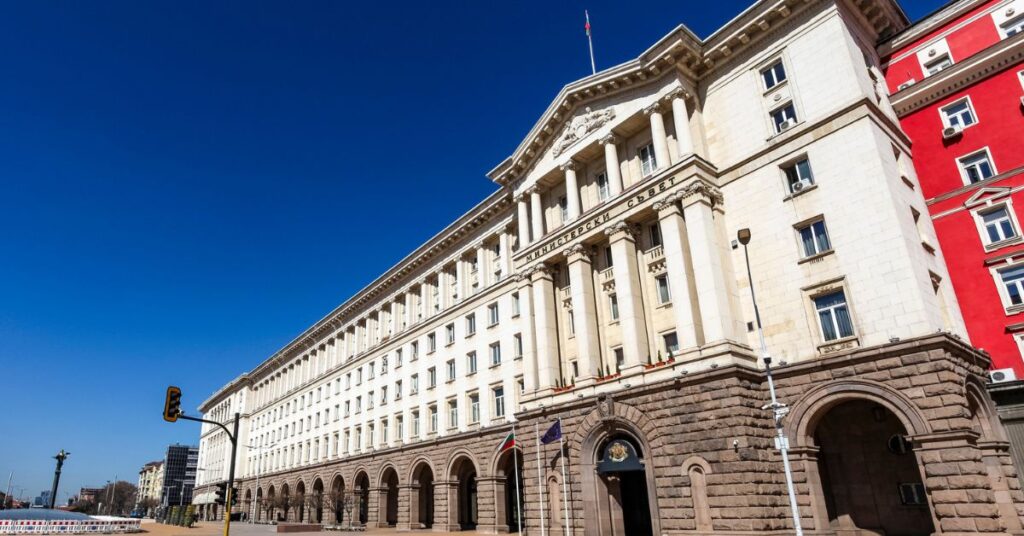
Bulgaria’s government wants permanent residents to live in the country. A bill before the National Assembly would strip permanent residence from any foreigner who spent less than six months and one day in Bulgaria during the previous calendar year.
That provision would reshape the Bulgarian golden visa, long marketed as offering status without relocation. A BGN 1 million (or €511,292) fund subscription currently secures permanent residence without requiring entry into the country.
The Council of Ministers approved the draft on 27 July 2026 through Decision 575. Prime Minister Rumen Radev signed the decision and transmittal letter, and the National Assembly registered the bill on 28 July under reference 52-602-01-29.
The measure covers every permanent resident, regardless of how they obtained their status, according to the reported bill text.
Union test shrinks to Sofia
The changes are contained in the Law on Foreigners in the Republic of Bulgaria. Article 40, paragraph 1 lists grounds for withdrawing residence rights.
Item 6 currently applies to long-term and permanent residence permits, but only after 12 consecutive months outside the European Union.
Section 17 would restrict item 6 to long-term permits. A new item 24 would instead govern permanent residence, measuring presence in Bulgaria rather than absence from the Union.
The change, therefore, narrows the test from the entire Union to Bulgaria and replaces an absence test with a presence requirement. Permanent residents would have to spend most of the year in the country.
Carve-out may shield no one
The existing item 6 protects investors by exempting permanent residence granted on investment grounds under Articles 25 and 25g, according to the provision quoted in a December 2025 practitioner article.
Whether that protection survives depends on a question of Bulgarian law: can someone hold long-term and permanent residence simultaneously?
An investor holding both could remain protected from the 12-month rule. Someone holding permanent residence alone would fall under item 6 and item 24.
New item 24 contains no exemptions. It protects neither investors nor foreigners stranded abroad by a declared state of emergency, a safeguard retained in item 6 for long-term residents.

Old shields miss new ground
Two other provisions might soften the effect, although neither clearly applies. Bulgarian immigration practice describes withdrawal under Article 40, paragraph 1, as mandatory rather than discretionary.
Before imposing a coercive administrative measure, authorities must consider length of residence, family circumstances, and social and cultural ties under Article 44, paragraph 2.
Article 9(2) of Directive 2003/109/EC also allows member states to disregard long absences in exceptional circumstances. Whether it applies to item 24 remains uncertain because the directive governs EU long-term resident status, which the bill leaves under item 6.
Bulgarian permanent residence is a national status. The bill would place it under a purely domestic rule.
Prices hold through euro switch
The investment thresholds remain unchanged in real terms. Section 11 restates the Article 25 minimums in euros at the fixed conversion rate following Bulgaria’s adoption of the currency on 1 January.
BGN 1 million becomes €511,291.88, BGN 2 million becomes €1,022,583.76, and BGN 6 million becomes €3,067,751.29.
Section 7 changes the extended residence grounds in Article 24 only to convert currency. Item 24 would not apply to those permits because it applies only to permanent residence.

Government offers single line
The explanatory memorandum gives one reason for the change: rising applications for permanent residence create a need for stricter control over foreigners holding permanent residence.
It cites no security concern or European obligation and makes no reference to investment routes.
Permanent residence appears only in section two of the memorandum as an objective without a stated underlying cause.
Consultation skips main clause
The proposal drew little attention during public consultation, which ran from 1 April to 4 May 2026 under the Ministry of Interior.
Nine authors submitted 14 comments, including the Bulgarian Industrial Association, Bulgarian Helsinki Committee, and Employment Agency.
They addressed border screening, seasonal worker housing, medical insurance, and rounding euro fines. None mentioned the permanent residence requirement.

Rivals already demand real years
Immediate permanent residence is not unique to Bulgaria. Malta’s residence programme and Cyprus also grant it from the outset.
Bulgaria’s distinction is combining permanent residence from day one, no residence obligation, and naturalisation eligibility five years later with an A1 language test. Malta and Cyprus require years of actual residence before citizenship.
If the new presence rule passes, that distinction disappears. The change could reduce demand among applicants seeking status without relocation, directly weakening one of the programme’s main selling points.
Because item 24 makes no distinction by route, the effect would extend beyond investors. Spouses of Bulgarian citizens, people of Bulgarian descent, and long-settled foreigners can hold the same permit.
Amendments hold real answer
The bill would turn a scheme built around non-residence into one requiring physical presence. It contains no investor exemption, grandfather clause, or commencement date, leaving its ultimate effect dependent on amendments.
The impact could vary sharply. Investors holding a second long-term permit may retain the item 6 protection, while permanent-residence-only holders could face mandatory withdrawal. Those nearing the five-year naturalisation threshold could also risk resetting the clock.
That breadth gives committee members grounds to challenge the provision because the same permit covers spouses, descendants, and long-settled residents who never invested. Bills pass through committee, first reading, amendments, and second reading, and the final text can differ substantially from the original.
Three issues now matter most: whether item 24 gains an exemption or transitional rule; whether proportionality protections or the EU directive are interpreted to cover a domestic status; and the promulgation date, which under the three-day default rule could determine whether 2026 attendance counts against permits issued before the requirement existed.