
Schengen Visa Demand Rebounds to Nearly 12 Million
Jun 9, 2026
Category: EU News Schengen Visa
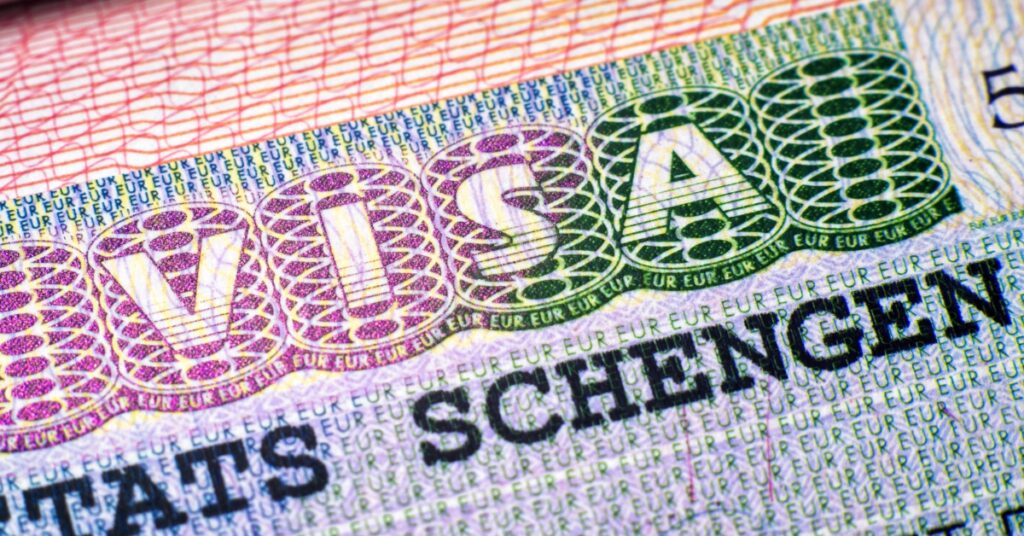
Nearly 12 million people applied for Schengen short-stay visas in 2025, a sign that travel to Europe keeps recovering even as a wider digital overhaul, alongside long-running databases reshapes how the continent manages its borders.
The figure marks a 1.8% increase on 2024, when consulates received 11.7 million applications. It is also 15.5% higher than the 10.3 million logged in 2023.
The numbers came from the European Commission’s Directorate-General for Migration and Home Affairs. They cover EU and Schengen-associated consulates worldwide.
Demand is rising, but it has not bounced all the way back. Applications remain well below the 17 million recorded in 2019, before the COVID-19 pandemic reset global travel.
Issued visas tell a similar story. More than 10 million were granted in 2025, up 3% on the 9.7 million issued in 2024, yet still short of the 15 million handed out in 2019.
Refusals split across countries
The global refusal rate held at 14.8%, unchanged from the previous year. Underneath that flat headline, individual countries moved in very different directions.
Some saw refusals ease. In Russia the rate dropped to 6.4% from 7.5%, in Algeria to 31% from 35%, and in Ethiopia to 34% from 36.1%.
Others tightened. Cape Verde’s refusal rate jumped to 21.4% from 13.4%, and the Democratic Republic of the Congo’s climbed to 40.1% from 29.9%.
The sharpest rises landed in West and Central Africa. Senegal’s refusal rate rose to 51.9% from 46.8%, while Burundi’s reached 53.4%, up from 40%.
China leads visa seekers
The countries sending the most applicants barely shifted. China topped the list with 1.8 million applications, followed by Türkiye with 1.25 million.
India came third with 1.15 million, ahead of Russia on 679,000 and Morocco on 620,000.
How people travel once approved also shifted slightly. Of the 10 million visas issued, 51.2%, or 5.1 million, allowed multiple entries into the Schengen area.
That was a small drop from 52.2% in 2024. Schengen states also issued 83,790 visas directly at external borders, down from 85,118 the year before.

Borders go fully digital
The visa figures arrive as Europe switches on a new way of tracking who comes and goes.
The Entry/Exit System (EES) is now fully operational. It registers non-EU nationals every time they cross the external borders of 29 European countries for a short stay.
The rollout began on 12 October 2025 and the system reached full operation on 10 April 2026.
The EES is automated and digital, and it replaces the old practice of stamping passports across most of Europe. Cyprus and Ireland are the exceptions, where staff continue to stamp passports by hand.
The system applies to non-EU travellers on short stays of up to 90 days within any 180-day period. That covers both visa-required and visa-exempt visitors, though some groups are exempt.
The EES also records travel-document details such as full name, date of birth and nationality, along with entry and exit records and biometric data including facial images and fingerprints. Any refused-entry information is logged too.
The European Commission said that the system tightens border security and helps spot travellers who overstay or fail to meet entry conditions. It adds that automated controls can cut waiting times where they are available.
Authorisation scheme arrives next
A second change is coming before the year ends. The European Travel Information and Authorisation System (ETIAS) will start in the final quarter of 2026.
It will affect a vast group of travellers. Around 1.4 billion people from 59 visa-exempt countries and territories will need authorisation to enter 30 European countries for a short stay.
Travellers do not need to do anything yet. The EU has said it will confirm the exact launch date several months ahead of time.
The authorisation links to a passport and costs EUR 20, with some travellers exempt from the fee. It stays valid for up to three years, or until the linked passport expires, whichever comes first.
It works much like the visa rules already in place. ETIAS allows stays of up to 90 days within any 180-day period, but it does not guarantee entry, because border guards still check that travellers meet the conditions on arrival.
Speed will vary by case. Most applications are processed within minutes, though some take up to four days. That window can stretch to 14 days if extra documents are needed, or up to 30 days if the applicant is called for an interview.

Europe reshapes its borders
Taken together, the three developments point to a single shift. Europe is managing short-stay travel through a recovering visa system, a new digital border record and a forthcoming pre-travel check.
The pieces do not map onto exactly the same territory. The visa data covers Schengen short-stay applications, while the EES applies to 29 European countries and ETIAS to 30, reflecting separate legal frameworks.
For travellers, the direction of travel is clear enough. Visa demand is climbing back towards pre-pandemic levels, and the rules for crossing into Europe are becoming more automated and more closely tracked than at any point before.