
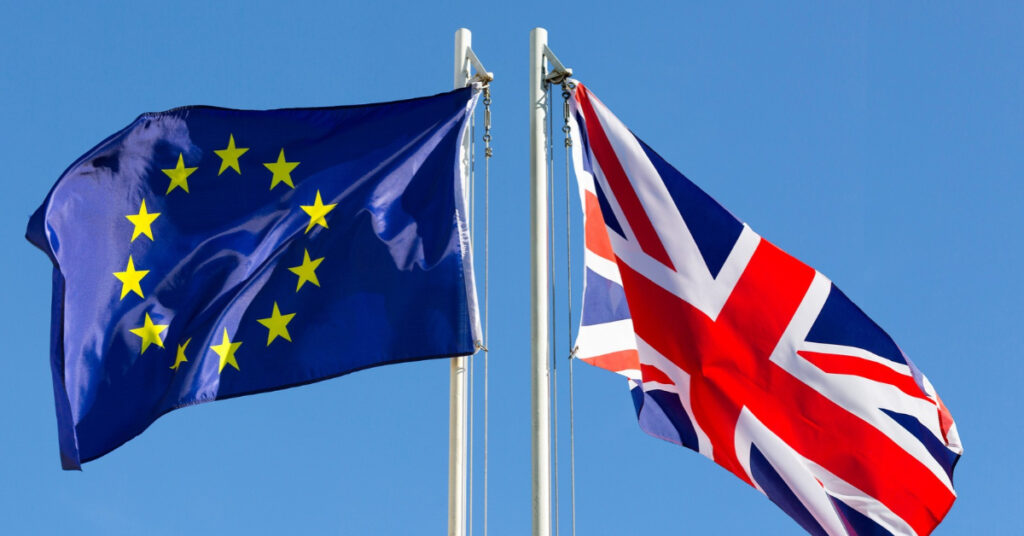
Downing Street has distanced Prime Minister Andy Burnham from any return to EU free movement, days after he said the UK should have an “honest discussion” about the issue.
A No 10 spokeswoman told reporters the Prime Minister “isn’t proposing a return to freedom of movement, or any option”. She added that Burnham was “crucially not leaning either way”.
The Daily Express reported that the statement came hours after Burnham said Britain would never return to free movement without a referendum.
Burnham told reporters he would “never move ahead of the British public when it comes to Brexit”. The Daily Express described the spokeswoman’s intervention as a “climbdown”.
Revolving door debate
Burnham first raised the subject in an interview with The Sunday Times. He argued that migration into the UK has changed since Brexit, with more arrivals now settling permanently instead of returning home.
“I think you have to have a very factual, quite evidence-based debate about this,” he told the paper. He also indicated that staying outside the free movement area would not be a red line in negotiations.
The Prime Minister accepted that EU migration before Brexit had created significant pressures. “But, at the same time, it was a type of immigration that perhaps wasn’t as difficult (as now),” he noted.
“Revolving door migration where people would come and then go back is different,” Burnham explained. “The balance of migration has changed, hasn’t it, since then?”
Free movement was central to the 2016 Brexit referendum. The UK left the EU in 2020.
No euro, no Schengen
Burnham has previously floated full EU membership or joining the single market as options for a new relationship with the bloc. Either path would require free movement.
He drew a firm line elsewhere. Burnham said he could not “see myself ever recommending anything that would involve joining the euro or Schengen”, the EU’s passport-free travel zone.
Any changes would need a mandate at the next general election, which is due by 2029, according to the Prime Minister. He stated that rejoining the EU would require a new referendum, while joining the single market or customs union would not.

Eurodac in the mix
Burnham placed free movement inside a wider renegotiation with Brussels covering data sharing and migration. He pointed to the UK’s lost access to Eurodac, the EU’s asylum and migration database.
“Consider what we’ve lost, which was the ability to be part of Eurodac … and all the data collaboration around migration,” he argued. “You’ve got to see it in the round, rather than just looking at freedom of movement on its own.”
Housing Secretary Angela Rayner backed the Prime Minister on Sky News on Sunday (25 October). “It’s about what is the best deal for Britain and that’s what we are asking the public to look at,” she told the broadcaster.
“We can’t go backwards. That’s not a possibility for us,” Rayner added. “We have to go forwards …”
Reform tallies the bill
Reform UK, led by Nigel Farage, claims a return to free movement would cost taxpayers billions of pounds. If net EU migration returned to its pre-referendum average of 164,000 a year, Britain would need an extra £3.3bn a year for infrastructure, the party says.
By Reform’s count, that adds up to about £33bn over a decade. The party also warns of an extra £2.2bn a year in benefit payments.
Reform says 744,679 EU nationals with settled status already claim Universal Credit, at a cost of £7.8bn a year. Of that sum, the party says £3.3bn goes to people who do not work at all.
The party also cites EU citizenship figures. It claims 88% of the 1.17 million people who gained EU passports in 2024 came from outside the bloc, mainly from the Middle East and Africa.
Under free movement, Reform argues, those new EU citizens would automatically gain the right to live and work in Britain. The party presents this as a reason to keep the current rules.
“Any return to free movement would not only be a betrayal but would spell catastrophe for Britain,” Farage warned. He linked his claim to higher taxes and added pressure on housing, schools and the NHS.

Two lines, one PM
The government now has two public lines on free movement. The Prime Minister has called for an evidence-based debate tied to access to Eurodac and migration data, while his office says he backs no option.
Burnham’s own conditions point to a long timeline. He has linked any change to an election mandate, with a vote due by 2029, and has ruled out Schengen, so passport checks between the UK and the EU would continue under any arrangement he has described.
For EU nationals and UK residents, free movement remains a subject for debate, with no proposal on the table. Reform’s cost figures give opponents a ready case against reopening the question.
Burnham is due to meet EU leaders in November for a summit on the UK’s future relationship with Europe. Data sharing and migration, the areas he tied to free movement, would fall within that wider conversation.