
Frontex Launches Fifth Contingent at Portugal, Spain Borders
Jul 3, 2026
Category: Border and Security EU News Portugal Spain

Frontex has opened a new command centre in Lisbon to run its operations across the sea and air borders of Portugal and Spain. The move brings the agency’s planning and decision-making closer to two of Europe’s most heavily used external frontiers.
The European Border and Coast Guard Agency launched the structure, named Contingent 5, to steer Frontex activity in a region where the Entry/Exit System (EES) now governs how non-EU travellers are registered at airports.
Each contingent operates as a regional command within Frontex’s standing corps—the EU’s first uniformed service—co-locating officers, planners and decision-makers near field operations.
Borders under steady pressure
Spain and Portugal carry particular weight for the agency. Spain sits on the front line of two of Europe’s most active migratory routes.
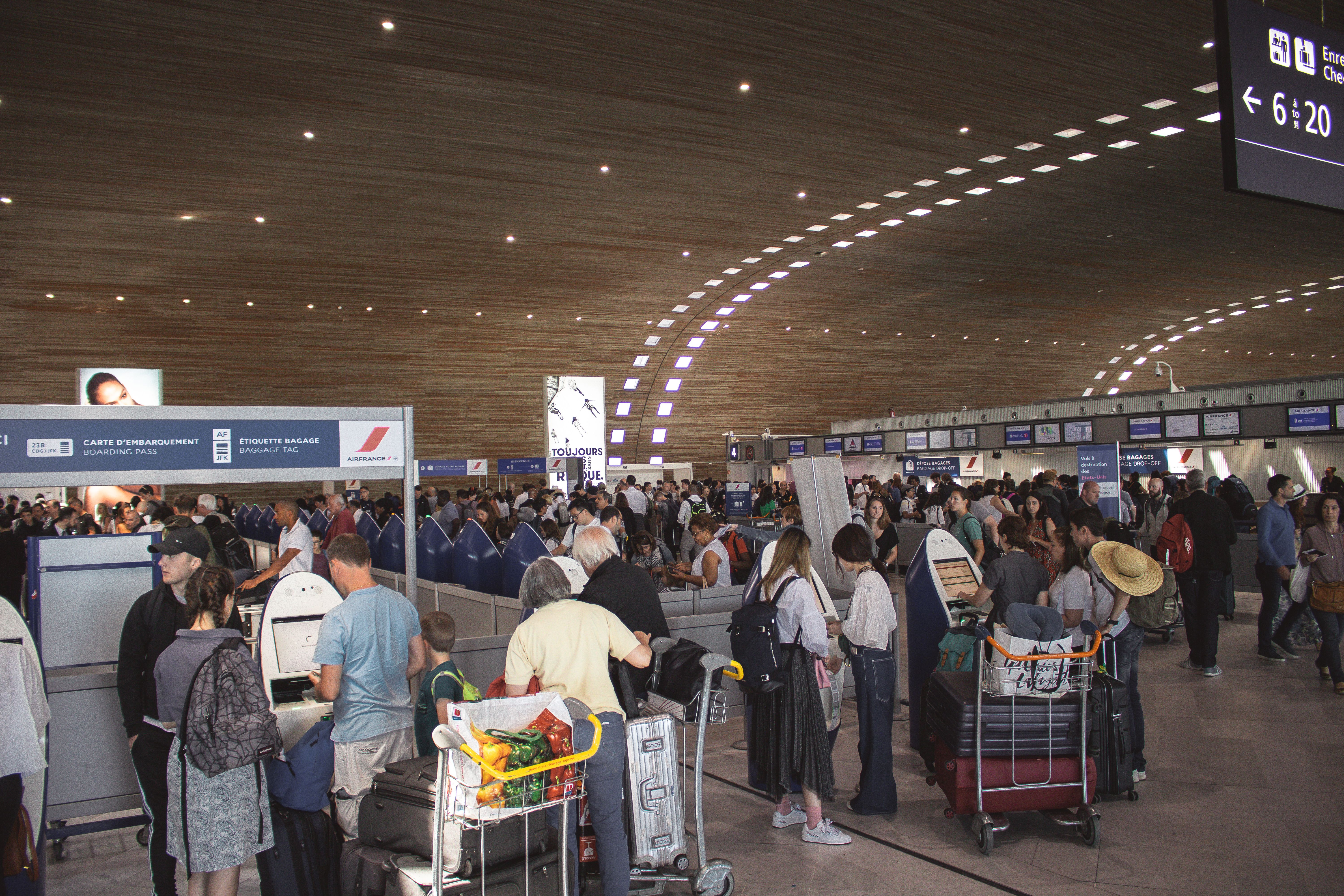
Both countries also run some of Europe’s busiest international airports. Frontex officers there support border checks and help counter document fraud and cross-border crime.
The agency frames the Lisbon command as a way to respond more quickly and plan more effectively. Officers expect to work side by side with national authorities rather than at a distance.
A model spreading across the bloc
Contingent 5 forms part of a wider turn toward localised leadership in the EU. Frontex has already established contingent commands in several member states.
The agency reported that 3,800 of its officers now work at Europe’s borders. The Lisbon structure adds another regional hub to that growing network.

Voices from Lisbon, Madrid
Senior figures from all three sides spoke at the launch. Frontex Executive Director Hans Leijtens placed the command at the centre of the agency’s field-first approach.
“With this Contingent, we are bringing Frontex closer to the field and to the people who manage these borders every day,” Leijtens told the ceremony. “Portugal and Spain are key partners, at sea and air borders. Working with them on the ground, side by side, we can respond faster and plan better.”
Portugal’s Minister for Home Affairs, Luís Neves, tied the deployment to stronger European border management. He described the command as a support for joint operations and closer cooperation between national authorities and Frontex.
“The deployment of Frontex Contingent 5 in Portugal represents another important step in strengthening European border management,” Neves remarked. He added that the structure helps secure effective border control, operational readiness and solidarity across the EU.
Spain’s Minister of the Interior, Fernando Grande-Marlaska, set the move against a longer timeline. He pointed to two decades of work toward a shared approach to external border control.
“Twenty years ago, we began to build a common approach to the control of external borders,” Grande-Marlaska recalled. “Today we are taking a new step forward with the opening of Contingent 5.”
Ceremony draws agency chiefs
More than 120 guests attended the opening. The list ranged from political institutions and law enforcement in Portugal and Spain to senior management at Frontex and leaders of EU agencies based in Lisbon.
Frontex itself supports EU member states and Schengen-associated countries in running the bloc’s external borders. The agency also works against cross-border crime.

Ripples for Europe’s travel systems
Frontex makes no mention of Europe’s travel databases in announcing the command. The links that follow are analytical rather than claims drawn from the agency.
Co-locating air-border commands in Portugal and Spain places leadership directly where the Entry/Exit System (EES) registers non-EU travellers. This streamlined local structure can ease the operational strain biometric registration causes at high-traffic airports.
Spain’s two active sea routes tell a different story. Irregular arrivals there often cross outside formal posts, and EES and the forthcoming European Travel Information and Authorisation System (ETIAS) are built around regulated crossings.
A stronger command of those routes targets movement that neither system captures. It addresses a gap beyond the databases rather than feeding them.
Integrating document checks and counter-fraud operations with regional systems ensures data integrity for EES biometrics and ETIAS pre-screening. Consequently, tighter checks at Iberian airports will improve the quality of records across both platforms.
Timing matters too. ETIAS is due to begin in the last quarter of 2026, and a command that sharpens coordination at Spanish and Portuguese air borders ahead of that launch could smooth the added layer of pre-travel checks.
The migrant experience cuts two ways
Visa-exempt travellers currently navigate EES registration and face upcoming ETIAS authorisation requirements. Depending on resource allocation, an Iberian command focused on waiting times and document verification could either accelerate or tighten its border passage.
Irregular migrants on Spain’s sea routes fall outside both frameworks. For them, the command’s effect runs through interception, processing and interdiction capacity, not through the IT systems.
A heavier Frontex presence on high-pressure routes also raises standing questions over rights safeguards and screening at the point of contact. The agency’s announcement does not touch on that ground.
A tighter grip on the Iberian edge
The Lisbon command extends Frontex’s regional model to the sea and air borders of Portugal and Spain. It places planning and decision-making near two countries that carry real weight for migration and aviation traffic.
Officials from Frontex, Lisbon and Madrid present the step as a faster response and deeper cooperation between the agency and national authorities. They frame it as the latest move in a 20-year drive toward a common border approach.
For EES and ETIAS, the command’s bearing stays indirect. It may firm up the document checks and airport coordination that the systems depend on, while the main weight of its focus on irregular migration falls on routes that those systems never governed.