
Hop, Skip and a Border Away: The Ultimate Guide to Planning a Multi-Country European Trip
Oct 28, 2026
Category: European Travel Travel Tips Trip Planning UK

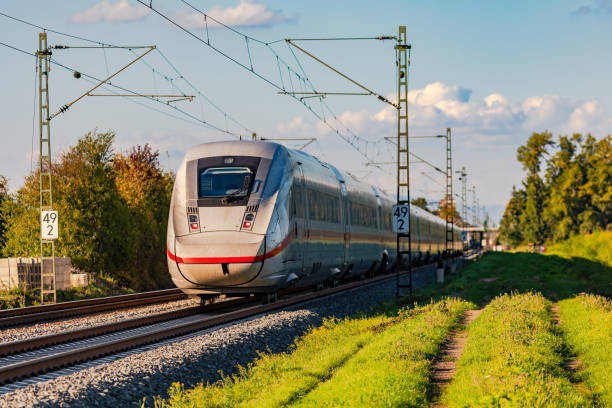
Breakfast in Paris, dinner in Brussels, and a weekend in Amsterdam: few places pack as much variety into a single trip as Europe. For British travellers, the whole journey can start at London St Pancras and run entirely by rail.
That ease makes it tempting to cram in every capital you’ve ever wanted to see. Many multi-country trips fall apart for the same reasons: overpacked itineraries, routes that double back, costs that creep up, and stay-limit mistakes that can trouble you at the border.
Post-Brexit travel also works differently for UK passport holders. Time limits and border checks now apply across the Schengen area, so planning a multi-country European trip takes more care than it once did.
This guide gives you a step-by-step framework to plan your European itinerary from start to finish. You’ll learn how to choose your countries, map a sensible route, and pace each stop so the trip feels like a holiday, not a race.
Choosing Your Countries Without Overstuffing the Map
Pick fewer countries than you think you can manage, and choose ones that share a border. Two to three nights per city is the minimum to see a place, not just pass through.
How Many Countries Fit Your Trip Length
Every move between cities costs you at least half a day once you check out, get to the station, and find your next base. A route with a new city every night can leave you with more hours on trains than in the places you came to see.
Use your trip length to set a ceiling before you start picking destinations.
| Trip length | Countries | Cities | Example route |
| One week | 2 | 2–3 | Paris, Brussels, Bruges |
| Two weeks | 3–4 | 4–6 | Berlin, Prague, Vienna, Budapest |
| Three weeks | 4–5 | 6–8 | Amsterdam, Cologne, Munich, Salzburg, Vienna, Budapest |
Count your arrival and departure days as half days at best. If your flight home leaves in the morning, your final city gets one usable evening.
Grouping Countries by Region
Neighbouring countries tend to share direct rail links, so your transfers stay short and simple. Some clusters also share a language or currency, which cuts down the small daily hassles.
These regional groupings work well for a first multi-country trip:
- Benelux: Belgium, the Netherlands, and Luxembourg, with Brussels to Amsterdam under two hours by high-speed train.
- Central Europe: Germany, Czechia, Austria, and Hungary, linked by direct trains from Berlin through Prague and Vienna to Budapest.
- Iberian Peninsula: Spain and Portugal, where long distances mean flights or coaches often beat rail between the two countries.
- Scandinavia: Denmark, Sweden, and Norway, with trains crossing the Øresund Bridge between Copenhagen and Malmö in under 40 minutes.
- The Balkans: Slovenia, Croatia, Bosnia and Herzegovina, and Montenegro, where coaches do more of the work than trains.
A scattered wish list, like Lisbon, Prague, and Stockholm, means you’ll fly every leg. Stay within one cluster, and you can travel most of the route overland.
Shared languages help too. German will carry you through Germany, Austria, and much of Switzerland.
Building Around a Theme
A theme gives you a filter, so you can cut destinations that don’t fit instead of agonising over every option. It also gives the trip a clear shape that’s easy to plan around.
Popular themes and the routes that suit them include:
- Christmas markets: Strasbourg, Nuremberg, Munich, and Salzburg.
- Alpine scenery: Switzerland, western Austria, and the Italian lakes.
- Mediterranean coast: the French Riviera from Nice to Monaco, then along the Italian Riviera to Genoa.
- Art cities: Amsterdam, Brussels, and Paris, all within a few hours of each other by train.
If two themes pull you in different directions, choose one for this trip. Save the other for your next visit.
Timing Your Trip: Seasons, Crowds, and Prices
Spring and autumn give you the best balance of weather, crowds, and cost for a multi-country trip. Summer brings long days and buzzing cities but higher prices, while winter is cheaper and quieter with shorter daylight hours.
Peak, Shoulder, and Off-Season Trade-offs
Peak season runs from late June to August, when queues at major sights are longest and hotel rates hit their highs. Shoulder season runs from April to May and September to October, and off-season stretches from November to March, except during the Christmas period.
The same month can feel very different depending on where you go. A route that crosses from north to south will see big swings in temperature and daylight.
| Season | Northern Europe | Southern Europe |
| Summer (June–August) | Mild, with up to 18 hours of daylight in Scandinavia | Often above 35°C in Seville, Rome, and Athens |
| Shoulder (April–May, September–October) | Cool, changeable, and quieter | Warm and comfortable for sightseeing |
| Winter (November–March) | Cold, with around six hours of daylight in Stockholm in December | Mild and sunny in Andalusia and southern Italy, though coastal resorts quieten |
If you want a north-to-south route, shoulder season keeps both ends pleasant. A summer trip works best if you stay in the north or stick to the coast in the south.
Working Around UK School Holidays and Bank Holidays
Prices for Eurostar, cross-Channel ferries, and flights from UK airports climb sharply when schools break up. If you aren’t tied to the school calendar, avoiding these dates is the easiest way to cut costs.
The busiest periods for UK departures include:
- Summer holidays, from late July to early September in England and Wales, and from late June to mid-August in Scotland.
- Easter, plus the half-term weeks in mid-February, late May, and late October.
- Bank holiday weekends in early May, late May, and late August.
- Christmas and New Year.
Travelling midweek also helps. Departures on a Tuesday or Wednesday tend to cost less than Friday or Sunday ones.
Local Events and Closures
Big festivals push up accommodation prices across a whole city, sometimes months in advance. Check the calendar for each stop before you lock in dates.
Events that fill hotels quickly include:
- Venice Carnival in February.
- King’s Day across the Netherlands on 27 April.
- San Fermín in Pamplona from 6 to 14 July.
- Oktoberfest in Munich, from mid-September to early October.
- Christmas markets in Germany, Austria, and France from late November to just before Christmas.
August brings the opposite problem in parts of France and Italy. Many family-run restaurants and shops close for weeks, and Italy’s Ferragosto holiday on 15 August shuts much of the country for the day.
High mountain passes close for winter too. Routes such as Italy’s Stelvio Pass and the Great St Bernard Pass between Switzerland and Italy typically close from autumn until late spring.

Mapping a Route That Actually Makes Sense
The best route moves in one direction, starts and ends near your flights, and never doubles back on itself. Plot your cities on a map before you book anything, then link them in the order that keeps each journey short.
Linear Routes vs Loops
A linear route runs from point A to point B, such as Amsterdam to Budapest, with each stop leading naturally to the next. You never repeat a journey, so you spend more time in each place.
A loop brings you back to where you started. It costs you extra travel time, but it makes sense in a few situations:
- Your return flight from the starting city is much cheaper than flying home from somewhere else.
- You’ve hired a car and need to return it where you collected it.
- Your route forms a natural circle, such as Munich, Salzburg, Innsbruck, and back to Munich.
Watch for the zigzag, the most common routing mistake. Going from Paris to Barcelona, then up to Brussels, and back down to Rome means hundreds of wasted kilometres and at least one extra flight.
Open-Jaw Flights
An open-jaw ticket flies you into one city and home from another. It pairs perfectly with a linear route because you never have to travel back to your starting point.
With budget airlines, each leg is priced separately, so flying into Amsterdam and home from Budapest often costs about the same as a return to either city. Full-service airlines sell open-jaw itineraries through the “multi-city” option on their booking pages.
Check which UK airports serve both ends of your route before you settle on a plan. A cheap fare into one city loses value if the return flight leaves from an airport hours from where you live.
Using Hub Cities for Day Trips
A hub city is a base with fast rail links to several nearby destinations, including some across the border. You unpack once and visit three or four places without moving hotels.
| Hub city | Day trip | Train time (approx.) |
| Vienna | Bratislava, Slovakia | 1 hour |
| Vienna | Brno, Czechia | 1 hour 30 minutes |
| Brussels | Lille, France | 35 minutes |
| Brussels | Bruges, Belgium | 1 hour |
| Milan | Lugano, Switzerland | 1 hour 15 minutes |
| Milan | Lake Como (Varenna) | 1 hour |
| Basel | Freiburg, Germany | 45 minutes |
| Basel | Colmar, France | 45 minutes |
Keep day trips to destinations within about two hours each way. Anything longer turns a relaxed outing into a day spent mostly on trains.
A hub works especially well for small cities and towns that don’t need an overnight stay. You see more without adding check-ins and check-outs to your schedule.
Getting Between Countries: Trains, Flights, Buses, and Ferries
Trains are usually the quickest and easiest way to cross borders on routes under six hours, while flights win on longer hops. Coaches are the cheapest, ferries fill gaps across the sea, and a car gives you freedom in rural areas.
Rail Travel and the Interrail Pass
As a UK resident, you can buy an Interrail pass, which covers trains in 33 countries. The Global Pass works across all of them, while a One Country Pass suits a trip focused on a single rail network.
The pass covers your fare, but many high-speed trains charge extra for a compulsory seat reservation. France’s TGV, Italy’s Frecciarossa, and Spain’s AVE all require one, and seats on busy routes sell out in summer.
Eurostar from London St Pancras is the usual first leg, with direct trains to Paris, Brussels, and Amsterdam. Interrail holders can book Eurostar seats for a reservation fee instead of a full ticket.
Night trains save you a hotel bill and a daytime travel slot. European Sleeper runs from Brussels and Amsterdam to Berlin and Prague, and ÖBB’s Nightjet links Vienna with Rome, Venice, and Hamburg.
Budget Airlines
Ryanair, easyJet, and Wizz Air make long hops across Europe fast and often cheap. The headline fare usually covers only a small under-seat bag, so a cabin bag or checked case can double the price.
Check where the airport is before you book. Paris Beauvais is around 85 kilometres from central Paris, and Frankfurt-Hahn is over 100 kilometres from Frankfurt.
| Route | Train | Flight time | Better option |
| Paris to Amsterdam | About 3 hours 20 minutes | 1 hour 15 minutes | Train |
| Berlin to Prague | About 4 hours 15 minutes | 1 hour | Train |
| Madrid to Lisbon | No direct daytime train | 1 hour 15 minutes | Flight |
| Berlin to Rome | 15 hours or more with changes | 2 hours | Flight |
Add around three hours to any flight for airport transfers, security, and boarding. That extra time is why rail often wins on journeys that look longer on paper.
Coaches and Ferries
Long-distance coaches from operators such as FlixBus and BlaBlaCar Bus are the cheapest way to cross borders. Journeys take longer than trains, but overnight coaches can double as a free night’s accommodation.
Ferries connect routes that rail and road can’t reach directly:
- Dover to Calais or Dunkirk, for crossing the Channel with a car.
- Ancona to Split and Bari to Dubrovnik, across the Adriatic between Italy and Croatia.
- Helsinki to Tallinn, a crossing of around two hours between Finland and Estonia.
- Piraeus to the Greek islands, with frequent summer sailings.
Driving and One-Way Car Hire
A UK photocard driving licence is accepted for visits to most EU countries. You need a UK sticker on your car, which replaced the old GB sticker in 2021.
Many countries charge for motorway use through a vignette, a prepaid sticker or digital pass. Austria, Switzerland, Czechia, Slovakia, Hungary, and Slovenia all use them, and fines for driving without one are steep.
French and German cities run low-emission zones that require a windscreen sticker. France uses the Crit’Air system, and Germany uses the Umweltplakette.
Hire firms charge high fees to drop a car in a different country, often running to hundreds of pounds. Some also ban taking hire cars into certain countries, so read the terms before you plan a cross-border drive.
Passports, Stay Limits, and Border Checks for British Travellers
UK passport holders can spend up to 90 days in any 180-day period across the Schengen area without a visa, as long as their passport meets two date rules. Your days add up across every Schengen country you visit, and digital border checks now record each entry and exit.
Passport Validity Rules
Your passport must meet both of these conditions on the day you enter a Schengen country:
- It was issued within the last 10 years.
- It remains valid for at least three months after your planned departure date.
Check the issue date, not just the expiry date. Older UK passports could carry up to nine extra months from a previous passport, and those months don’t count towards the 10-year rule.
If your passport is close to either limit, renew it before you book. A passport that fails either rule can result in denied boarding or entry.
Counting Your 90 Days Across Multiple Countries
The 90-day limit treats the Schengen area as one zone, so a week in France and a week in Italy add up to 14 days. Bulgaria and Romania joined fully in January 2025, so days there count too.
The 180-day window rolls. On any given day, look back 180 days and add up every day you spent in the Schengen area, counting arrival and departure days in full.
| Trip | Dates | Days used |
| Spain | 1–20 March | 20 |
| France and Belgium | 1–30 June | 30 |
| Italy | 1–25 August | 25 |
| Total on 25 August | 75, leaving 15 days |
The Entry/Exit System (EES) records your stay digitally instead of using passport stamps. On your first trip, border officers register your passport details, a facial image, and your fingerprints, and they log every later crossing automatically.
Any overstay shows up instantly, and you can check how many days you have left with the official EES online tool. Registration happens at your first Schengen border, which for many UK travellers means the French controls at Dover, Eurostar at St Pancras, or Eurotunnel at Folkestone, so allow extra time on that first trip.
Mixing Schengen and Non-Schengen Countries
Some European countries are outside the Schengen area, so time there doesn’t count towards your 90 days. Adding one to your route can stretch a longer trip without breaking the limit.
- Ireland: part of the Common Travel Area with the UK, with no time limit for British citizens.
- Cyprus: an EU member that still stamps passports by hand.
- Albania, Montenegro, Serbia, and Bosnia and Herzegovina: each applies its own entry rules and stay limits.
- Turkey: visa-free for UK passport holders for up to 90 days in any 180, counted separately.
Check each country’s entry requirements on GOV.UK before you travel. Rules differ by country and can change at short notice.
What Is Coming Next
UK travellers will also need an ETIAS travel authorisation for short trips to Schengen countries once the system starts. The European Travel Information and Authorisation System (ETIAS) is not yet in operation, and the EU has said it will announce the start date several months before launch.
Once it opens, the application will cost €20, and the travel authorisation will link to your passport for up to three years. If you get a new passport, you’ll need a new travel authorisation.
Budgeting Across Multiple Currencies
Budget for each country separately, because prices and currencies change as you cross borders. A fee-free card and a rough daily spending figure for every stop will keep your costs under control.
Euro and Non-Euro Countries
Most of the countries on a typical multi-country route use the euro, including Bulgaria, which switched on 1 January 2026. Several popular destinations still use their own currency, so you’ll need to switch between them as you travel.
| Country | Currency | Payment tip |
| Switzerland | Swiss franc (CHF) | Some shops accept euros but give change in francs at a poor rate |
| Czechia | Czech koruna (CZK) | Avoid street exchange booths in central Prague |
| Hungary | Hungarian forint (HUF) | Prices run into thousands, so double-check the number of zeros |
| Poland | Polish złoty (PLN) | Contactless is widely accepted, even at market stalls |
| Romania | Romanian leu (RON) | Carry some cash for rural areas and small guesthouses |
| Denmark | Danish krone (DKK) | Cards work almost everywhere |
| Sweden | Swedish krona (SEK) | Many places refuse cash entirely |
| Norway | Norwegian krone (NOK) | Cards work almost everywhere |
Prices can jump sharply at a border. A meal in Zurich can cost twice as much as the same meal across the frontier in Germany, and Prague is noticeably cheaper than Vienna.
Cards, Cash, and Fees
Many UK high-street debit cards charge a non-sterling transaction fee of around 3% on every purchase abroad, plus a fee on each cash withdrawal. Over a two-week trip, those fees can add up to more than a night’s accommodation.
A fee-free card removes most of these costs. Options include:
- Bank accounts that don’t charge foreign transaction fees, such as Chase, Monzo, and Starling.
- Multi-currency cards from Wise or Revolut, which let you hold and convert several currencies in one app.
- Credit cards with no foreign transaction fees, which also give you extra protection on large purchases.
When a card machine or cash machine asks whether to pay in pounds or the local currency, always choose the local currency. Picking pounds triggers dynamic currency conversion, where the machine’s operator sets its own exchange rate, often several percent worse than your card’s.
Avoid standalone cash machines in tourist areas, especially those run by Euronet. Use machines attached to a bank branch, and keep a small amount of local cash for cafés, markets, and public toilets.
Daily Budgets by Region
Your daily spend depends far more on where you are than how many days you travel. These figures cover a mid-range traveller’s accommodation, food, local transport, and sightseeing, but not travel between countries.
| Region | Example countries | Approx. daily budget per person |
| Scandinavia and Switzerland | Norway, Denmark, Switzerland | £150 or more |
| Western Europe | France, the Netherlands, Germany | £100–150 |
| Southern Europe | Spain, Portugal, Italy | £75–120 |
| Central and Eastern Europe | Poland, Czechia, Hungary | £50–80 |
| The Balkans | Albania, Montenegro, Serbia | £40–70 |
Add city tourist taxes to your accommodation costs. Most European cities charge one per person per night, and Amsterdam bases its tax on a percentage of your room rate.
Venice also charges day-trippers an access fee on selected peak days. Check the city’s official website before you visit, as you need to book and pay in advance.

Booking Accommodation in the Right Order
Book the stays tied to fixed dates or high demand first, then fill in the flexible stops around them. This order protects the parts of your trip that are hardest to rearrange and leaves room to adjust the rest.
What to Book First
Start with any stop with a fixed date you can’t move, like the night before an early flight or a city hosting a major event. Those rooms sell out first and price up fastest.
Next, lock in accommodation in the most popular cities on your route. Small towns and less-visited stops can wait, since availability there tends to hold up much closer to your travel dates.
| Type of stay | When to book | Reason |
| Festival or event cities | Six months or more ahead | Rooms sell out and prices can triple |
| Major cities in peak summer | Three to six months ahead | Central, mid-range rooms go first |
| Major cities in shoulder season | One to three months ahead | Good choice remains, but prices rise as dates approach |
| Smaller towns and off-season stops | Two to four weeks ahead | Plenty of availability in most cases |
Work through your route in this order rather than from start to finish. Booking your first city first and your last city last often leaves you with poor options in the places that matter most.
Flexible Cancellation as Insurance
On a multi-stop trip, one delayed train or changed plan can throw several bookings off track. Free-cancellation rates let you shift dates without losing money on every stay after the disruption.
Free cancellation usually costs a little more than a non-refundable rate. Think of the difference as a small insurance payment against the knock-on costs of a missed connection.
Read the cancellation deadline on every booking. Some properties allow free cancellation until the day before arrival, while others need several days’ notice or charge the first night regardless.
A mix of rate types often works best:
- Non-refundable rates for stays you’re certain about, such as the first night after a fixed flight.
- Free-cancellation rates for stops that depend on train times or connections.
- Pay-at-property rates for later stops, so your money isn’t tied up for months.
Booking a refundable room early also lets you watch for price drops. If the same room gets cheaper, you can cancel and rebook at the lower rate.
Choosing Locations Near Stations
Staying within walking distance of your arrival and departure station saves you time and taxi fares on every travel day. It also means you don’t drag luggage across a city on public transport.
Check which station your train actually uses before you book. Paris has six main stations: Eurostar uses Gare du Nord, while high-speed trains to southern France leave from Gare de Lyon.
Large cities with a single central hub make this easier. Amsterdam Centraal, Milan Centrale, Vienna Hauptbahnhof, and Berlin Hauptbahnhof all have plenty of hotels within a few minutes’ walk.
The streets right around some major stations can feel less pleasant late at night. Read recent guest reviews for comments on the neighbourhood, and consider a hotel one or two stops away on the metro if the area puts you off.
Health, Insurance, and Staying Connected
Carry a free UK Global Health Insurance Card (GHIC) and buy travel insurance that covers every country on your route. Check your mobile network’s roaming charges before you leave, and switch to a European eSIM if daily fees add up.
GHIC and Travel Insurance
The GHIC gives you access to necessary state healthcare on the same terms as local residents. It’s free from the official NHS website, so avoid any site that charges you to apply.
Where you use it, and what you show, depends on the country:
| Destination | What to show for state healthcare |
| EU countries | GHIC (or a valid UK EHIC) |
| Norway, Iceland, and Liechtenstein | GHIC (or a valid UK EHIC) |
| Switzerland | GHIC, if you meet the entitlement conditions, which cover UK nationals |
| Montenegro | GHIC only, as the UK EHIC isn’t accepted |
| Ireland | Proof of UK residency, such as a passport or driving licence |
The NHS lists the EU, Switzerland, Norway, Iceland, and Liechtenstein as places where you can use a UK GHIC or UK EHIC; Montenegro is covered by the GHIC only, and UK residents get state healthcare in Ireland on the same basis as Irish citizens. The card doesn’t cover private clinics, and some countries charge a patient contribution that the NHS treats as free.
The NHS is clear that neither card replaces private travel insurance. A good policy for a multi-country trip should include:
- A Europe zone that covers every country on your route, as some policies treat Turkey or the Balkans separately.
- Medical repatriation to the UK.
- Cancellation and missed-connection cover for knock-on costs across several bookings.
- Cover for any pre-existing medical conditions, which you must declare.
- Add-ons for activities such as skiing or hiking at altitude.
Mobile Roaming and eSIMs
Free EU roaming for UK customers ended with Brexit, and networks now set their own charges. EE charges £2.59 a day for most contracts signed after July 2021, Three charges £2.00 a day, and Vodafone charges £2.57 a day, while O2 still offers free EU roaming with a 25GB fair-use cap.
Daily fees add up fast on a long trip. On EE’s standard daily rate, two weeks of EU roaming costs £36 per SIM.
Coverage also varies by country. UK networks often don’t include non-EU European countries in their free roaming zones and charge extra, so check your network’s list for Switzerland, Turkey, and the Balkans.
A European eSIM gives you one data plan across dozens of countries, usually for less than a fortnight of daily roaming fees. Your phone must be unlocked and eSIM-compatible, and you can install the plan before you leave the UK.
You also get some protection against surprise bills. From 1 October 2024, UK networks must notify you as soon as you start roaming and show you how to cap your bill.

Packing for a Moving Itinerary
Pack light enough to carry everything yourself up station stairs and onto crowded trains. A single carry-on bag, a few versatile layers, and one universal adapter cover most multi-country trips.
Travelling Carry-On Only
Hand-luggage-only travel makes every move between cities faster. You skip baggage queues, step straight off trains, and avoid paying for checked bags on every flight.
Budget airlines set strict limits on the free bag you can take on board, and those limits differ by carrier.
| Airline | Free under-seat bag | Weight limit |
| Ryanair | 40 × 30 × 20 cm | No official limit |
| easyJet | 45 × 36 × 20 cm | 15 kg |
| Wizz Air | 40 × 30 × 20 cm | 10 kg |
Ryanair’s free bag must fit under the seat in front of you, with a larger overhead bag of up to 10 kg available only with Priority. Wizz Air cut its free bag to 40 × 30 × 20 cm from 1 November 2025, and the measurements include wheels and handles.
A backpack that fits the smallest allowance works on every carrier. The European Parliament voted in January 2026 for a free personal item and a free cabin bag on all European flights, but airlines still apply their own rules until the law is finalised.
Check liquid rules at each airport on your route. Some airports with newer 3D scanners now let you carry liquids over 100ml, while others still enforce the old limit.
Practical Essentials
Most of continental Europe uses Type C and Type F sockets, both two-pin. A single two-pin adapter covers most countries, since Type C plugs also fit the different sockets used in Switzerland, Italy, and Denmark.
Bulky adapters with a wide round base may not fit Swiss or Italian sockets. A slim Type C adapter, or a universal adapter with USB ports, is the safest choice for a multi-country route.
Pack for the range of climates on your route rather than for each country. A lightweight waterproof jacket, a warm mid-layer, and breathable base layers let you adjust from a cold Alpine morning to a warm afternoon on the coast.
For trips longer than a week, plan a laundry stop instead of packing more clothes. Useful items include:
- A small pouch of travel wash for sink laundry.
- A flat rubber sink stopper, since many hotel basins don’t have one.
- Packing cubes to separate clean and worn clothes.
- One pair of broken-in walking shoes for cobbled streets.
Keeping Documents Organised
Keep every document you might need in one folder, both on your phone and on paper. That folder should hold your passport, travel insurance policy, GHIC, driving licence, booking confirmations, and rail pass.
Save copies offline so you can open them without signal or Wi-Fi. A photo of your passport photo page speeds things up if you need an emergency travel document from a British embassy.
Carry your passport separately from your spare bank card and some backup cash. If you lose one, you still have the others to fall back on.
Making the Most of Every Stop
Plan one or two main activities a day, build in regular rest days, and use local transport passes and day trips to see more without rushing. A slower pace gives you more time in each place and less of the trip spent tired.
Pacing and Rest Days
Pick one major sight for the morning and one for the afternoon, then leave the evening open. Big museums and landmarks are quieter early in the day, so book the first entry slot where you can.
Schedule a rest day every four or five days on longer trips. Use it for things that keep the trip running smoothly:
- Doing laundry and repacking your bag.
- Checking train times and confirming the next few bookings.
- Sleeping in or walking a neighbourhood with no fixed plan.
- Catching up on sightseeing you missed because of rain or closures.
A rest day doesn’t have to mean doing nothing. A long lunch, a park, or a local market lets you enjoy a city without the pressure of a ticketed timetable.
Leave gaps in your daily plan for things you find along the way. Some of the best moments on a multi-country trip come from a café or viewpoint you never planned to visit.
City Passes and Local Transport
City passes bundle entry to attractions, and sometimes public transport, into one price. Examples include the Paris Museum Pass, the I amsterdam City Card, the Berlin WelcomeCard, and the Prague Visitor Pass.
Do the maths before you buy one. A pass usually pays off only if you visit three or more paid attractions a day, so list the sights you actually want and add up their individual prices first.
Contactless bank cards now work as tickets on public transport in many cities, including Amsterdam, Milan, and Rome. You tap in and out at the barrier or on board, and the system charges the correct fare.
In cities that still use paper or app tickets, validate yours before you travel. In places such as Prague and across Italy, inspectors fine passengers on the spot for unstamped tickets, even if they bought one.
Download a transport app for each city, or use a single app that covers many of them. Live departures help you avoid long waits, especially on trams and buses that run less often in the evening.
Day Trips Across Borders
Travelling between Schengen countries normally involves no passport control, so a cross-border day trip can be as simple as a tram or bus ride. Carry your passport anyway, as spot checks happen and you may need ID for hotels, car hire, or age-restricted purchases.
| Base | Day trip | How to get there | Approx. journey time |
| Strasbourg, France | Kehl, Germany | Tram across the Rhine | 20 minutes |
| Salzburg, Austria | Berchtesgaden, Germany | Regional bus | 45 minutes |
| Geneva, Switzerland | Annecy, France | Coach | 1 hour |
| Maastricht, the Netherlands | Liège, Belgium | Train | 30 minutes |
| Görlitz, Germany | Zgorzelec, Poland | Walk across the Neisse river | 10 minutes |
Check whether the town across the border uses a different currency. A day trip from Görlitz to Zgorzelec takes you from euros to złoty in a few minutes on foot.
Look at return times before you set off. Rural buses and regional trains can stop running early in the evening, especially on Sundays.

Your Europe, Your Route: Start Planning Today
A multi-country European trip comes together when you choose one region, map a one-way route, and book the hardest-to-replace stays first. Check your passport dates and remaining Schengen days before you pay for anything.
Sketch a first draft of your itinerary this week, with rough nights in each city and the transport between them. Once it’s on paper, every booking after that gets easier.