
Trains cross Finland-Sweden border again after 38 years
Aug 24, 2026
Category: Border and Security Finland News Sweden
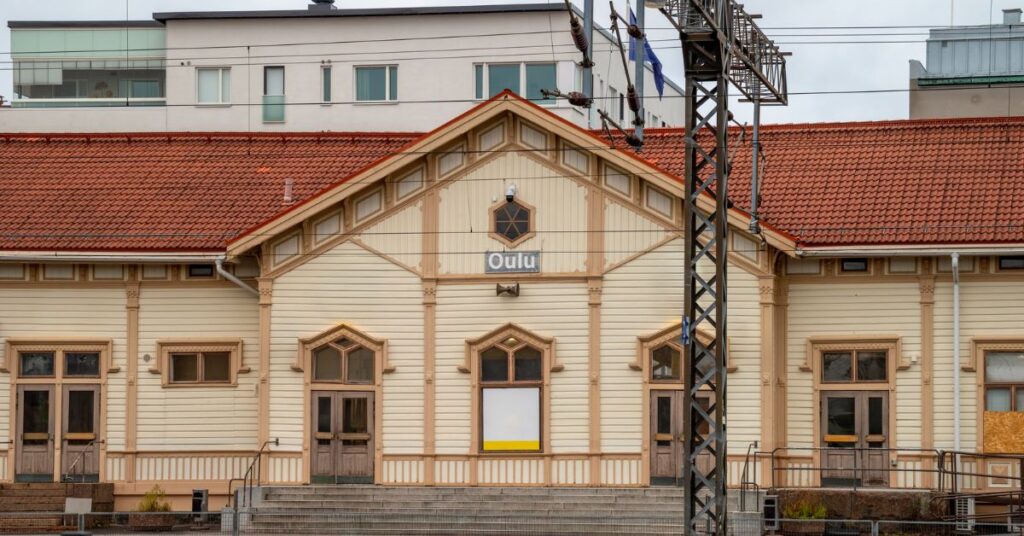
A double-decker train left Oulu shortly after 05:00 on Monday 10 August, travelling west along the coast and across the Tornio River into Sweden. Its journey restored passenger rail services between Finland and Sweden after a 38-year break.
Finland’s state-owned operator VR runs the service from Oulu to Haparanda in Sweden. It is the first scheduled passenger train on the route since 1988.
Flags out at Haparanda
Crowds welcomed the inaugural train at Haparanda station, waving Finnish and Swedish flags. Local time in Sweden was 06:00.
Transport and Communications Minister Lulu Ranne travelled on the first service alongside representatives from VR, transport agency Traficom, and officials from Oulu and Tornio.
“People have been waiting for a rail connection ever since,” Tornio mayor Jukka Kujala remarked, referring to the end of the previous service.
Finland’s transport minister described the reopening as evidence that cooperation between the two countries is growing “all the time.”
Two trains, every day
VR operates two return services daily between Oulu and Haparanda, with a journey time of 100 minutes.
The early-morning departure carried the inaugural crowds. A second train leaves Oulu at 19:50 and returns later that evening.
The route follows Finland’s west coast, stopping at Kemi and Tornio before crossing the border. Kemi, Tornio and Haparanda formed the original cross-border passenger link.

Boden, Luleå, then Stockholm
Although the reopened section is short, it connects Finland with Sweden’s wider rail network.
From Haparanda, passengers can take Norrtåg trains to Boden and Luleå. Boden connects with SJ services travelling north and south, while passengers from Luleå can continue to Stockholm. Travellers returning to Finland can connect onwards to Helsinki.
The route also makes it possible to travel about 5,000km by rail from Portugal’s Algarve to Kolari, Finland’s northernmost station, believed to be Europe’s longest train route. It also enables a 24-hour rail journey between Helsinki and Stockholm.
Change here for Sweden
The connection is not yet seamless. Passengers travelling south from Haparanda must change trains, and current timetables do not provide connections for every service.
VR told Finnish news agency STT that Norrtåg connections should improve during the autumn, with further timetable improvements expected next year.
VR chief executive Elisa Markula hopes the route will benefit from growing European interest in rail travel.
“Train travelling in all Europe is having a renaissance. Also in Finland, our passenger numbers are increasing a lot,” Markula told AFP.

Tracks too wide to match
Passenger trains between Kemi, Tornio and Haparanda last ran in 1988, when Finland withdrew its railbus service.
Low passenger numbers and differences between Finnish and European track gauges contributed to the closure. Finland uses the wider Russian gauge, a legacy of its time as part of the Russian Grand Duchy, but is now updating tracks towards the European standard.
Freight services never stopped, so this week’s service is historic as a passenger reopening rather than the first cross-border train in 38 years.
Accounts differ slightly on the length of the gap. Some dated the suspension to 1988, while others said that it lasted nearly 40 years.
Now the timetable talks
Operationally, the reopening is modest: two return journeys a day on a 100-minute route. Its wider significance is greater.
Restoring the missing Kemi–Haparanda passenger link reconnects Finland with Swedish and wider European rail networks. The immediate beneficiaries are people in the Tornio–Haparanda border region, followed by travellers seeking an alternative to flying to Stockholm and beyond.
For VR, the route will test whether rising passenger numbers can sustain a service that previously closed because of weak demand. Sweden can feed the additional passengers into existing Norrtåg and SJ services without requiring an entirely new network.
The next test will be the timetable. Better Norrtåg connections, fewer gaps between services and a smoother Haparanda transfer could determine how widely the route is used.
Finland’s track conversion programme will also shape how closely its rail network integrates with the rest of Europe in the years ahead.