
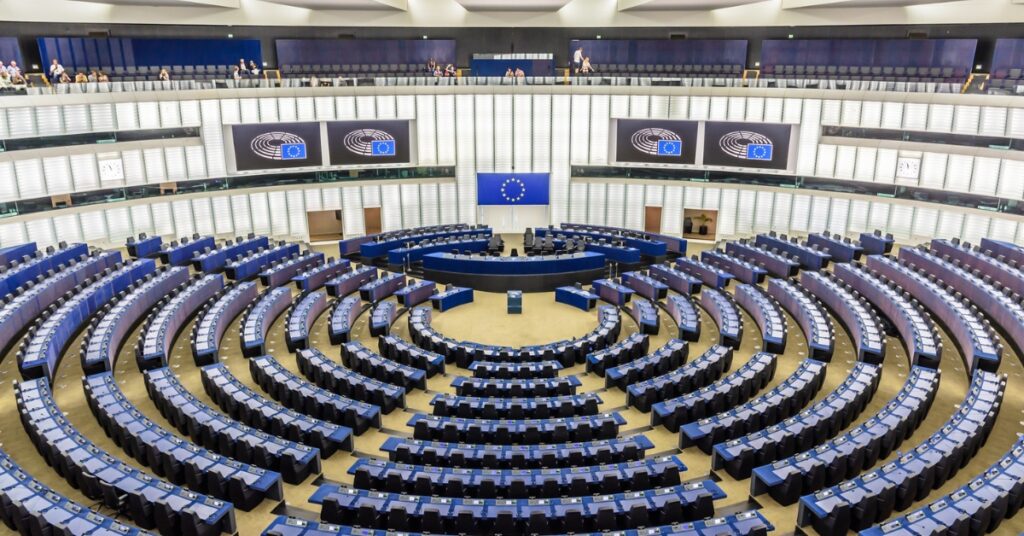
The European Parliament has strengthened EU air passenger rights, ending more than 13 years of deadlock over protections for delayed and cancelled flights.
MEPs approved the overhaul by 646 votes to 12, with three abstentions. The text had already been agreed with the Council of the EU in the Conciliation Committee.
The reform retains compensation for delays of three hours or more while adding protections for claims, baggage, and family seating. It updates rules in force since 2004, which have been repeatedly clarified by the EU courts.
Three-hour rule survives
The fight came down to one number, and it remained unchanged.
Compensation remains payable for delays exceeding three hours, cancellations announced fewer than 14 days before departure, and denied boarding. Payments still scale with distance.
Travellers can claim €250 for journeys up to 1,500 km and €400 for intra-EU trips beyond that distance. Other journeys between 1,500 km and 3,500 km also qualify for €400, while longer routes receive €600.
Earlier Council proposals would have raised the threshold to four hours for shorter trips and six for longer ones. Consumer groups warned that the change would have eliminated compensation for many routine delays.
Airlines keep get-out
Airlines secured clearer rules on when they can avoid paying compensation.
Compensation may be refused if a delay or cancellation is due to events beyond an airline’s control. The rules include a non-exhaustive list of these extraordinary circumstances.
It covers:
- natural disasters
- war
- bad weather
- unruly passengers, and
- strikes affecting airports, air navigation or ground handlers
Airlines can also halve compensation on their longest routes if they re-route passengers or limit the arrival delay to under four hours.
Even when a flight is cancelled, airlines must still care for stranded passengers. They must provide refreshments every two hours, a meal after three hours and accommodation for up to three nights when the disruption is beyond their control.

Cash back without chase
Consumer advocates argued that the rules matter only if passengers can use them.
Passengers who choose a refund over re-routing will receive it automatically. Those affected by disruption must receive clear claim instructions within four days of their journey ending.
Travellers have nine months to file a claim. Airlines then have 30 days to pay or explain that extraordinary circumstances apply, giving reasons for refusal and outlining the next steps.
Passengers cannot be required to open an account or download an app to access that information. Pre-filled forms replace the need to reconstruct booking and delay details.
A market for specialist claims firms emerged because direct applications were often slow or confusing. These firms took a share of successful payouts.
Baggage, seats, second chances
The reform also tackles common travel frustrations.
Passengers can use the return leg of a return ticket even if they miss the outbound flight, at no extra cost. One personal item, such as a small bag or backpack, must be carried in the cabin free of charge.
Airlines may still offer cheaper fares without hand luggage, but carriers, booking sites and search portals must display fares that include carry-on baggage from the start of the booking process.
Airlines can no longer charge for correcting a misspelt name or for printing a boarding pass after check-in. Passengers also gain the right to a digital boarding pass at check-in without requesting one.
Families and vulnerable travellers receive new protections. Children under 14 must be seated next to an accompanying adult free of charge. The rule also applies to pregnant women and passengers with reduced mobility.
These passengers can also claim compensation, re-routing and assistance if they miss a flight because the airport failed to get them to the gate on time.

Nobody loses, nobody sweeps
Reaction suggested that the deal delivered gains for both sides rather than a clear victory.
Virginijus Sinkevičius, vice-chair of the Transport and Tourism Committee, said that negotiators had prevented passengers from losing existing rights. The deal secured “better protection for families, people with reduced mobility, and others who need it most,” he added.
Rapporteur Andrey Novakov described the vote as a win for both travellers and airlines. “Today’s vote is a win,” he argued, adding that it ended more than 13 years of deadlock with clearer rules.
Clearer rules on extraordinary circumstances favoured airlines, which have faced litigation and inconsistent enforcement. But Parliament stopped short of making compensation rare in practice.
The Commission proposed the revision in 2013, and Parliament adopted its position in 2014. Governments remained divided until the Council revived the file in 2025, helping produce a final deal with concessions for both sides.
Smoother payouts, tighter borders
The upgrade comes as Europe’s short-stay travel rules become stricter at the border.
Redress after delays is becoming easier through automatic refunds, pre-filled forms and fixed deadlines. Crossing the border, however, is becoming more demanding.
The Entry/Exit System (EES), which records biometric data from non-EU nationals at the external borders, has been fully operational since 10 April 2026.
The European Travel Information and Authorisation System (ETIAS) is expected to launch in the near future, introducing pre-travel authorisation for visa-exempt visitors.
For travellers flying to Europe in 2026, the shift cuts both ways: stronger rights after delays come alongside more border formalities.
Real test waits at claims desk
The politics are settled, but implementation remains.
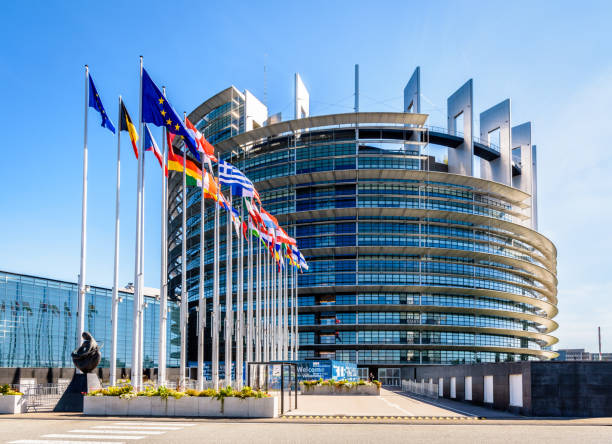
The Council must confirm the agreement by early August 2026. The rules will then enter into force 20 days after publication in the Official Journal, followed by a one-year preparation period for countries and companies.
Cross-border enforcement remains the key challenge. A single journey can involve an airline based in one country, departure from another and a disruption in a third.
If national authorities interpret the rules differently, the reform could recreate the confusion it aims to eliminate. Its success will depend on whether travellers can enforce their rights without another battle over claims.