
Migrant Rights Safe at Return Hubs, EU Commissioner Vows
Jun 25, 2026
Category: Asylum Border and Security EU Migration News
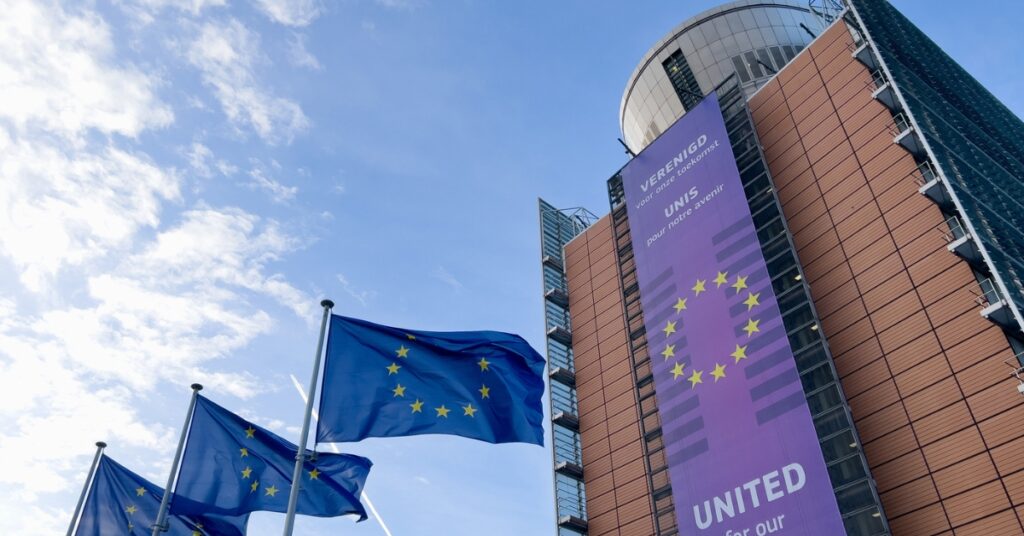
The European Union (EU) will protect the rights of rejected asylum seekers that it sends to return hubs in non-EU countries, the bloc’s migration commissioner pledged.
Magnus Brunner gave that assurance as EU migration ministers meet to mark the launch of the bloc’s new migration and asylum pact.
“Human rights standards and international law is non-negotiable,” Brunner told the news conference.
The European Commission will monitor any agreement to set up the hubs. The International Organisation for Migration and the UN refugee agency will also vet each deal to confirm it meets the legal safeguards.
Five states court African partners
Five EU members are in talks with African countries to host the hubs on their soil.
Germany, Austria, Denmark, the Netherlands and Greece lead those negotiations.
The Greek Migration Ministry said the five aim to seal deals with unnamed countries this year, with the hubs to run in 2027.
Brunner declined to name the countries under consideration, leaving that to the states doing the talking.
“We created the rules, we create the basis, but it’s up to the member state to negotiate agreements if they want to,” the commissioner said.
Cyprus plans to join once its six-month turn at the EU’s helm ends on 1 July.
Cypriot Deputy Minister for Migration Nicholas Ioannides confirms the island enters the talks then.
Rights groups sound alarm
The hubs form one strand of the new pact, and they troubled human rights groups.
Those groups questioned whether the centres would turn into long-term holding sites packed with failed asylum seekers stuck in legal limbo.
They also warned that rushed assessments could deny genuine refugees a fair hearing.
Ioannides played down the concerns, saying that the critics object to the project’s entire architecture.
He argued that the EU’s priority is to get the new rules up and running so that the bloc avoids being caught off guard by another surge like the one in 2015.
Brunner countered that the pact shields “actually those in need” through clearer, tougher rules that target smuggling routes and people smugglers.

Law clears next hurdle
The legal machinery behind the return system moves through the European Parliament.
Malik Azmani, a Renew MEP from the Netherlands, steered the regulation establishing a common system for returning third-country nationals without the right to remain.
The Civil Liberties Committee took up the provisional agreement on Monday, 15 June.
A plenary vote followed, and Azmani held a press conference straight after in Strasbourg.
Numbers Brunner leans on
Brunner pointed to falling arrival figures as proof that the reforms work. He cited a 90% drop in irregular arrivals on the Western Balkan route over three years.
He added a 67% fall in arrivals from Turkey to Greece’s Aegean islands in the first four months of 2026.

Border systems, long game
The hubs sit at the enforcement end of the EU’s migration setup. The Entry/Exit System (EES) and the European Travel Information and Authorisation System (ETIAS) sit at the entry end.
EES logs every entry, exit and refused entry for non-EU short-stay travellers, and flags anyone who overstays the 90-day limit.
That detection gains real force once a removal route exists, since an overstay flag means little without somewhere to send people.
ETIAS screens visa-exempt travellers before they leave home and can refuse higher-risk applicants, thereby reducing irregular inflows at the front.
The two systems feed the front of the chain. The hubs handle people who have already been rejected on EU soil.
Most lawful long-term migrants stay clear of both ends. Holders of residence permits and long-stay visas fall outside EES registration and the return mechanism, so their status remains unchanged.
Exposure climbs for those whose status lapses. A short-stay overstay caught by EES, or a failed asylum claim, can route someone towards the return system.
The rights groups’ warnings bite hardest here. Faster processing and offshore hubs increase the risk that people awaiting removal end up in legal limbo.
Pact still taking shape
The same day, Cyprus announced a deal with Lithuania to relocate migrants granted international protection to the Baltic country.
The agreements that matter most still sit on the table. The five negotiating states have months to turn intent into signed deals, and the hubs only open in 2027.
Until then, Brunner’s promise of safeguards rests on monitoring that no agreement has yet tested.