
Biometric Checks in Schengen Border System Jump 88%
Jun 3, 2026
Category: Border and Security EU News
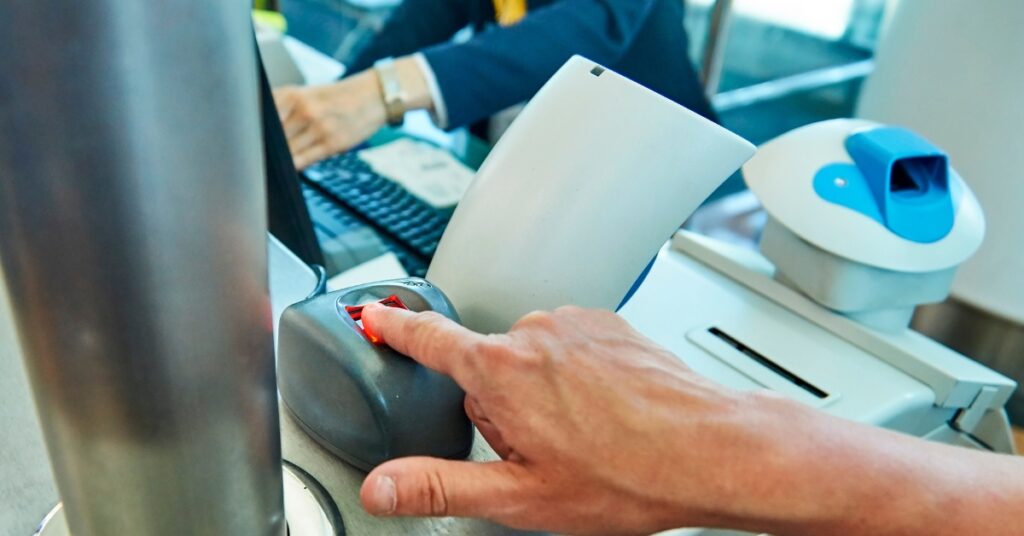
Biometric searches in Europe’s Schengen Information System (SIS) rose by 88% in 2025, the standout figure in annual statistics published by the European Union (EU) agency eu-LISA on 25 May 2026.
eu-LISA reported that authorities ran more than 13.1 million biometric searches over the year. That works out at almost 36,000 a day, or roughly 1,500 every hour.
The jump points to wider use of fingerprint and other identification tools at Europe’s borders. eu-LISA linked the rise to more accurate and efficient checks across the system.
Fingerprints lead surge
Biometric searches run through SIS-AFIS, the system’s Automated Fingerprint Identification System. It has been operational since March 2018.
Extra search types were added from March 2023. Five now exist:
- Fast Print
- Common Print
- Mark to Print
- Mark to Mark, and
- Print to Mark.
The last of these was reported for the first time in 2025. Even so, biometric searches made up just 0.07% of all activity. The other 99.93% were alphanumeric, meaning text-based checks on names, document numbers and similar data.
Searches hit record high
Total searches across the system reached more than 17.7 billion in 2025. That marked an 18% rise on the previous year.
The daily average came to nearly 49 million searches, or over 2 million an hour. Counting alert-management operations as well, total access to the system topped 17.78 billion.
Automated searches drove much of the growth. These exceeded 12 billion in 2025, up from 9.9 billion in 2024 and just 4 billion in 2021. Two countries ran most of the traffic. The Netherlands accounted for 29% of searches and Belgium 22%, together more than half the total.

Person alerts climb fast
The database held 94,605,202 alerts at the end of December 2025, a 2% increase on the year before.
Most of these concern objects, such as stolen vehicles, documents and licence plates. Just over 2% relate to people.
Alerts on persons reached 1,990,038, up 19% in a year. That category has roughly doubled since 2022, a shift eu-LISA tied to the launch of the renewed system in March 2023.
Return decisions made up the largest share of person alerts at 41%. Refused entry and stay followed at 34%, with discreet, specific and inquiry checks linked to national security at 11%.France, Italy and Germany stored the most alerts overall. France held 19%, Italy almost 19% and Germany 17%, together accounting for 55% of the total.
Hits drop against trend
Not every figure climbed. Hits on foreign alerts fell 8% to 364,984 over the year.
A hit occurs when a search matches an alert created by another country. These were reported through the SIRENE Bureaux, the network of national contact points that exchange extra information on alerts.
The daily average came to around 1,000 hits, or more than 40 an hour. Return decisions accounted for the biggest slice at 27%, followed by national-security and inquiry checks at 20%.
The growth in person alerts showed up clearly in the results. Four of every five hits in 2025 came from alerts on people rather than objects.

System aids returns policy
The figures included a detailed look at how the database supports the removal of people staying in Europe illegally.
By the end of December, 819,413 alerts were stored for third-country nationals subject to a return decision. These generated 103,901 hits on foreign alerts.
Member States confirmed 20,392 returns linked to those alerts. Of these, 1,480 involved travellers subject to removal.
A further 11,368 information exchanges were reported on countries’ own return alerts at external borders.
Database underpins border checks
The SIS is the most widely used large-scale IT system in Europe. It helps police and judicial authorities cooperate while reinforcing the bloc’s external borders.
The term Member States covers all EU countries plus the Schengen Associated Countries of Iceland, Liechtenstein, Norway and Switzerland. The agencies Europol and Frontex also searched the central system, while Eurojust reported none.
eu-LISA manages the central infrastructure and completed the report in April 2026. The agency keeps the system available, secure and updated so national authorities can exchange information quickly.
Some earlier dips in the data have clear causes. Two deletion campaigns cut stored records in 2021, following Brexit, and in 2022, after a change to the legal framework. Search numbers in 2020 were held down by COVID-19 travel restrictions.

Numbers point one direction
The 2025 figures show a system handling more traffic than ever, even as confirmed hits dipped.
Searches, stored alerts and biometric checks all rose, with person alerts climbing fastest. The single fall came in hits on foreign alerts, down 8% on the year.
For the millions of travellers and authorities crossing and guarding Europe’s borders, the database now processes close to 49 million searches a day, and shows no sign of slowing.