
EU Borders Tighten as Illegal Crossings Plunge 40%
May 26, 2026
Category: Border and Security EU Migration News
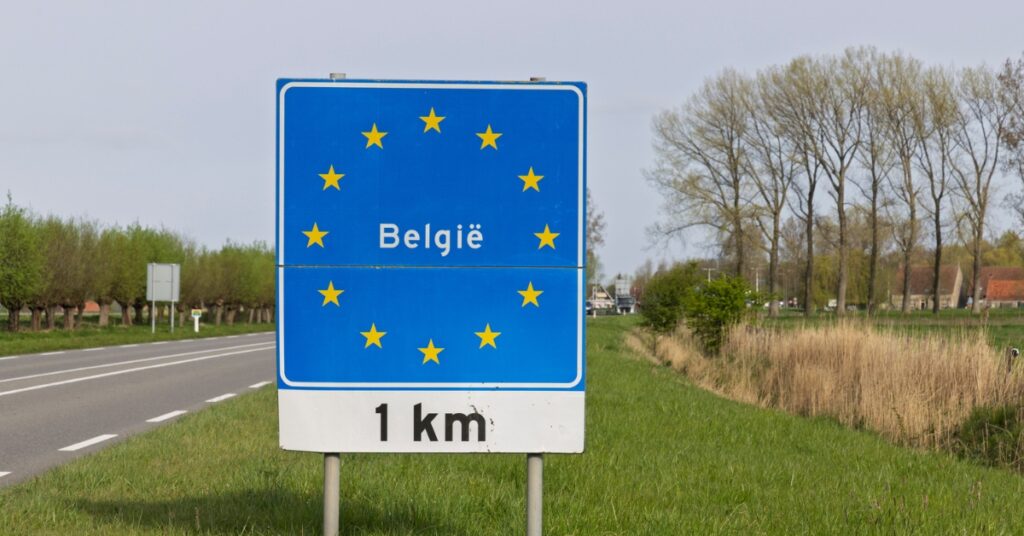
Irregular border crossings into the European Union (EU) have fallen sharply, with EU border management policies showing measurable results across most major migration routes in early 2026.
Frontex recorded just over 28,500 detections between January and April, a drop of 40% compared with the same period last year.
The European Commission’s annual ‘State of Schengen’ report showed a 26% fall across the whole of 2025 against 2024.
Crossings drop across routes
The Central Mediterranean stayed the busiest route, with around 8,500 arrivals between January and April. That figure is down 46% year-on-year, with Libya remaining the main departure point.
The Eastern Mediterranean saw around 8,400 crossings, a 32% fall. The Libya-to-Crete corridor stayed active even as other corridors slowed.
Top nationalities on the Central route were Bangladeshi, Somali and Sudanese travellers. The Eastern route saw mostly Afghan, Sudanese and Yemeni arrivals.
Channel crossings towards the United Kingdom almost halved to around 9,900 attempts. That figure counts both successful arrivals and those stopped before leaving.
Routes shift as smugglers adapt
The Western Mediterranean bucked the trend, with detections rising 50% to about 5,200. Algeria became the main departure country as tighter controls in Morocco pushed traffic east.
The Western African route saw the steepest decline of all, at 78%. Detections fell to roughly 2,300 after preventive measures by Mauritania, Senegal and The Gambia, working with Spain and the EU.
The Western Balkan route registered around 2,800 detections, down 19%. The Croatian border with Bosnia and Herzegovina stayed the main exit from the region.
The Eastern Land Border saw around 1,100 detections, a 49% drop. Pressure from Belarus resumed in March after legislative changes eased access to the border zone, and crossings from Ukraine mostly involved men avoiding military conscription.

New border system goes live
The Entry/Exit System (EES) became fully operational on 10 April 2026, six months after its progressive launch in October 2025. It now runs at the external borders of 29 European countries.
The system replaces passport stamping with digital records for non-EU short-stay travellers. It collects names, dates of birth, nationality, entry and exit records, facial images and fingerprints.
In its first six months, EU countries logged more than 66 million entries and exits. About 32,000 people without the right to enter were refused.
Cyprus and Ireland continue to stamp passports manually. Travellers can check how much of their 90-day allowance remains through the official portal.
Exemptions cover EU nationals, family members of EU citizens, residence permit and long-stay visa holders, and citizens of Andorra, Monaco, San Marino and Vatican City. Researchers, students, au pairs and intra-corporate transferees also sit outside the system.
ETIAS launch nears
The European Travel Information and Authorisation System (ETIAS) will start operating in the last quarter of 2026. It will apply to roughly 1.4 billion people from 59 visa-exempt countries and territories.
Travel authorisations will cost 20 euros and last up to three years, or until the passport expires. Some travellers will be exempt from the fee.
Most applications should process within minutes. Decisions can take up to four days, extendable to 14 days if more information is needed, or up to 30 days if an interview is required.
An ETIAS authorisation does not guarantee entry. Border guards will still verify entry conditions on arrival.
Stays in Cyprus are counted separately and do not eat into the 90 days allowed in the other ETIAS countries.

Returns hit decade high
Returns of people without a right to stay in the EU reached 28% in 2025. That is the highest rate in 10 years, according to the Commission.
The Commission described the result as the product of joint efforts by EU countries. A legislative proposal on ‘return digitalisation’ is planned for 2026.
The proposal would build digital case management systems for national authorities handling return cases.
Brussels sets next priorities
The Commission has listed several focus areas for the 2026 to 2027 Schengen cycle. Work will continue on EU visa policy, with a planned revision of the Visa Code to address security elements.
Digital border measures will progress further, with full ETIAS rollout and continued EES operation. The Commission has asked the Schengen Council to discuss the report and adopt the new priorities at the Justice and Home Affairs Council in June.

Risks remain at sea
The drop in crossings has not removed the human toll. The International Organization for Migration reported that more than 1,200 people have died in the Mediterranean so far this year.
Smuggling networks keep loading travellers onto overcrowded, unseaworthy boats regardless of conditions. Frontex has deployed more than 3,800 officers at the EU’s external borders.
Conflict in the Middle East carries risk for migration flows, the agency warned. Instability in Lebanon raises particular concern about possible sea departures towards Cyprus and other Mediterranean destinations.
Pressure points still loom
The figures point to a sustained drop in arrivals, but Frontex noted that detections count crossings rather than individuals. The same person can be counted more than once at different border points.
Weather, security in departure countries, and how quickly smuggling networks adapt to new controls will all shape what comes next. The Western Mediterranean rise shows how fast flows can move when one route closes and another opens.
Brussels is betting that EES, ETIAS, faster returns and tighter cooperation with partner states can lock in the drop. Whether the trend holds will become clearer as summer brings warmer weather and the year’s busiest crossing months.