
EU Rail Reform to End Cross-Border Ticket Chaos
May 22, 2026
Category: Border and Security EU News Tourism
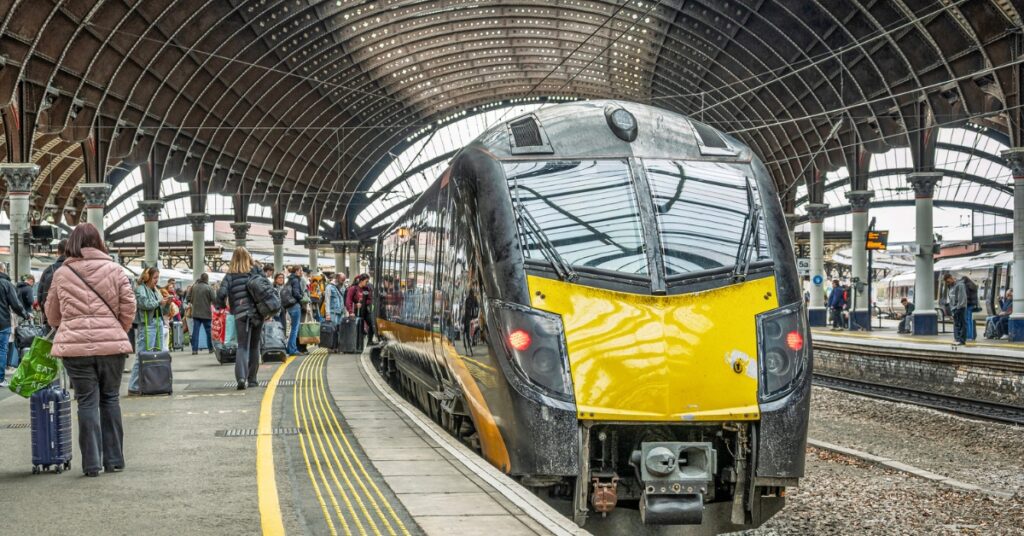
The European Commission has unveiled new rules to let train passengers book cross-border journeys with a single ticket, even when several operators are involved.
The package promises “one journey, one ticket, full rights” for travellers crossing the bloc by rail.
It joins a growing pile of European Union files reshaping how people move and live across the continent, sitting alongside major efforts like the Pact on Migration and Asylum.
The proposal has already split Brussels from the industry it targets.
Brussels takes aim at fragmentation
Three legislative proposals were adopted under the package: a multimodal booking proposal, a rail ticketing proposal known as the Single Digital Booking and Ticketing Regulation, and a revision of rail passenger rights.
Rail operators would be forced to make their tickets available to any online platform that wants to sell them.
Companies holding at least 50% of a national market would have to display competitor services on their websites and sell those tickets on request.
Platforms would need to show offers neutrally, sorted by greenhouse gas emissions where feasible.
Member states are also being told to speed up data-sharing rules under the Intelligent Transport Systems Directive.
One ticket, full rights
Passengers buying a single ticket across multiple operators would gain full protection for the whole trip.
That covers rerouting, reimbursement, compensation and assistance when connections fall through.
Overnight accommodation and meals would be covered where necessary. Travellers left behind by a disruption could hop on the next train.
The company responsible for the delay would carry the bill.
Today, when a journey involves separate tickets from different operators, companies often refuse responsibility for missed connections.
“Freedom of movement is one of Europe’s greatest achievements,” argued Apostolos Tzitzikostas, Commissioner for Sustainable Transport and Tourism, who promised travel that is “simpler, smarter and more passenger friendly”.
Raffaele Fitto, Executive Vice-President for Cohesion and Reforms, framed rail connectivity as a cohesion and Single Market issue, linked to the bloc’s “Right to Stay” agenda.

Industry pushes back hard
The Community of European Railway and Infrastructure Companies (CER) slammed the package as regulatory overreach.
“I’m not aware of any case where somebody is obliged to sell the product of a competitor. Think about Lufthansa obliged to sell Ryanair” flights, CER Executive Director Alberto Mazzola told AFP.
Mazzola warned that the rules would benefit non-European booking giants, push up ticket prices and discourage investment in better booking tools.
“Today’s proposals favour big digital platforms, risk increasing ticket prices, undermine railways’ investments in innovation and set aviation apart…” he stated.
CER points out that the Commission’s own Regulatory Scrutiny Board flagged weak cost-benefit analysis and questioned whether market failure has actually been proven.
According to Eurobarometer figures cited by the lobby group, 73% of EU citizens who tried booking two or more connecting trains with different operators found the process easy.
International digital rail ticket sales jumped by as much as 75% in Germany in early 2026 compared with 2025, thanks to an industry-built standard called the Open Sales and Distribution Model.
Climate goals drive change
Brussels wants to shift passengers from short-haul flights to trains.
Rail made up just 0.3% of EU transport emissions in 2022, against almost 12% from civil aviation.
In 2024, nearly 400 million people flew internationally within the bloc, while only around 150 million took cross-border trains.
A 2025 YouGov survey for the advocacy group Transport & Environment found that almost two in three respondents had skipped rail trips because the booking process was a hassle.
Studies show booking a train takes 70% longer on average than booking a flight.
“Booking cross-border train journeys within Europe is still unnecessarily complicated,” noted Vivien Costanzo, a centre-left MEP.
“With more competition on the railways, passengers will benefit from better service and lower prices,” added Jan-Christoph Oetjen, a centrist lawmaker.
Mazzola pushed back on the diagnosis, arguing that cross-border rail accounts for only about 7% of train trips in Europe because high-speed infrastructure is patchy, not because of ticketing problems.

Border tech complicates vision
The dream of frictionless travel runs into the reality of new border systems for non-EU travellers.
Visa-exempt visitors must hold a valid European Travel Information and Authorisation System (ETIAS) authorisation, costing EUR 20 and lasting up to three years or until passport expiry.
Every short-stay crossing is logged by the Entry/Exit System (EES), with facial images and fingerprints captured at the border.
If Brussels succeeds in pulling passengers off planes and onto trains, more non-EU travellers will reach the Schengen Area through rail border points rather than airports.
Rail stations have historically been less equipped for biometric processing than airports, raising questions about capacity at international hubs.
Non-EU travellers also face the 90-days-in-180 cap. Frequent cross-border rail users could be more exposed to unintentional overstays.
EU nationals, long-term residence permit holders and family members of EU citizens remain exempt from EES, so they stand to gain the most from one-click bookings without added border friction.
Nationals of Andorra, Monaco, San Marino, and holders of Vatican or Holy See passports are also exempt, making cross-border rail particularly attractive for these groups.
CER’s warning about non-European booking giants gaining ground adds a data-protection wrinkle, since passenger data flowing through platforms outside the EU could complicate the privacy safeguards behind EES and ETIAS.
Under EES rules, transport carriers can already verify whether short-stay visa holders have used their authorised number of entries, leaving open the question of how third-party rail booking platforms would slot into those checks.
Battle lines drawn in Brussels
The package now heads to the Council and the European Parliament under the ordinary legislative procedure.
State-backed national rail champions are expected to lobby member states hard against the rules. Prolonged negotiations between MEPs and capitals are likely before any compromise text emerges.
The Iran war has pushed jet fuel prices higher and raised concerns about shortages during Europe’s peak travel season, giving rail what Transport & Environment’s Victor Thevenet called a “window of opportunity” to win passengers over.
CER has signalled it is ready to engage, but Mazzola warned that regulation “will not help achieve that vision any faster than the sector’s own initiative and risks creating the very problems it intends to solve”.
For weary passengers juggling tickets across borders, the wait for a smoother ride goes on.