
Group Tours and ETIAS: A British Traveller’s Guide to the New EU Entry Rule
Jun 20, 2026
Category: ETIAS ETIAS Tips
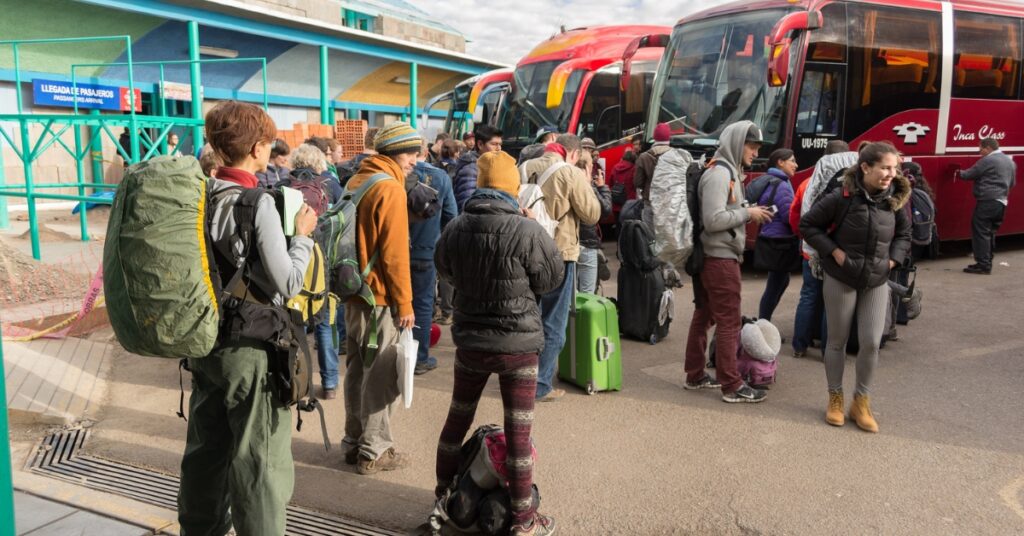
You’ve booked a coach tour through the Alps, a Rhine river cruise or an escorted holiday taking in three or four European countries. One question remains: does the new ETIAS rule apply to you?
It does. From the last quarter of 2026, most British nationals will need an ETIAS travel authorisation for short stays in the European Union, and booking as part of a group does not change that obligation.
Crucially for travellers, group ETIAS applications don’t exist. The authorisation is tied to your passport, so every adult on your tour applies individually through the official ETIAS website or app.
This guide covers who needs to apply, whether your tour operator can do it for you, how a single authorisation works across a multi-country itinerary and what to expect at the border now that the EES is live.
What ETIAS Means for British Travellers After Brexit
Brexit took the United Kingdom out of the EU, so British passport holders are now treated as visitors from a non-EU country. That status is exactly why the European Travel Information and Authorisation System (ETIAS) will soon apply to you.
Why British Nationals Will Need ETIAS
While British nationals can enter Europe visa-free for short stays, a visa waiver is not the same as an ETIAS. You still require an ETIAS travel authorisation to enter any of the 30 European countries.
This applies to British citizens and to less common categories too. British overseas citizens, British protected persons and British subjects all fall under the same rule.
When ETIAS Rules Take Effect
ETIAS is scheduled to start in the last quarter of 2026, and no action is needed from you before then. The EU will confirm the exact launch date several months ahead, so you have time to prepare.
The Withdrawal Agreement Exemption
Some British nationals are exempt from the ETIAS requirement entirely. If you are a beneficiary of the Withdrawal Agreement, you and your family members are exempt, as long as you carry documents proving that status.
This mainly covers UK nationals living in an EU country before the end of the Brexit transition. If you hold a residence permit from one of these nations, you can skip ETIAS and travel using that document instead.
Your situation decides which route applies to you. The table below sorts the most common UK traveller types and shows what each one needs at the border, where border guards check that your paperwork matches your stay.
| Traveller Type | What You Need |
| Short-stay tourist on a standard British passport | ETIAS travel authorisation |
| Withdrawal Agreement beneficiary | Exempt, carry proof of status |
| British national resident in an EU country with a residence permit | Exempt, travel on that permit |
| British national staying longer than 90 days | Long-stay visa or residence permit |
If none of the exempt categories applies to you, plan to apply for ETIAS before your trip. For most British holidaymakers heading off for a week or two, the standard short-stay route applies.
Do You Need ETIAS for a Group Tour?
You still need an ETIAS, and travelling as a group changes none of that. The authorisation works the same way whether you book solo or join 40 other people on a coach.
ETIAS is Individual, Not Collective
Each ETIAS is issued to a single person and linked to that person’s travel document. There is no group form, no family form and no way to bundle several travellers under a single authorisation.
That means everyone on your tour who is from a visa-exempt country holds their own ETIAS. A shared booking reference or a single invoice from the operator does not merge your applications into a single application.
The link to your passport is the reason. When you cross into the Schengen Area, the system checks the authorisation against the exact document you applied with, on a person-by-person basis.
The Danger of Assuming Your Tour Company Sorts Everything
Escorted tours handle a lot for you, from hotels to border-area logistics, so it is easy to assume that ETIAS falls into the same pile.
Booking a package holiday doesn’t automatically guarantee this. You remain personally responsible for your travel authorisation, even on guided tours. If yours is missing or incorrect, the group cannot cover for you at check-in or the border.
A few quick checks keep you clear:
- Confirm whether your operator is applying for you or expecting you to do it yourself.
- Check that your own ETIAS is approved and linked to the passport you will carry.
- Do not rely on a fellow traveller’s status, since each authorisation stands alone.
This applies wherever your itinerary goes. A tour that includes Cyprus follows the same individual rule as one that stays on the mainland, so every person on the trip needs their own authorisation sorted before departure.

Who in Your Tour Group Needs to Apply for ETIAS
Every traveller from a visa-exempt country needs their own ETIAS, regardless of age. That covers the toddler in the front row of the coach and the grandparent at the back.
Adults, Children and Older Travellers
Age does not get anyone out of holding an authorisation. Children need an ETIAS, like adults, but a parent or legal guardian must submit the application for anyone under 18.
What changes with age is the cost, not the requirement. Applicants under 18 or over 70 pay no application fee, while everyone else pays EUR 20.
This split impacts multigenerational trips. For instance, a family of five with two children and a grandparent must still file five separate applications, but only the two working-age parents pay.
Mixed-Nationality Groups and Family Members of EU Citizens
Group tours often include mixed nationalities. If someone in your party is a family member of an EU, Icelandic, Liechtenstein, Norwegian or Swiss national, they can apply under family-member status and skip the fee.
That status is not automatic; it depends on the traveller’s relationship and their paperwork. They claim it during their own application, so it does not change anyone else’s filing in the group.
Travel-document rules also shift by nationality, which affects border security checks on arrival. A non-British group member should confirm what their own passport requires before assuming the British timeline fits their travel plans.
Run a check at the booking stage rather than at the airport. Sorting who pays and who applies early keeps the whole group moving together on the day.
Can a Travel Agent Apply for ETIAS on Your Behalf?
A tour operator or travel agent can submit your ETIAS for you. They do it through a formal authorisation called a declaration of representation, signed by both of you.
The Declaration of Representation
A third party, including a travel agency, can compile and submit your online application once you both sign a declaration of representation. That signed form is your proof that you authorised them and handed over your personal data.
Each traveller needs a separate declaration, so a single document cannot cover the entire party. Picture a family of five entrusting an agency with the job: that is, five declarations, not one shared form.
ETIAS Fees, Scams and Fair Service Charges
The official fee is EUR 20, paid to the system itself. An intermediary may add a service charge on top, but it should be reasonable, and you can report anyone who overcharges or fails to submit your application.
Watch out for sites that look official but are not. The official route is the ETIAS website or app, and the European Commission publishes guidance on recognised documents and processes, so check there before trusting a third party.
These checks keep you on the safe side:
- Use only the official ETIAS website or app, never a copycat domain.
- Treat any fee far above EUR 20 as a red flag.
- Keep your signed declaration of representation in case you need proof later.
Protecting Your Data and Your Contact Details
The email address on your application must be one you personally control. It carries every official message about your authorisation, from approval to any later change in status.
Your data is held to strict standards, and only authorised bodies, such as national authorities and Europol, can access it under strict conditions. That protection only works if the contact details on file are genuinely yours, not an agent’s inbox.
You stay responsible for the data even when someone else submits it. Ask to see the draft before they file it, and confirm that every detail matches your passport.
Getting these basics right ensures third-party convenience doesn’t cost you control. While they submit the application, the authorisation and responsibility remain yours.

What You Need to Apply Before Your Tour Departs
You need three things ready before you apply: a valid passport, your personal and trip details, and a payment card. Get them lined up before your departure date locks in.
Your Passport and its Validity
ETIAS is based on a valid travel document, so your passport sits at the centre of the application. It must not expire in under three months from your intended departure, and it cannot be older than 10 years.
Travelling on a passport close to expiry is a gamble you do not want on a group trip. If the document falls short, you can be refused at the border, and a fixed-itinerary tour will not wait while you sort it out.
Required Information on Your ETIAS Application
The form asks for more than your name and passport number. You will give personal details, your parents’ first names, travel-document details, your education and occupation, and the country where you will first arrive.
You must also declare any past criminal convictions, recent travel to conflict zones or deportation orders. These questions screen visa-exempt tourists entering the Schengen zone in ways an ordinary visa application would not.
The country of first stay is required, but it does not lock your plans. Once your authorisation is approved, you can change your route freely across the participating countries.
Payment
You pay the fee with a card during the application. Several online payment options work, so you are not tied to one card type.
Some travellers are exempt from the fee based on age or family status. Check your eligibility before paying so you aren’t caught out.
Pulling these pieces together early keeps the whole process quick. Most of the work is gathering details, not filling in the form, so a few minutes of prep before you sit down will save you a scramble later.
How One ETIAS Covers a Multi-Country Tour Itinerary
One ETIAS covers your whole tour, not just the first country you land in. A single authorisation lets you move across all 30 participating countries on the same trip.
30 Countries, One Three-Year Authorisation
Your ETIAS is valid in all participating countries for up to 3 years, or until your passport expires. That means a tour crossing four or five borders runs on the one authorisation you already hold.
The three-year window keeps paying off after this trip. If you book another European tour for tourism before it expires, the same ETIAS still covers you, with no need to reapply.
How the 90/180-Day Rule Affects Back-to-Back Tours
ETIAS is built for short stays, not extended living. You can stay for up to 90 days within any 180-day period across the participating countries, and an ETIAS does not stretch that limit the way a long-stay Schengen visa would.
This impacts travellers linking multiple trips. Back-to-back tours or frequent short breaks within a half-year count towards the same 90-day limit, so check your balance before booking.
The Cyprus Exception
Cyprus counts your stay on its own clock. The time you spend there does not count towards the 90 days you can spend in the other participating countries.
That separate count can work in your favour on a longer trip. Here is how the days add up on a tour that includes a transit through the mainland before reaching Cyprus.
| Stage of Your Tour | Days Used | Counts towards the 90-day limit? |
| 30 days across Greece and Malta | 30 of 90 | Yes |
| Up to 90 days in Cyprus | Separate count | No |
| Return to other participating countries | 60 of 90 remaining | Yes |
So a group spending 30 days in Greece and Malta still has 60 days left for the other countries, even after a long stay in Cyprus. Cyprus time sits outside that pool entirely.
Map your days against this before you commit to a packed itinerary. Knowing how the count works lets you plan a multi-country tour without running into the limit halfway through.

Timing Your ETIAS Application for Departure
Apply well before your departure date, not the week you fly. Most authorisations come through within minutes, but some take much longer, and a group tour will not change its date for you.
How Long Processing Takes
Most ETIAS applications are decided within minutes. Some take up to four days, and that can stretch to 14 days if you are asked for extra documentation, or up to 30 days if you are called for an interview.
You cannot predict which path your application takes. Treating the 30-day figure as your planning window keeps a slow decision from clashing with a fixed departure.
Here are the timeframes you might hit:
- Standard decision: Minutes to four days
- Extra documentation requested: Up to 14 days
- Interview required: Up to 30 days
Apply Before You Book or Pay
An ETIAS is not guaranteed, so getting one before you commit money is the safer option. Apply ahead of any non-refundable tour payment, rather than booking first and hoping the authorisation follows.
If you have used a US ESTA, the habit of sorting your authorization before flying carries straight over. The same forward planning protects you here, ensuring your ETIAS is checked before you reach Europe.
Last-Minute and Limited-Validity Options
Leaving it late is not the end of the road. Most applications still process fast enough that a last-minute filing often clears in time, though you carry the risk if yours does not.
A limited-validity authorisation may be available in specific circumstances, such as urgent travel. The Entry/Exit System (EES) registers you at the border on arrival, so your ETIAS needs to be sorted before you get there, however tight the timing.
Give yourself room rather than relying on the fast track. A few weeks’ lead time costs nothing and removes the one variable a fixed departure date cannot absorb.
At the Border: What Your Group Should Expect
A valid ETIAS gets you to the border, but it does not guarantee you through it. Expect carrier checks before you board and biometric registration upon arrival.
Carrier Checks Before Boarding
Your airline, coach company or ferry operator checks your ETIAS against your passport before you travel. If the two do not match, you are refused boarding, and that is decided for each traveller on their own document.
This is why the details from your ETIAS application process have to be exact. One person’s mismatch holds up only them, not the group, so each traveller carries the passport they applied for.
EES Registration for the Group
The EES now registers you at the external border on arrival. It captures your facial image and fingerprints and records each entry and exit, replacing the old passport stamp.
The system is run by eu-LISA, the EU agency behind these large-scale border databases. First registration takes a little longer, so a full coach can mean a slower first crossing while everyone is enrolled.
Two countries on your itinerary work differently:
- Cyprus continues to stamp passports manually rather than using the EES.
- Ireland also keeps manual stamping, so a stop there follows the old process.
If your tour includes Cyprus, build in that the border step there looks different from the mainland. The same trip can mix biometric registration and a manual stamp depending on the country.
Border Guards Have Final Say
Border control officers make the entry decision, not the carrier and not your ETIAS. They verify that you meet the conditions of entry and can refuse you entry, even with a valid authorization in hand.
They may ask for supporting documents, and your details are checked against security databases, including alerts shared through Interpol. Have your trip details ready so that any questions are answered quickly, and the group keeps moving.
Knowing each step in advance keeps the crossing calm for the whole group. Carry the right passport, expect the biometric step and treat the border guard’s questions as routine.
Avoiding Common Pitfalls on Group Bookings
Most ETIAS problems stem from small errors that are caught too late at the border. A few checks before you travel, keep one person’s slip from disrupting the whole group.
Passport Detail Mismatches
The most common error is a typo in your passport number. Mixing up the number “0” and the letter “O” is enough to break the link between your ETIAS and your document.
If those details do not match, you will be refused boarding and entry. Visa-exempt travellers carry the same risk here as anyone else, so read your number back against the passport before you submit.
Changing or Renewing Your Passport Before the Tour
A new passport means a new ETIAS, for any reason at all. Your authorisation is tied to the exact document you applied with, so a renewal between booking and departure leaves you without a valid link.
If your passport changes after you book, reapply through the official website or mobile app well before you fly.
Losing Access to the Application Email
The email on your application contains all official messages regarding your authorisation. That includes notice of any revocation or change in status, recorded through the Schengen Information System (SIS).
If a tour operator or agent applied for you, make sure the email on file is one you control. An inbox you cannot open means missing alerts that could affect your trip, and you would only find out at the border.
These rules apply whether you are a visa-exempt or visa-free traveller on a short stay. Tours visiting Norway or any other participating country run identical checks, so careful planning protects everyone in your group.
Sort Your ETIAS Before You Pack
Before your tour leaves, run a quick check across the whole group: each traveller holds a valid ETIAS linked to the passport they will carry.
Apply only through the official ETIAS website or app, and steer clear of unofficial intermediaries that charge more for the same authorisation.
Organised group travel for short-term stays across Europe runs much as it always has, as long as every member completes this single individual step before departure.