
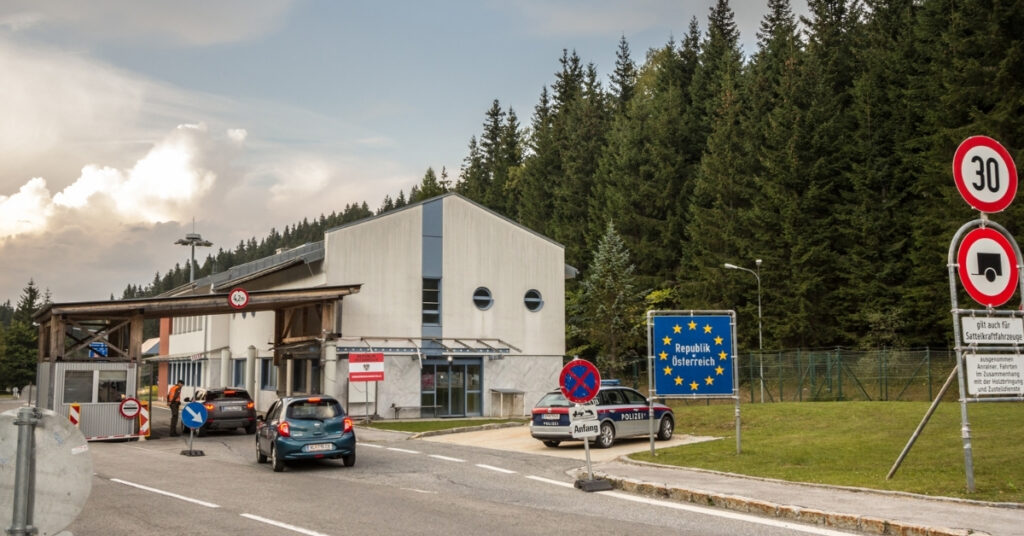
Germany asylum applications fell by more than half in 2025, hitting their lowest level in over a decade, according to official figures released this week.
The drop comes after Chancellor Friedrich Merz’s government tightened border controls across Germany, increased returns and limited family reunification.
Border rules tighten
Official figures from Germany’s Federal Interior Ministry showed that the country recorded about 113,000 first-time asylum applications in 2025, down from nearly 230,000 in 2024.
The ministry said that the total was less than half the previous year’s figure and among the lowest annual levels recorded since 2013, excluding the first year of the pandemic.
The Interior Ministry attributed the decline to stricter migration measures introduced under Chancellor Friedrich Merz’s government.
These measures included turning people back at the border, limiting family reunification, ending fast-track citizenship routes and increasing migrant returns.
Interior Minister Alexander Dobrindt said in a public statement: “Those who have no claim to protection should not come; those who become offenders must leave.” The ministry also said that deportations increased by around 20% in 2025.
Checks intensify at borders
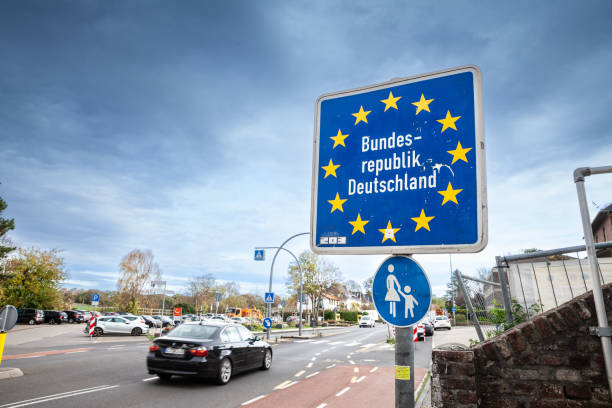
Federal police stepped up border checks throughout 2025, according to the Interior Ministry.
Authorities reported tens of thousands of attempted entries where people were refused entry or turned back, particularly at land borders with Poland, Austria and the Czech Republic.
The government also confirmed changes to how asylum seekers receive support. In several federal states, cash benefits were replaced with prepaid debit cards that can only be used in physical shops.
Voluntary humanitarian intake programmes also ended during the same period.
In a New Year address, Chancellor Merz said that Germany was not closing its doors entirely to asylum seekers.
He said that the government was working to open legal migration routes while restricting irregular entry, stating: “For us, humanity and order are two sides of the same coin.”
Shifts behind figures
Data from Germany’s Federal Office for Migration and Refugees showed that the decline in asylum applications affected several nationalities, including applicants from Syria, Afghanistan and Turkey.
First-time applications fell sharply compared with totals recorded in 2024 and 2023.
Figures cited by Mediendienst Integration show that around 948,000 Syrians were living in Germany by late 2025.
The Interior Ministry said that some Syrian nationals returned voluntarily during the year through a government-supported return programme that covered travel costs and provided initial financial assistance.
Lower asylum figures also coincided with changes along migration routes into the European Union. Data by German authorities showed fewer people arriving via the eastern Mediterranean and Balkan routes during 2025.
Italy reported lower arrivals after tightening its own migration controls, while Poland expanded border policing along its eastern frontier.
Politics stay heated
Migration remained a prominent issue in German politics throughout 2025. The Interior Ministry said that the government’s objective was to reduce irregular migration while maintaining access to asylum for people with valid protection claims.
Public debate continues over the government’s approach, with migration policy remaining a central topic in political discussions.
At the same time, official economic data continued to show labour shortages in parts of the German economy, including healthcare, construction and manufacturing.
Government statements indicated that labour migration policy was being handled separately from asylum procedures.
Different paths across Europe
Germany’s lower asylum numbers were reported alongside differing trends across the EU. Italy recorded fewer arrivals after tightening controls in the Mediterranean.
Meanwhile, Spain introduced a reform in May 2025 aimed at regularising up to 300,000 undocumented migrants per year by simplifying work and residency permits.
New systems for travellers
Germany’s asylum figures do not alter entry rules for short-term visitors, but they come as the EU rolls out new digital border systems.
The Entry-Exit System (EES) began operating in October 2025 and is being introduced gradually, with full implementation scheduled by April 2026.
Under EES, non-EU nationals travelling for short stays have their entries and exits digitally recorded when crossing the external borders of Schengen countries, including Germany.
The system replaces passport stamps and applies to stays of up to 90 days within a 180-day period.
From late 2026, travellers from visa-exempt countries will need an approved ETIAS travel authorisation before entering 30 European countries. ETIAS will be valid for up to three years or until a passport expires and will be linked to the traveller’s passport, although it does not guarantee entry.
EES and ETIAS are designed for border management and short-term travel. Asylum procedures remain governed by national and EU asylum law and are handled separately from the new travel systems.

A tighter chapter ahead
Germany’s sharp fall in asylum applications places it among a growing group of EU countries reporting lower arrival numbers after tightening migration controls. The decline is one of the steepest year-on-year drops Germany has recorded outside the pandemic period.
At the same time, other EU states continue to take different approaches. These contrasting policies underline how migration remains handled largely at national level, even as overall EU asylum figures fluctuate.
For now, Germany’s 2025 data marks a clear shift from the high application numbers seen in recent years. Whether the decline holds will depend on developments beyond Germany’s borders as well as decisions taken by individual EU governments in the months ahead.