

Lawmakers in Spain’s Balearic Islands are set to debate plans that could ban Brits from buying homes unless they have lived there for the past five years.
The proposed Balearic property ban aims to curb foreign ownership and ease pressure on local housing.
MPs table five-year rule
The proposal was introduced by left-wing party Més per Mallorca and will be debated in the Balearic parliament in the coming weeks.
It would block non-residents from buying property on Mallorca, Menorca and Ibiza unless they can prove they have lived on the island for at least five consecutive years.
Under the draft bill, second homes owned by non-residents would be classed as a “tourist use”, placing them under tighter controls. Lawmakers backing the measure said that it is aimed at easing pressure on the local housing market.
Lluis Apesteguia, an MP for Més per Mallorca, said that “extraordinary measures were necessary” after the islands welcomed 19 million visitors last year.
He told local media: “We have to prioritise the houses that are for living in… not for those who want to speculate and continue with this game of Monopoly.”
Foreign buyers under fire
Around 90,000 homes across the Balearic Islands, roughly 16% of the housing stock, are already owned by foreign nationals. British buyers are among the largest groups in the market.
Property portal Idealista reported that nearly 12,000 homes were purchased by UK buyers in 2024 alone. Foreign nationals accounted for 13.8% of all property sales in Spain last year, about 97,300 transactions, marking a record high.
Supporters of the bill stated that rising foreign demand has pushed prices beyond the reach of many residents. The average price of a 90-square-metre home in the Balearics has climbed to about £403,000, up from £248,000 in 2020.
Ferran Rosa, another MP in the regional parliament, claimed that housing had become the “largest problem for Mallorcans”. He said the aim was to ensure properties were “used for living” rather than treated as investment assets.
Looming legal hurdles
The proposal faces opposition from other parties and may face legal challenges under European Union rules.
Sebastià Sagreras of the centre-right People’s Party said that the plan “cannot be fulfilled” because of EU regulations on free movement and non-discrimination. His party has confirmed that it will vote against the bill.
Marc Pons of the Spanish Socialist Workers’ Party, which supports limits on visitor numbers, said that the government “could not rely solely on this solution to the problems”, even if it helped slow price rises.
If passed, the law would place the Balearics among the strictest regions in Spain for property ownership by non-residents. Supporters point to Denmark, where foreign buyers must meet residency requirements before purchasing certain homes.
Protesters target overtourism
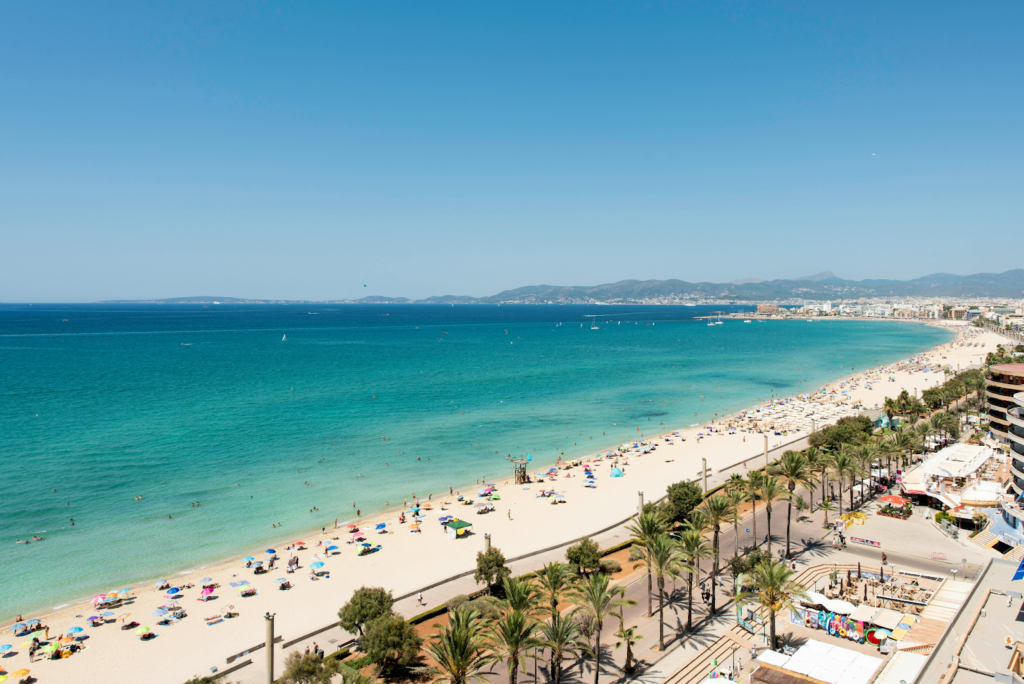
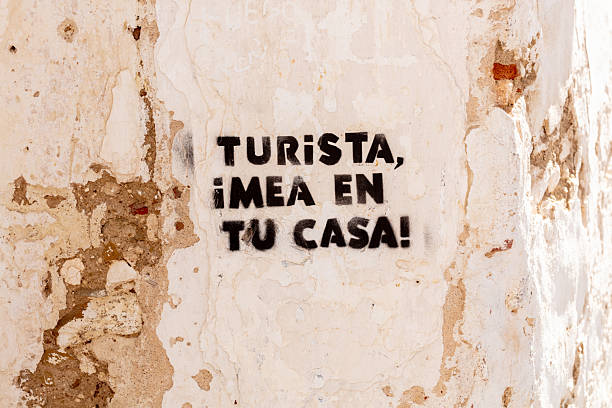
The debate comes amid sustained anti-tourism protests across Spain. Demonstrations in Palma and Ibiza over the past year have drawn thousands of residents calling for limits on short-term rentals and cruise ship arrivals.
Campaign group Menys Turisme Més Vida, which organised large protests last summer, has blamed second-home ownership and mass tourism for driving up rents and straining public services. Banners reading “Mallorca is not for sale” have become a common sight at rallies.
In Valencia last October, clashes broke out when protesters confronted holidaymakers in the city centre. Activists have also urged authorities to tighten controls on holiday lets, arguing that entire neighbourhoods are being converted into short-term accommodation.
National rules raise stakes
The regional proposal follows wider action at national level. Last year, Spanish Prime Minister Pedro Sánchez pledged a tax of up to 100% on properties bought by non-EU non-residents, claiming that it would address the country’s housing crisis.
That measure has yet to pass through parliament. Critics have warned that any announcement of tougher rules risks triggering a rush of purchases before restrictions take effect.
Spain remains one of the most popular destinations for British holidaymakers and property buyers. A September survey found that 56% of Britons who usually holiday in Spain chose another destination in 2025, with nearly 80% saying that recent protests had made the country less appealing.
Border systems meet property rules
The European Travel Information and Authorisation System (ETIAS) and the Entry-Exit System (EES) are designed to track short-term visitors, but they could shape how the Balearic property ban works in practice.
As EES records how long non-EU nationals stay in the Schengen area, authorities would have clearer data to check whether a buyer has genuinely lived on the islands for five years, a key condition in the proposed law.
ETIAS, due to apply to visa-exempt travellers, will require pre-travel approval for short stays of up to 90 days in any 180-day period, reinforcing the idea that frequent holiday visits do not equal residency.
Under current Schengen visa rules, Brits can travel visa-free for short trips but must secure residency permits to stay long term, which means anyone hoping to buy property under the new rules would likely need to formalise their status rather than rely on repeat tourist visits.
Added pressure from long-haul demand
Long-haul travel into Europe has rebounded since the pandemic, with growing numbers of visitors from the United States, the Middle East and Asia targeting Mediterranean hotspots.
If that demand continues, the Balearic Islands could see even stronger interest in second homes from buyers outside Spain, adding to the political push for restrictions.
At the same time, stronger long-haul tourism can push up rental yields and property prices in prime areas, which feeds local concerns about affordability.
If international arrivals keep rising, pressure on housing may grow, making it more likely that regional leaders press ahead with tighter rules on foreign buyers rather than softening the proposed ban.
Islands draw a line
The proposed Balearic property ban could shut many British buyers out of holiday home markets in Mallorca, Menorca and Ibiza as local leaders try to tackle rising prices and housing pressure.
The debate now moves to the regional parliament, and the outcome will decide whether owning a second home in the Balearics remains an option for non-residents or becomes far harder in the years ahead.