
Save the Children: EU Border Rules are Putting Kids in Danger
Dec 3, 2025
Category: Border and Security EU News
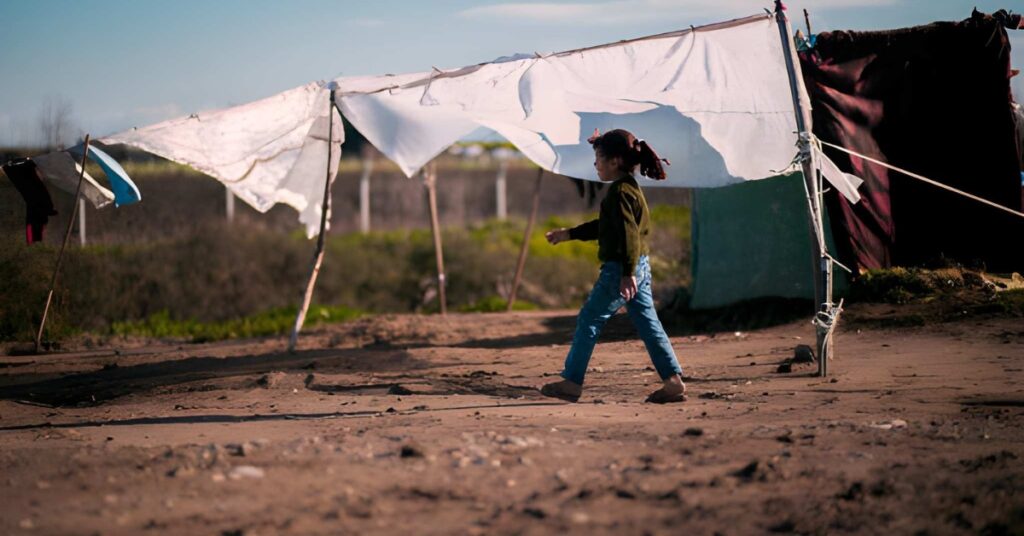
Save the Children warned that European Union (EU) border rules are exposing migrant children to violence and exploitation along routes from Sudan to Europe.
The group said that EU-funded measures in North Africa are pushing kids into dangerous crossings instead of keeping them safe.
EU policies push children into harm’s way
Migrant children traveling from Sudan to Europe are being exposed to repeated violence, exploitation, and psychological harm due to EU border policies, according to a report published by Save the Children on November 26, 2025.
The international NGO found that EU efforts to outsource migration control to countries like Egypt, Libya, and those along the Western Balkan route are placing minors in increasingly unsafe situations.
The 84-page report draws on interviews with 66 children, 19 experts, and 11 caregivers between February and October 2025.
Researchers focused on key migration routes stretching from Sudan through Egypt and Libya to Greece, and continuing through the Western Balkans.
The findings revealed systemic risks throughout the journey, including violence by smugglers and border guards, long-term detention, trafficking, and lack of access to basic services.
Caught in web of border deals
According to Save the Children, EU migration cooperation agreements are contributing to the very conditions they aim to prevent.
Children traveling along these routes are often funneled into underground smuggling networks because legal pathways to safety are limited or blocked.
The organization points to deals such as the EU-Egypt Strategic and Comprehensive Partnership which includes €7.4 billion in financial support—€200 million of which is earmarked for migration control.
While such agreements are intended to curb irregular migration, the report warned that without binding child protection measures, they effectively push vulnerable groups, especially unaccompanied minors, into more dangerous routes.
Federica Toscano, Save the Children’s migration expert, said that the EU’s spending priorities were misaligned with its legal obligations.
“The EU invests hundreds of millions in border and migration control without guaranteeing that children’s rights are respected, even though it is legally obliged to do so.”
Violence, exploitation in Libya
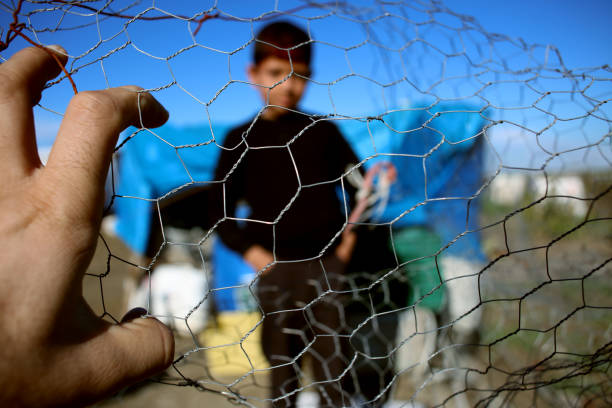
Children who pass through Libya before attempting to reach Europe face particularly severe threats.
The report noted that all interviewed minors who transited through Libya described experiences of extreme violence, sexual exploitation, and prolonged detention by armed groups.
In many cases, children were held in “containers” or informal prisons controlled by smugglers and militias.
Families of detained children are often extorted for ransom, and those without resources are forced into labor to buy their freedom or pay for passage.
Even after arriving in Greece, some minors remain indebted and at risk of exploitation, often coerced into working to repay smugglers.
Another key risk is criminalization. In Libya, children are sometimes forced to steer migrant boats. Upon arrival in Greece, these same children can be prosecuted as smugglers despite being victims of coercion.
Detention instead of protection
Once in Greece, children face further challenges. Between May and July 2025, many arrivals were held in closed facilities as Greek authorities imposed a temporary three-month suspension of asylum registrations for migrants arriving from North Africa via Crete.
Although the ban ended in October 2025, the measure created confusion about asylum access and legal status, particularly for unaccompanied minors.
Reception centers on Greek islands and the mainland, including Closed Controlled Access Centers (CCACs) and Reception and Identification Centers (RICs), were described as heavily securitized.
Despite being labeled as “safe areas,” these facilities have been criticized for operating as de facto detention zones. Children may remain in these centers for weeks or months while awaiting registration or age assessments.
Funding cuts have also affected support services. The report said that there has been a significant reduction in specialized child protection services in Greece since mid-2024, following the suspension of EU-funded cash assistance programs.
As a result, many children lack access to legal aid, mental health support, and basic necessities.
Border pushbacks and the Balkan Route
Those continuing through the Western Balkans face additional dangers. According to the report, one in five people who reported experiencing a “pushback” along the Balkan route was a child.
Pushbacks—forced returns without legal assessment—have been reported in countries like Croatia, Serbia, and Bosnia and Herzegovina. Many incidents involve physical violence, family separation, and confiscation of belongings.
With official reception capacity reduced due to budget cuts, many children sleep in squats, parks, or private accommodations without legal registration. The lack of visibility makes them more vulnerable to smugglers, trafficking, and abuse.
Civil society workers cited in the report said that this has led to a “systemic invisibility” of children, which further undermines protection efforts.
In some cases, older children are drawn into smuggling operations themselves—initially as guides or interpreters, and later as full participants.
The blurred line between victim and participant complicates legal responses and often results in criminal charges rather than protection.
Psychological toll
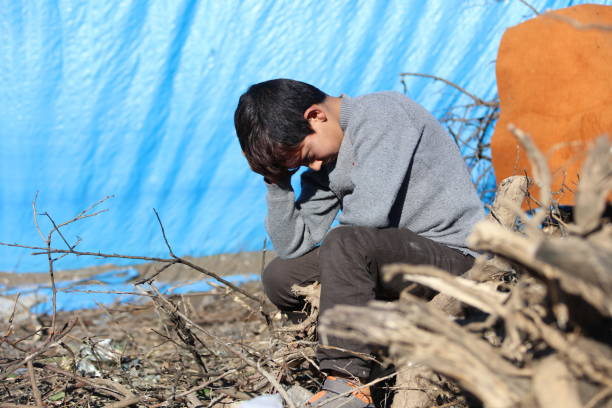
Mental health professionals interviewed by Save the Children noted that many children show signs of dissociation, aggression, withdrawal, and sleep disturbances.
The lack of consistent guardianship or access to psychosocial support across all stages of the migration journey worsens these effects.
Children interviewed in Greece and the Balkans described a constant sense of fear and insecurity. In some cases, unaccompanied minors were advised by other migrants to lie about their age to avoid prolonged detention, only to face more barriers later during legal procedures.
Unclear legal status and long waits for asylum decisions contribute to feelings of hopelessness.

EU funding vs. protection gaps
Save the Children said that the EU’s external migration funding fails to address the protection needs of children.
In total, more than €5 billion in EU Home Affairs funds have been allocated to Greece since 2015, much of it directed toward asylum systems, border surveillance, and detention facilities.
Additional funding supports migration control operations in Egypt, Libya, and Western Balkan countries through instruments like the Neighbourhood, Development and International Cooperation Instrument (NDICI) and the Instrument for Pre-Accession Assistance (IPA).
Despite these investments, the report argued that children continue to face rights violations at nearly every stage of the journey.
Many EU-funded projects, such as the EU4BorderSecurity initiative or the €36 million EU4FAST anti-smuggling project in the Western Balkans, do not include mandatory safeguards for child protection.
In countries like Egypt and Bosnia and Herzegovina, the EU supports border management capacity-building, but local protection services remain underfunded.
The report warned that without robust accountability mechanisms, funding for migration control may sustain or worsen conditions for children.
Technological initiatives like the Entry/Exit System (EES), which tracks border crossings of non-EU nationals, and the upcoming European Travel Information and Authorization System (ETIAS), intended to screen visa-exempt travelers before arrival, have also raised concerns.
While both systems are designed to improve migration management and security, critics argue that they do not currently address the safety and rights of minors who fall outside traditional travel categories.
The bigger picture for child safety
The report’s findings point to one clear issue: current EU border measures are leaving migrant children at risk instead of protecting them.
The concerns raised by Save the Children emphasize the need for closer scrutiny of how these policies affect young people on the move.
As the EU continues to change its approach to migration, the treatment and safety of children will remain central to the debate.