
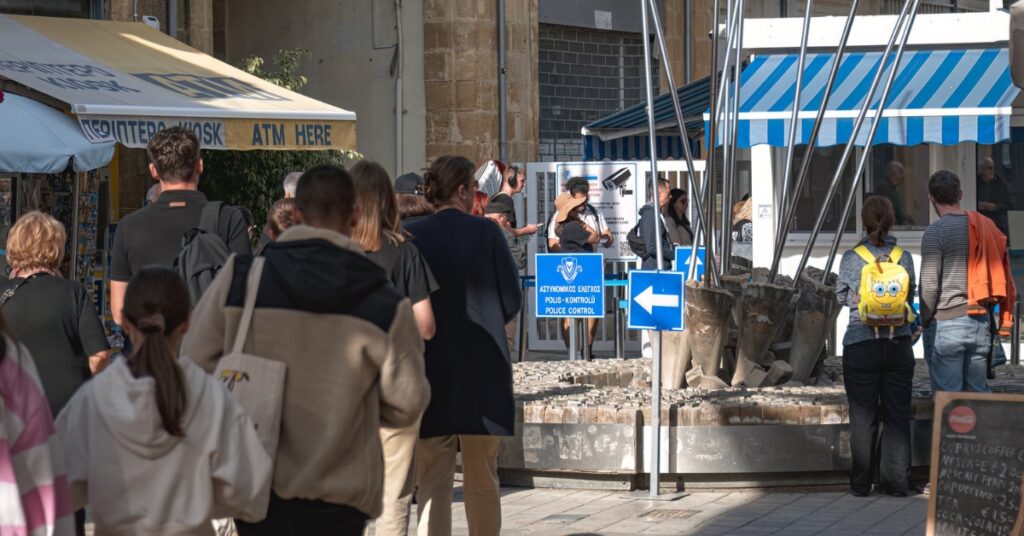
Concern about migration is running high in Lithuania, with more than two-thirds of residents saying they fear uncontrolled arrivals, according to a recent Eurobarometer survey.
The survey, conducted between November 6 and 30, 2025 among 1,023 Lithuanian residents, found that 67% were worried about uncontrolled migration.
The issue ranked among the most significant concerns for the public, alongside wars near the European Union’s borders, disinformation, cyber threats, online personal data protection and AI-generated fake content.
Migration debate intensifies
The survey results have drawn strong reactions from political figures across Lithuania’s parliament, where migration policy and integration have become recurring topics in public debate.
Vytautas Sinica, a member of parliament from the far-right National Alliance, described the polling figures as evidence that concern among citizens is growing.
Sinica called the survey a sign of “growing awareness” among the public. He argued that migration levels in Lithuania are substantial and rising, while institutions often portray migration too positively, mainly as an economic asset.
According to Sinica, Lithuania should reconsider the type of migrants it attracts, particularly in sectors that rely on lower-skilled labour.
He warned that employers may turn to foreign workers to maintain low wages rather than improve pay or working conditions for local employees. In his view, migration policy should focus on identifying which workers the country actually needs.
Controlled migration raises concerns
Migration worries are not limited to irregular arrivals, according to other political leaders who responded to the survey.
Eugenijus Gentvilas, a liberal lawmaker, said that the results confirmed that migration debates remain “extremely relevant” in Lithuania. He added that he had expected an even higher level of concern among respondents.
Gentvilas argued that public attention should extend beyond uncontrolled migration and include legal or “controlled migration”.
He pointed to refugees arriving from Ukraine and Belarus as examples of migrants whose integration into Lithuanian society must be addressed.
Gentvilas said that policymakers should consider integration beyond employment. Cultural and social integration, he suggested, will shape how migration affects Lithuanian communities in the long term.
Migration numbers grow
Statistics from Lithuania’s Migration Department provide a snapshot of the country’s changing population.
Last year, more than 217,000 foreign nationals were living in Lithuania. More than 106,000 of them held temporary residence permits connected to employment.
Debates about migration frequently centre on the economic role of these workers. Some policymakers argue that migrant labour helps address workforce shortages. Others say it can affect wages or strain integration systems.
Perceptions, reality clash
Some analysts said that the survey results may reveal more about public perceptions than about the actual scale of migration.
Migration specialist Karolis Žibas said that the findings capture a broader European mood rather than a reaction rooted solely in Lithuania’s situation.
Žibas noted that earlier Eurobarometer research found that people across EU member states often overestimate the number of migrants in their countries.
According to those studies, citizens may believe migrant populations are five to ten times larger than they actually are.
Žibas argued that public attitudes are shaped less by statistical evidence and more by political messaging and emotional public debate.
In his assessment, rhetoric around migration can influence how people perceive social changes, even when data tells a more moderate story.

Rhetoric sparks social concerns
Civil society organisations warned that migration debates can have consequences for social cohesion.
Aurelija Auškalnytė from the NGO Mental Health Perspectives said that far-right politicians across Europe often portray migrants and minority groups as threats.
She said that this type of rhetoric can harm people who are already living in the country, working, paying taxes and trying to integrate.
Auškalnytė also raised concerns about the broader social environment in Lithuania. She argued that public debate around migration can divert attention from structural problems such as inequality and feelings of injustice within society.
According to her, Lithuania still lacks sufficient public discussion reinforcing that a person’s nationality, country of origin or appearance does not determine their value.
Border tech tightens control
New European border systems may shape how migration concerns evolve in Lithuania over the next few years.
The Entry-Exit System (EES) began operating on 12 October 2025 and is being rolled out gradually at external borders across Europe. Full implementation is scheduled by 10 April 2026.
The system automatically records the entry and exit of non-EU travellers visiting for short stays, replacing traditional passport stamps with a digital register.
Lithuania is among the countries participating in the system, alongside most EU and Schengen states.
In practice, the technology may address part of the concern expressed by Lithuanian residents in the Eurobarometer survey. A digital register of short-term visitors allows authorities to detect overstays more quickly and manage visa-free travel more closely.
A second system will add another layer of screening. The European Travel Information and Authorisation System (ETIAS) is expected to begin operations in the last quarter of 2026.
The authorisation will be linked to a traveller’s passport and remain valid for up to three years or until the passport expires. Travellers will still face checks at the border, and authorisation alone will not guarantee entry.
For Lithuania, these systems may shift part of the migration debate from perception to enforcement. Automated tracking and pre-travel screening create clearer records of who enters the Schengen area and whether visitors comply with short-stay limits.
Public concerns about uncontrolled migration could ease if the systems demonstrate stronger oversight of cross-border travel. At the same time, stricter monitoring may also keep migration high on the political agenda, as authorities gain more precise data on movement across EU borders.

Debate over migration persists
Migration remains one of the most contested topics in Lithuania’s public discourse.
Survey data shows that many residents feel uneasy about uncontrolled migration, placing it among their main national concerns. Political leaders and analysts offer sharply different interpretations of those fears.
Some argued that the country must reassess migration policy and labour market needs. Others warned that political rhetoric may be inflating anxieties that do not match the available data.
As Lithuania continues to receive foreign workers and refugees, the discussion is likely to remain central to political debate and public opinion.