
Gibraltar Treaty Sparks Fury: UK Hands Border Control to EU
Jan 2, 2026
Category: Border and Security News UK
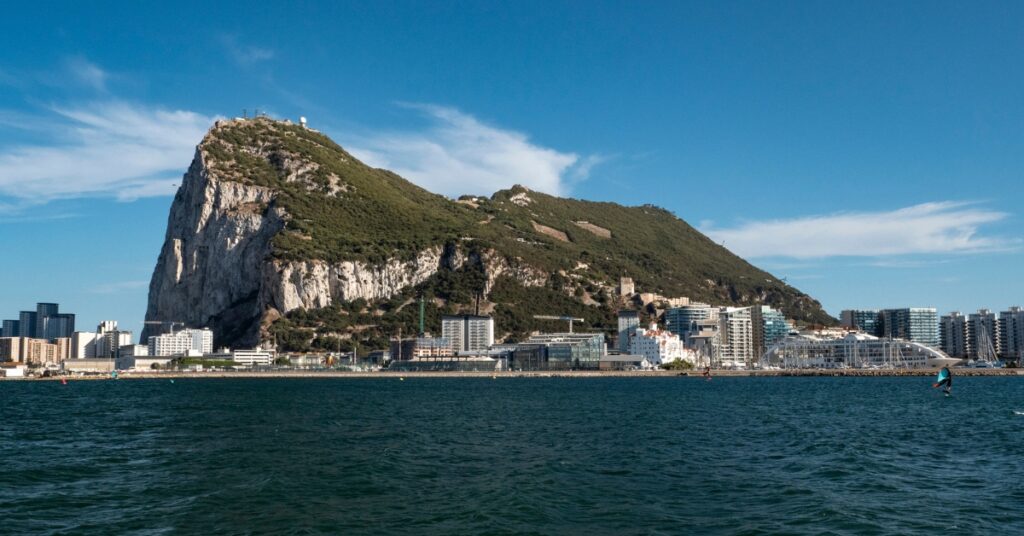
The United Kingdom and the European Union have finalised the Gibraltar Treaty after four years of negotiations.
This has sparked fierce backlash from Conservative MPs who have branded it a “ridiculous disaster” that hands Spanish border guards control over who enters British territory.
Chief Minister Fabian Picardo hit back at critics, insisting that the deal is “excellent” for Gibraltar residents and was negotiated under both Tory and Labour governments.
Tories slam ‘ridiculous disaster’
Conservative MPs have launched a scathing attack on the newly finalised Gibraltar Treaty, with former party leader Sir Iain Duncan Smith branding it a “ridiculous disaster.”
The Chingford and Woodford Green MP said the agreement was “a very good example of cowardly posturing” by Prime Minister Sir Keir Starmer.
“They’re using Gibraltar as a lever to get themselves back closer to Europe. He wants to undo Brexit,” Duncan Smith told The Telegraph. “The whole plan of this Labour Government who hated Brexit is that over a period of time, it will become impossible for us not to rejoin.”
Mark Francois, chairman of the European Research Group and prominent Brexiteer, criticised the deal alongside other recent government decisions.
“First a sell-out on Chagos and now an infringement of the rights of Gibraltarians, and that hard on the heels of paying over the odds to re-enter the EU’s Erasmus scheme,” he said. “I have argued before that ‘Starmer Remains a Remainer’ at heart but now he’s not even bothering to hide it – he’s going to try and take us back in.”
Former Home Secretary Suella Braverman shared the Telegraph article on social media, writing: “Exactly as I warned in June. Yet another total betrayal by this shameful government.”
Dual border system
Under the finalised treaty, tourists and residents entering Gibraltar will face a new dual-entry system requiring them to present their passports twice—first to Gibraltarian authorities, then to Spanish border guards acting in a Schengen role.
The arrangement gives Spanish officials a role in border management at British territory, a detail that has fuelled Conservative criticism.
The agreement removes all physical barriers at the land border between Gibraltar and the Spanish town of La Línea de la Concepción. According to officials, around 15,000 people cross the border between Spain and Gibraltar every day.
Border checks will instead be carried out at Gibraltar’s airport and port through cumulative dual controls, with both Gibraltar and Schengen authorities working together using electronic gates.
The Gibraltar government has previously explained that immigration checks at the airport will involve cumulative dual controls, first by Gibraltarian authorities, then by Spanish authorities acting in a Schengen role and using e-gates.
Officials have stated that Gibraltar residents cannot be prevented from returning to Gibraltar by Schengen authorities.

An “excellent” deal
Picardo has issued a defence of the treaty, directly challenging the Conservative critics on social media. “This is a very jaundiced view of what is an excellent deal for Gibraltar,” he posted in response to the criticism.
“The agreement we have done with the EU was negotiated by the Gibraltar Government alongside Tory and Labour Ministers in the UK,” Picardo wrote. “It is an excellent deal for Gibraltar residents of all nationalities.”
Picardo thanked Conservative MPs James Cleverly and Wendy Morton, noting that “Wendy having come out to Gibraltar for a briefing earlier this week.”
He added: “I briefed Tory Leader, Kemi Badenoch when I was last in London and I look forward to cross party support for this excellent deal, which helps us avoid the many and great pitfalls that Brexit created for Gibraltar.”
In a direct response to Braverman’s social media post, Picardo wrote: “I was saying then, as I am saying now, that you are as wrong now as you were in June.”
Historic fence comes down
The treaty marks the end of the Gibraltar border fence, a 1.2-kilometre physical barrier erected by the UK in 1909. The fence has long symbolised the political and legal status of Gibraltar and the sovereignty dispute between Britain and Spain.
A European Commission spokesperson stated: “The main objective of the future agreement is to secure the future prosperity of the whole region. This will be done by removing all physical barriers to the movement of persons and goods between Spain and Gibraltar, while preserving the Schengen area, the EU single market and customs union.”
The political agreement was first announced on 11 June following a Brussels meeting between EU Commissioner Maroš Šefčovič and then-British Foreign Secretary David Lammy.
Spanish Foreign Minister José Manuel Albares and Chief Minister Picardo also attended the session. Negotiators from the UK, EU, Gibraltar and Spain finalised the legal text following a breakthrough on 12 December.
The European Commission confirmed the completion of the legal text on 17 December.
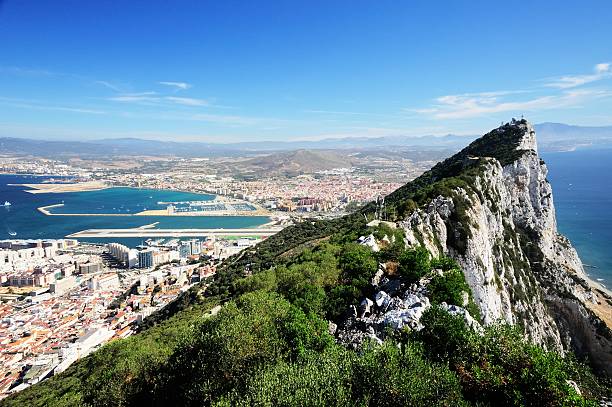
Brexit betrayal or pragmatic solution?
The Gibraltar Treaty has emerged as a flashpoint in ongoing tensions over Britain’s post-Brexit relationship with the EU.
Shadow Foreign Secretary Dame Priti Patel said: “Keir Starmer will be remembered for raiding the pockets of hard pressed taxpayers to hand over billions of pounds to Brussels, and for his unpicking of Brexit.”
She added: “The deal with Gibraltar will, like everything this Labour Government touches, require forensic scrutiny as they cannot be trusted to serve our national interest and the public will need assurance that they have not once again caved to EU demands.”
The controversy comes alongside the government’s decision to rejoin the EU’s Erasmus student exchange scheme, which the UK left under Boris Johnson’s administration.
The government will pay around £570 million to rejoin the programme in 2027, with costs for future years to be negotiated with the bloc.
The UK government has stated the Gibraltar deal includes “a clause agreed by all sides which makes explicitly clear that the final Treaty does not impact sovereignty.”
The government said in June that the agreement resolves “the last major unresolved issue from Brexit.”
Gibraltar is located on the southern tip of the Iberian Peninsula and was formally ceded to Britain from Spain in 1713.
Gains for Gibraltar
A Gibraltar government spokesperson stated:
“The process has now moved to the necessary technical legal scrub/reviews by all parties and the EU translation process. We remain committed to transparency: the final treaty will be made public and subject to the full scrutiny of the Gibraltar, UK and EU parliaments as part of the process of ratification.”
The Gibraltar government said that it welcomed the “positive conclusion” of the negotiation of the text. The removal of border delays and checks is expected to facilitate smoother movement for cross-border workers and visitors.
According to the agreement details announced in June, the deal aims to put an end to the enforced isolation of Gibraltar following Brexit.
The “fluid border” arrangement is designed to avoid what the government described as “onerous checks” and long delays at the border.
Immigration and law and order in Gibraltar will remain the exclusive responsibility of its authorities, according to the government, while Spanish officials will be responsible for ensuring the integrity of the Schengen Area, with which Gibraltar shares a border.
New travel rules hit tourists
British tourists visiting Gibraltar will face additional procedures as the territory’s integration into Schengen border management coincides with the EU’s rollout of new digital travel systems.
The Entry/Exit System began operating on 12 October 2025 and is being gradually introduced at external borders across Europe, with full implementation expected by 10 April 2026.
The EES is an automated IT system for registering non-EU nationals travelling for a short stay each time they cross external borders. The system replaces passport stamps with digital records that register entries and exits electronically.
UK nationals, as non-EU nationals who do not need a visa for short stays, fall under the EES requirements.
The system uses biometric data, including fingerprints and facial recognition, to track whether travellers comply with the 90-day limit within any 180-day period allowed for short stays in the Schengen area.
For Gibraltar, this means UK visitors will have their travel recorded through the dual-check system at the airport and port.
Looking ahead to late 2026, the European Travel Information and Authorisation System will add another requirement. ETIAS is a travel authorisation for visa-exempt nationals travelling to 30 European countries.
UK nationals will need to apply for ETIAS travel authorisation, which costs €20 and is valid for up to three years or until passport expiry. The authorisation allows multiple entries for short-term stays of up to 90 days within any 180-day period.
Cross-border workers who make up the estimated 15,000 daily crossings between Spain and Gibraltar will need to navigate these systems as they come online.
The Gibraltar government has stated that residents cannot be prevented from returning home by Schengen authorities under the treaty arrangements.
Schengen border model goes hybrid
The Gibraltar Treaty creates what officials have called a hybrid border arrangement. Gibraltar will not formally join the Schengen Area, but Spanish authorities will conduct Schengen-style checks at Gibraltar’s airport and port facilities.
This allows for the removal of the land border fence whilst maintaining what the EU describes as the integrity of the Schengen external border.
The European Commission spokesperson stated the agreement will bring “stability and legal certainty to the lives and well-being of people throughout the area by promoting shared prosperity.”
The arrangement addresses EU concerns about border security whilst allowing free movement across the land border.
Immigration and law enforcement within Gibraltar remain under local authority control, whilst Spanish officials handle Schengen area responsibilities at external entry points.
The model represents an attempt to balance UK sovereignty over Gibraltar with practical cooperation on border management.
The agreement preserves what the EU describes as “the Schengen area, the EU single market and customs union” whilst removing physical barriers to movement.
Treaty still needs final approval
The Gibraltar Treaty now faces legal review and translation into all EU languages before it can be signed and ratified.
The deal will then need approval from EU member state governments and the European Parliament, a process expected to take several weeks before the agreement can officially come into force in early 2026.
Despite the political controversy in Westminster, Gibraltar’s government insists that the treaty will benefit all residents by removing border delays and boosting regional prosperity.
For now, the future of the Rock’s relationship with Europe hangs on parliamentary votes on both sides of the Channel.
The only people furious about this are those trying to make a political statement.
Gibraltar completely relies on goods and services from the EU (it does not produce any food for example) let alone family ties across the border.