
EU Entry/Exit System (EES) Detects 4,000 Schengen Overstays
Mar 25, 2026
Category: Border and Security EES EU News

The Entry/Exit System (EES) has already flagged more than 4,000 travellers for overstaying in the Schengen area, just months into its phased rollout.
Introduced in October 2025, the EES tracks when non-EU nationals enter and leave the bloc.
Early data shared with European lawmakers shows the system is already identifying breaches of the 90/180-day rule, a core limit for short-term stays.
The system will be fully operational by 10 April 2026, marking a shift away from passport stamping to digital border control.
System flags overstayers
The European Commission revealed the figures during a February briefing to Members of the European Parliament.
Henrik Nielsen, a Commission official, told lawmakers that more than 4,000 travellers had already been detected overstaying within the Schengen area.
The system has processed around 17 million travellers and recorded 30 million border crossings in its first four months. It has also issued roughly 16,000 entry refusals.
Nielsen noted that about a quarter of those refusals were linked to travellers flagged for overstaying.
Digital border checks expand
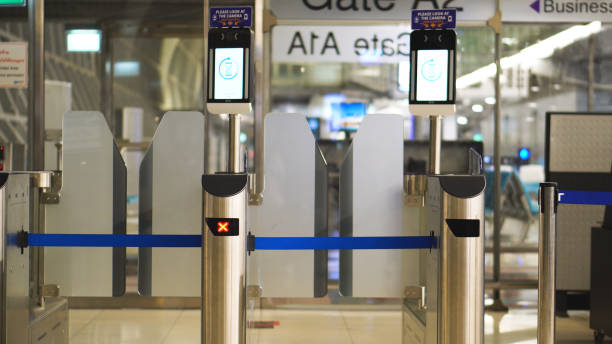
The EES replaces passport stamps with digital records that include fingerprints and facial scans. Each entry and exit is logged, allowing authorities to calculate how long a traveller has stayed across the entire Schengen area.
The system applies to visa-free visitors, including travellers from the United Kingdom and the United States.
Its purpose extends beyond tracking overstays. The EES intends to reduce identity fraud and speed up border procedures over time.
Tillmann Keber, Executive Director of eu-LISA, described the rollout at the central level as “very smooth and successful”, adding that the system is now “fully stabilised” and operating normally.

Rollout ramps up
The system is being introduced in stages, with participation increasing over time.
When it went live on 12 October 2025, only a portion of travellers were registered. By January 2026, at least 35% of eligible non-EU passengers were required to be entered into the system, up from an initial 10%.
From 10 March, that figure rose to 50%. Full coverage is expected by 10 April, when all eligible travellers crossing Schengen borders will be recorded.
Once the rollout is complete, passport stamping for short-stay travellers will be phased out entirely.
Airports face delays
While central systems have been described as stable, border operations have faced problems.
Airports in France, including Charles de Gaulle, have reported delays linked to faulty kiosks, software issues, and staff shortages. In Portugal, Lisbon Airport temporarily returned to manual passport checks after biometric controls led to severe congestion.
Airport operators warn that processing times can rise by up to 70% when the EES is in use. In some cases, passengers have faced waits of up to three hours during peak periods.

Rules tighten on stays
The EES enforces the 90/180-day rule, which limits how long visa-free travellers can stay in the Schengen area.
The system automatically calculates time spent across all participating countries, reducing the risk of travellers overstaying unintentionally.
Penalties can include fines, which in France are set at €198, as well as records that may affect future travel applications. In rare cases, travellers may face removal or temporary bans.
Exceptions can be made for serious or unforeseen circumstances, such as illness.
Travellers with long-stay visas or residence permits are not required to register under the EES, though they may still experience longer queues at border crossings.
Pressure builds before ETIAS
The rollout of EES comes ahead of the European Travel Information and Authorisation System (ETIAS), which is scheduled to begin in the last quarter of 2026.
The ETIAS will require visa-exempt travellers to obtain travel authorisation before entering 30 European countries.
The system will be linked to a traveller’s passport and remain valid for up to three years, allowing multiple short stays within the 90/180-day limit.
The EES is expected to feed data into ETIAS checks, giving authorities a clearer record of past travel and compliance.
The early detection of overstayers suggests that future ETIAS decisions could rely on this data when assessing applications.
At the same time, delays seen at airports during the EES rollout point to possible challenges for border processing once both systems are in use.
Even with ETIAS approval, travellers will still need to pass checks at the border, where EES data will be used to verify their eligibility.
System takes hold
The EES has begun to reshape border control across the Schengen area, with thousands of overstayers already identified in its early phase.
As registration expands to cover all travellers, the system is set to become the main tool for monitoring short stays.
Its performance in the coming months will shape the rollout of the ETIAS, which will add a pre-travel screening layer on top of the same data.
Together, the two systems signal a move towards tighter, more automated checks for travellers entering Europe.