
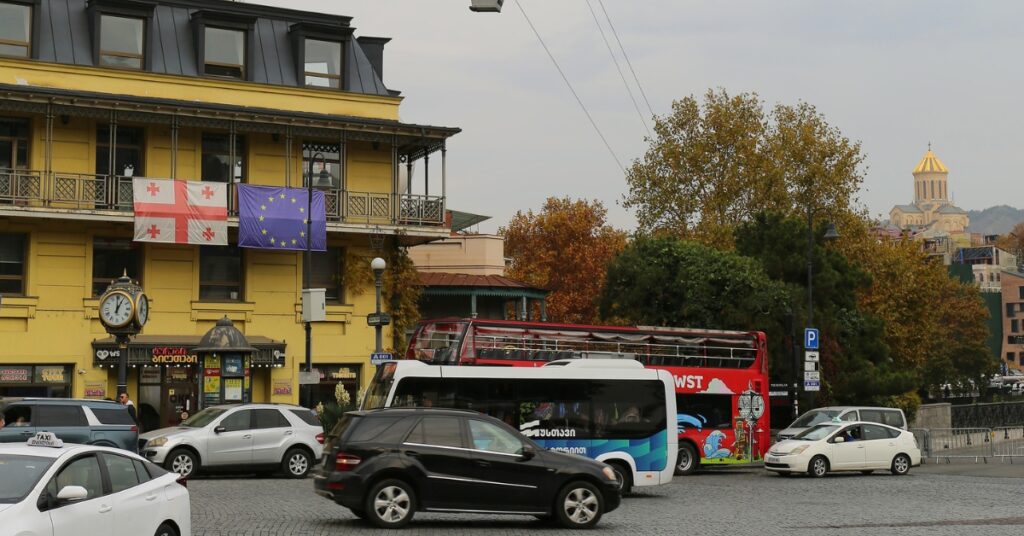
The European Union has suspended visa-free travel for Georgian diplomats and senior government officials, escalating tensions with Tbilisi over concerns about democratic backsliding.
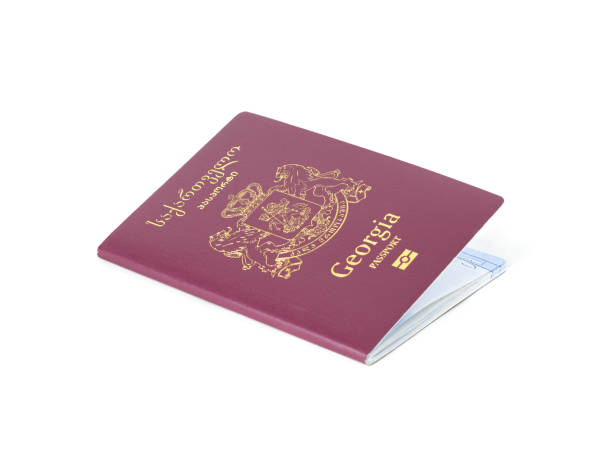
The European Commission announced on 6 March that holders of Georgian diplomatic, service and official passports must now obtain a visa before entering the Schengen area for official visits.
The measure took effect immediately and will remain in place for 12 months.
EU authorities activated the bloc’s revised visa suspension mechanism after concluding that Georgia had breached commitments tied to its visa-free travel arrangement, particularly in areas linked to democracy and fundamental rights.
The decision targets government representatives rather than the general population. Ordinary Georgian citizens travelling with biometric passports can still enter the EU visa-free for short stays of up to 90 days.
Protests spark crackdown
The move follows political unrest in Georgia that intensified after the country’s government paused negotiations on EU membership talks until 2028.
Large protests broke out across the country following the announcement. Georgian authorities responded with arrests of demonstrators and actions against opposition politicians and independent media outlets.
European officials described these developments as a serious deterioration in democratic standards.
Henna Virkkunen, executive vice-president of the European Commission responsible for technology, security, and democracy, described the measure as a response to the repression of political opposition and peaceful demonstrators.
“Visa liberalisation is key to facilitate mobility between the EU and partner countries… Those who fail to respect fundamental rights should not benefit from this freedom,” Virkkunen stated.
Kaja Kallas, the EU’s high representative for foreign affairs and security policy, warned that governments that silence journalists and restrict civil liberties should face consequences.
“If a government attacks its own people, silences journalists, and curtails freedom, there are consequences,” Kallas declared.
New visa tool deployed
The decision marks the first time that the EU has used its strengthened visa suspension mechanism, introduced in December 2025.
The system gives the EU faster tools to suspend visa-free travel when partner countries breach commitments linked to security, migration policy or democratic standards.
Officials in Brussels argued that Georgia’s recent policies contradict the principles behind visa liberalisation agreements, which were designed to promote closer cooperation and shared democratic values between the EU and neighbouring states.
Under the suspension, Georgian diplomats and other special passport holders must apply for Schengen visas before entering any EU member state. Member states are also instructed to apply stricter screening procedures when processing these applications.
Consular authorities may require interviews and supporting documents from applicants. Visa requests can be rejected if officials doubt the reliability of the information provided.
Tightened border security
The European Commission has issued detailed guidelines for border authorities across the EU.
Officials are expected to conduct enhanced checks on Georgian travellers using European security databases, including the Visa Information System and the Schengen Information System.
The Entry/Exit System, a digital border monitoring system gradually introduced across the EU since October last year, will also be used as an additional screening layer.
Authorities have also been advised to verify that Georgian officials travel using diplomatic or service passports when conducting official visits. Failure to do so could lead to entry bans at EU borders.
Pressure builds on Tbilisi
The latest EU action builds on previous measures aimed at Georgian officials.
In December 2024, the European Commission proposed suspending the EU-Georgia Visa Facilitation Agreement. The Council of the European Union adopted that measure in January 2025.
Before the EU-wide decision, 19 member states had already limited visa privileges for Georgian government representatives.
The new ruling now applies uniformly across all EU countries, preventing individual member states from granting exemptions.
The European Commission states that the suspension will remain in force until 6 March 2027. If governance and rule-of-law concerns continue, the EU may extend the measure for up to two additional years.
The Commission also retains the option of expanding the suspension to cover all Georgian citizens if relations deteriorate further.
Deepening political crisis
Georgia has faced sustained political tensions since the 2024 parliamentary elections. The ruling Georgian Dream party claimed victory in that vote, which critics said strengthened the government’s hold on power.
Protests spread across major cities after the government announced it would halt EU accession negotiations until at least 2028. Demonstrators accused authorities of abandoning the country’s pro-European direction.
Reports of police violence and arrests during protests drew condemnation from European institutions and human rights groups.
At the same time, Georgia has strengthened economic ties with Russia, raising concern among European policymakers about the country’s geopolitical direction.
For many years, Georgia had been viewed as one of the most pro-Western democracies to emerge from the former Soviet Union.
A warning on further action
European officials emphasise that the visa suspension targets government representatives rather than the Georgian public. The EU continues to express support for Georgian citizens and their right to travel freely across Europe.
Kaja Kallas framed the policy as a measure aimed at those responsible for political repression. “The people of Georgia have our full support but there is no place for those representing repression in our Union,” she said.
The European Commission has urged Georgian authorities to address rule-of-law concerns and restore democratic standards during the suspension period.
Progress on these issues could lead to the reinstatement of visa-free travel privileges for government representatives.
At the time of the announcement, the Georgian government had not issued an immediate public response to the EU’s decision.