
Iceland ETIAS Requirements for British Citizens: Complete 2026 Guide
UK passport holders will need an ETIAS authorisation to visit Iceland from late 2026.
The European Travel Information and Authorisation System—a Brexit consequence treating British citizens as non-EU nationals—permits short stays of 90 days within any 180-day period.
This comprehensive guide covers every ETIAS requirement for UK travellers, from travel document validity to application costs, ensuring seamless Iceland trip planning.

What is ETIAS and Why Do UK Citizens Need it for Iceland?
ETIAS is a pre-travel screening system that checks travellers before they arrive at Europe’s borders. UK passport holders need it for Iceland because Brexit ended their status as EU nationals with automatic travel rights.
Understanding the ETIAS System
ETIAS stands for the European Travel Information and Authorisation System. It works like Canada’s eTA system, which screens visitors before they board flights to Canada..
The system will cover approximately 1.4 billion people from 59 visa-exempt countries. These travellers can visit participating European countries without a traditional visa but must obtain advance authorisation.
Iceland is one of 30 countries requiring ETIAS, which includes all 27 EU member states plus Iceland, Liechtenstein, Norway and Switzerland. The system applies to the entire Schengen Area, not just European Union members.
Once approved, your ETIAS authorisation links electronically to your passport. Airlines and border guards access this information through their systems, so you won’t receive a physical document or stamp.
ETIAS is separate from the Entry-Exit System, which collects biometric data at borders. The EES registers your actual border crossings, whilst ETIAS grants you permission to travel in the first place.
How Brexit Changed Travel Rules for British Travellers
Before Brexit, UK citizens travelled to Iceland as EU nationals under freedom of movement rules. You could enter any European country with just a valid passport and stay indefinitely if desired.
Post-Brexit, the UK became a ‘third country’ in EU terminology. This means British passport holders now have the same status as Americans, Canadians and Australians when visiting Europe.
The transition didn’t happen overnight because the UK retained visa-free privileges for short stays. EU law already permitted visa-exempt travel for many non-EU countries, and the UK was added to this list after leaving the bloc.
The new rules apply to all UK passport types except those covered by the Withdrawal Agreement. This category includes UK citizens who established residence in EU countries before Brexit and hold the proper documentation proving their status.
Who Needs ETIAS to Travel to Iceland from the UK?
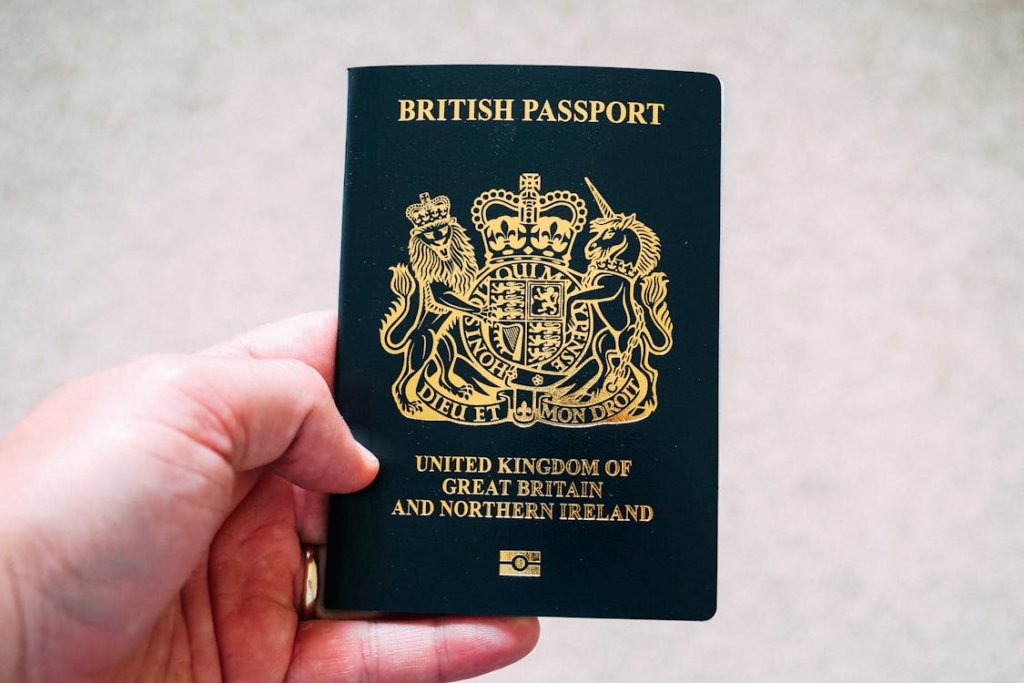
Most UK passport holders will need ETIAS to visit Iceland for short-term stays starting in late 2026. The requirement applies regardless of age, so everyone from infants to pensioners must obtain their own authorisation.
UK Passport Holders Required to Apply
Standard British citizens with regular UK passports must apply for ETIAS before travelling to Iceland. This represents the vast majority of UK travellers planning holidays, business trips or family visits.
British Nationals (Overseas), commonly known as BN(O) passport holders, also need ETIAS authorisation. This category primarily includes individuals with connections to Hong Kong who hold this specific passport type.
British Overseas Citizens (BOC) fall under the ETIAS requirement as well. If your passport identifies you as a BOC rather than a standard British citizen, you’ll need to complete the application.
British Protected Persons (BPP) and British Subjects (BS) must obtain ETIAS too. These less common passport categories still grant UK nationality but don’t automatically exempt you from the authorisation requirement.
Age makes no difference to the ETIAS requirement. Newborn babies, toddlers, teenagers and adults all need their own individual authorisation linked to their passport.
Who is Exempt from ETIAS Requirements
UK nationals who are Withdrawal Agreement beneficiaries don’t need ETIAS for Iceland. You qualify if you lived in an EU or EEA country before Brexit and hold settled or pre-settled status documentation.
Family members of Withdrawal Agreement beneficiaries also get this exemption. Your relationship to the qualifying person and proper documentation must prove your status when crossing borders.
UK citizens who also hold EU citizenship can bypass ETIAS entirely by using their EU passport. You must use the same passport consistently throughout your application and travel.
UK residents holding valid residence permits from Iceland or any Schengen country are exempt. Your residence card serves as your authorisation to enter and remain in the territory.
People with valid Schengen visas don’t need ETIAS because the visa already grants entry permission. Long-stay national visas from Iceland or other participating countries also exempt you.
The exemptions only work if you actually hold and present the qualifying documents at the border. Simply being eligible for a residence permit or Withdrawal Agreement status isn’t enough without the physical proof.
Special Cases and Considerations
UK residents who aren’t UK citizens follow their own nationality’s rules, not the UK’s. If you live in Britain but hold a Nigerian or Indian passport, check your country’s specific ETIAS or visa requirements.
Irish citizens residing in the UK remain exempt as EU nationals. Your Irish passport gives you the same travel rights to Iceland as citizens of France, Germany or any other EU member state.
Children born in the UK to non-UK parents need ETIAS if they travel on British passports. Birth in Britain alone doesn’t determine ETIAS requirements; citizenship and passport type do.
UK diplomats and official passport holders may be exempt depending on international agreements. The exemption typically applies only to official government business, not personal holidays.

Iceland ETIAS Application Requirements
The ETIAS application process requires a valid UK passport, personal details, travel information and a payment method for the €20 fee. You’ll also need to answer questions about your criminal history, health status and previous travel to conflict zones.
Essential Documents You’ll Need
Your UK passport must meet specific validity requirements before you can apply for ETIAS. It needs to remain valid for at least three months beyond your planned departure date from Iceland or any other participating country.
The passport itself cannot be older than 10 years from its original issue date. If you’re still using a 10-year passport issued in 2016, it won’t qualify even if it hasn’t technically expired yet.
You don’t need to upload a physical copy of your passport during the application process. The system only asks you to enter the passport details manually, including the document number and expiry date.
A valid email address is essential because all correspondence about your ETIAS application arrives electronically. Choose an email you check regularly and will still access during your three-year authorisation period.
Your payment method must be a debit or credit card that works for international transactions. The application fee of €20 processes immediately when you submit your application, so make sure your card has sufficient funds.
Keep your passport nearby whilst filling out the form to avoid transcription errors. Mixing up a single digit or letter in your passport number will cause problems at the border.
Personal Information Required in the Application
The system asks for your full name exactly as it appears in your passport. If your passport shows middle names or initials, you must include them in the application form.
Your date of birth, place of birth and current nationality are all mandatory fields. If you’ve held other nationalities previously, you’ll need to declare those as well.
Current home address in the UK must be provided, including postcode. The system uses this information for correspondence and risk assessment purposes.
Your phone number creates another contact channel if authorities need to reach you. Include your UK mobile number with the international dialling code.
Parents’ first names seem like an unusual requirement, but they help verify your identity. You only need their first names, not surnames or full details.
Education level means selecting from options like secondary school, bachelor’s degree or postgraduate qualifications. Your current occupation requires both a category selection and potentially your employe’’s details.
The application form resembles entry requirements for countries like Australia, which also collect detailed personal information. This standardised approach helps border authorities assess travellers consistently across different systems.
Travel and Background Information
First intended country of stay refers to where you’ll spend your first night in the participating zone. If you’re flying directly to Iceland, select Iceland even if you plan to visit other countries later.
Address of destination in Iceland can be your hotel, Airbnb or a private residence. You don’t need confirmed bookings at this stage, but you should provide a genuine intended location.
Criminal conviction history requires honest declaration of any offences resulting in a conviction. This includes convictions from any country, not just the UK.
Travel history to war or conflict zones asks about visits to areas experiencing active military conflict. The system defines these zones specifically, so typical tourist destinations don’t qualify even if they have security concerns.
Previous deportation or entry refusal history covers any instance where border authorities denied you entry or removed you from a country. Include refusals from any country worldwide, not just European ones.
Health-related questions assess epidemic risk, particularly relevant after the COVID-19 pandemic. These questions may evolve based on current global health situations.
Cyprus appears separately in some questions because it calculates stay durations independently from other countries. Your time there doesn’t affect your 90-day allowance elsewhere in the zone.
Declaration and Consent Requirements
You must declare that all information submitted is accurate and complete. False statements can result in immediate refusal and potential bans from future applications.
Understanding entry conditions means acknowledging that ETIAS doesn’t guarantee admission to Iceland. Border guards retain final authority to approve or deny entry based on their assessment at the border.
Consent for data processing allows authorities to store and share your information across security databases. The system checks your details against various watchlists and criminal records automatically.
Agreement to provide supporting documents at the border is part of the conditions. You might need to show return tickets, accommodation bookings, travel insurance or proof of funds when you arrive.
If someone submits the application on your behalf, additional declarations become necessary. Both you and the representative must sign authorisation documents confirming the arrangement.

Step-by-Step ETIAS Application Process for British Travellers
Applying for ETIAS takes about 10 to 15 minutes through a straightforward online form on the official website or mobile app.
The process walks you through five main stages: entering passport details, providing personal information, answering security questions, reviewing your answers and paying the fee.
Before You Start: Preparation Checklist
Check your passport’s expiry date before beginning the application. It must remain valid for at least three months beyond your planned departure from Iceland and cannot be more than 10 years old from its issue date.
Gather your passport, a working debit or credit card, and your parents’ first names. You’ll also need to know your current employer’s name and address if you’re employed.
Set aside 10 to 15 minutes in a quiet space where you won’t be interrupted. The system allows you to save your progress, but having uninterrupted time reduces errors and speeds up completion.
Choose between the official ETIAS website and the mobile app based on your preference. Both platforms offer identical functionality, so pick whichever feels more comfortable for your device and internet connection.
Make sure you’re using the legitimate government platform rather than third-party sites. The official ETIAS website will have a europa.eu domain, not a commercial .com or .co.uk address.
Double-check that your payment card works for international transactions. Some UK banks block overseas payments by default, which could prevent your €20 fee from processing.
Completing the Online Application Form
Access the official portal through travel-europe.europa.eu when ETIAS launches in late 2026. The homepage will have a clear ‘Apply Now’ button that starts your application.
Step 1 asks for your passport details including document type, number, issue date and expiry date. Type carefully because your ETIAS links directly to this specific passport number.
Nationality selection comes next, where you’ll choose ‘United Kingdom’ from the dropdown menu. The system may ask if you hold any other nationalities, which you must declare honestly.
Your personal details form includes full name, date of birth, place of birth and gender. Enter your name exactly as it appears in your passport, including all middle names and proper spacing.
Contact information requires your current UK address, email and phone number. The email becomes your primary communication channel for the entire three-year validity period.
Step 2 covers your travel plans, starting with your first intended destination country. Select Iceland if that’s where you’re flying directly, or choose another country like Belgium if you’re transiting through Brussels first.
Destination address in Iceland can be a hotel name and street address. You don’t need booking confirmation at this stage, just a genuine intended location.
Employment and education questions ask about your current job title, employer name and highest qualification. Select from the dropdown options provided and fill in text fields where required.
Step 3 presents the security and background questions that determine your risk assessment. Criminal conviction questions ask if you’ve been found guilty of any offence in any country.
Answer yes or no to whether you’ve travelled to war or conflict zones in recent years. The form specifies which regions currently count as conflict zones, so read the guidance carefully.
Previous deportation or entry refusal requires disclosure of any instance where border authorities denied you entry. Include refusals from any country worldwide, not just European nations.
Health questions may appear depending on current global health situations. These typically ask about communicable diseases or recent exposure to epidemic zones.
Step 4 shows your complete application for review before submission. Read through every section carefully, checking for typos in your passport number, email address and other critical details.
Common errors to watch for include swapping the letter ‘O’ with the number ‘0’ in passport numbers. Also verify that your email address is spelled correctly because a single wrong character means you won’t receive your authorisation.
Check that dates are in the correct format, especially if the system uses day/month/year rather than the month/day/year format. British applicants typically find this intuitive, but it’s worth confirming.
Step 5 processes your €20 payment through the secure portal. Enter your card details, including the 16-digit number, expiry date and three-digit security code on the back.
The system confirms your payment immediately and generates a unique application number. This number appears on screen and arrives in a confirmation email within minutes.
What Happens After Submission
An immediate confirmation email arrives at the address you provided. This email includes your unique application number, which you should save in a secure location for future reference.
The ETIAS system automatically cross-checks your information against multiple security databases. These include Interpol records, Europol data, Schengen Information System entries and national criminal databases.
Most applications receive approval within minutes because the automated checks find no security concerns. You’ll receive a second email with your approval notification and a summary of your authorisation details.
Some applications take up to 96 hours for processing if the automated checks flag something requiring human review. This doesn’t necessarily mean refusal, just that an officer needs to assess your application manually.
Applications flagged for additional scrutiny may receive requests for extra documentation. You’ll have 10 days to provide the requested documents through the online portal.
Interview requests are rare but possible if authorities need clarification about your answers. These interviews typically happen at the nearest consulate or sometimes via video call.
The manual review process can extend your wait time by up to 14 days for documentation requests. Interview requirements can add another 30 days to the timeline.
Receiving Your ETIAS Authorisation
Approval notification arrives via email with a subject line like ‘ETIAS Travel Authorisation Approved.’ Open it immediately to verify all details match your passport exactly.
Check that your name spelling, passport number, date of birth and nationality are correct. Even minor errors like a missing middle initial or transposed digits will cause boarding denials.
Your ETIAS exists only as a digital record in the system, not as a physical document. Airlines and border guards access it electronically using your passport number, so you don’t receive anything to print or carry.
The approval email includes your authorisation number, issue date, expiry date and which countries it covers. Save this email in a dedicated travel folder where you can easily find it before trips.
Print a copy of the approval email if it makes you feel more secure, though it’s not required. Border officers pull up your record automatically when they scan your passport.
If you spot any errors in the approved authorisation, you must contact ETIAS support immediately. Travelling with incorrect details in the system will result in boarding denial and entry refusal at the Icelandic border.
ETIAS Costs and Payment Options for British Citizens
The standard ETIAS application costs €20, which converts to approximately £17 to £18 depending on current exchange rates. This one-time fee covers your authorisation for up to three years or until your passport expires, whichever comes first.
Fee Exemptions
UK travellers under 18 years old apply for ETIAS completely free of charge. Parents still must complete the full application form, but the system automatically waives the payment when you enter a date of birth showing the applicant is a minor.
UK travellers over 70 years old also receive automatic fee exemption. The system calculates your age based on the date of birth you provide and skips the payment stage if you qualify.
Family members of EU or EEA citizens can claim exemption if they meet specific criteria. You must be travelling with or joining an EU national who is exercising their free movement rights in a country other than their own.
The family member exemption requires proof of your relationship and the EU citizen’s status. Border control authorities may request marriage certificates, birth certificates or other documentation showing your family connection.
Claiming an exemption when you don’t qualify counts as providing false information. This can result in application refusal, ETIAS revocation and potential bans from future applications.
Accepted Payment Methods
Credit cards from major networks process ETIAS payments without issues. Visa, Mastercard and American Express all work through the official payment portal.
Debit cards function identically to credit cards for ETIAS payments. Your card must have sufficient funds because the €20 charge processes immediately when you click submit.
International transaction capability is essential for your payment card to work. Some UK banks block overseas payments by default as a fraud prevention measure, so check your settings before starting the application.
Payment security follows industry-standard protocols including encryption and PCI DSS compliance. The ETIAS system doesn’t store your card details after the transaction completes, only recording that payment was received.
Contact your bank if the payment fails despite having sufficient funds. Technical glitches occasionally occur with international transactions, and your bank can confirm whether they blocked the payment.

ETIAS Validity Period and Travel Conditions
Your ETIAS authorisation remains valid for three years from the date of approval or until your passport expires, whichever happens first.
During this period, you can make unlimited trips to Iceland and other participating countries as long as you don’t exceed 90 days within any 180-day period.
How Long is ETIAS Valid?
Standard ETIAS validity runs for exactly three years from the date authorities approve your application. If you apply on 15 January 2027, your authorisation expires on 14 January 2030 unless your passport expires sooner.
Passport expiry overrides the three-year period whenever your passport expires first. A passport expiring in two years means your ETIAS also becomes invalid after two years, even though the authorisation itself hasn’t reached its three-year limit.
Getting a new passport requires a completely new ETIAS application. The authorisation links electronically to your specific passport number, so a different passport means a different authorisation.
Plan passport renewals strategically to maximise your ETIAS value. Renewing your passport before applying for ETIAS gives you the full three-year validity period rather than having it cut short by an expiring document.
Name changes through marriage or deed poll also necessitate new passports and new ETIAS applications. Your authorisation must match your passport details exactly, so any document changes trigger the need for a fresh application.
Length of Stay Permitted in Iceland
The 90/180-day rule governs all ETIAS travel, limiting you to 90 days within any rolling 180-day period. This calculation applies across all 30 participating countries combined, not per individual country.
A rolling 180-day period means looking backwards from any given day to count your previous 180 days. On any date during your trip, you cannot have spent more than 90 days in the ETIAS zone during the preceding 180 days.
Calculating your days manually can get confusing, so online calculators designed for Schengen stays help track your allowance. The European Commission provides an official calculator that shows exactly how many days you have remaining.
Each 24-hour period counts as one full day regardless of when you cross borders. Arriving at 11:59 PM and leaving at 12:01 AM the next day counts as two days, not one.
Entry and exit days both count towards your 90-day limit. Flying into Reykjavik on Monday and departing Friday uses five days of your allowance, not three.
Multiple short trips accumulate quickly under this system. Weekend breaks to Iceland every month might seem modest individually but can exhaust your 90 days faster than expected.
Cyprus operates under different rules that calculate separately from other ETIAS countries. Time spent in Cyprus doesn’t count towards your 90-day allowance in Iceland and the other 29 countries.
This Cyprus exception means you could spend 90 days in Iceland followed by 90 days in Cyprus without violating either limit. The two allowances run independently and don’t affect each other.
Multiple Entry Privileges
A single ETIAS authorisation permits unlimited entries to Iceland throughout its validity period. You can visit as many times as you want, whether that’s twice or 50 times over three years.
The unlimited entry privilege only works if you respect the 90/180-day limit. Exceeding your allowed days results in overstaying, which causes serious problems including entry bans and ETIAS revocation.
ETIAS functions similarly to the US ESTA system in this regard. Both authorisations allow multiple trips over several years, though ESTA lasts only two years compared to ETIAS’s three.
Border checks at internal Schengen boundaries don’t exist, so travelling between Iceland and continental Europe after your initial entry goes unrecorded. You still must track your days manually because the 90/180 limit applies regardless of where you travel within the zone.
Activities Permitted Under ETIAS
Tourism and sightseeing represent the most common reason UK travellers use ETIAS for Iceland. All standard tourist activities including visiting attractions, taking tours and exploring natural wonders fall under permitted uses.
Visiting family and friends living in Iceland requires only ETIAS for stays under 90 days. You can stay with relatives or friends without additional paperwork beyond your authorisation.
Business meetings and conferences allow UK professionals to attend work-related events. Participating in trade shows, meeting clients and attending corporate training all qualify as legitimate ETIAS activities.
Short-term courses and training programmes under 90 days work with ETIAS authorisation. Language classes, professional development workshops and skills training that don’t exceed three months need no additional visa.
Medical treatment trips for procedures or consultations are acceptable under ETIAS. You can travel to Iceland specifically for healthcare services as long as you return within the 90-day limit.
The check-in process at UK airports includes verification that you hold valid ETIAS. Airlines scan your passport and confirm your authorisation status before issuing boarding passes for Iceland-bound flights.
What ETIAS Does NOT Allow
Employment and paid work of any kind violate ETIAS conditions. You cannot work for an Icelandic employer, freelance for local clients, or receive any form of payment for services rendered.
Starting a business or conducting commercial activities beyond simple meetings breaks ETIAS rules. Selling products, offering services for payment or establishing a company all require proper work authorisation.
Long-term study programmes exceeding 90 days need student visas instead of ETIAS. University degrees, extended language courses and academic programmes lasting multiple months require different documentation.
Establishing residence in Iceland or any ETIAS country isn’t permitted under travel authorisation. ETIAS strictly covers temporary visits, not relocation or long-term stays.
Volunteering that displaces paid workers or involves commercial benefit typically violates ETIAS terms. Casual volunteering at a hostel in exchange for accommodation falls into a grey area, whilst organised volunteer programmes often require different visas.
Remote work for UK employers whilst physically in Iceland occupies ambiguous legal territory. Some countries explicitly permit digital nomadism under tourist authorisations, whilst others consider it unauthorised employment.

Get Ready for Hassle-Free Iceland Travel with ETIAS
British citizens need ETIAS to visit Iceland from late 2026, but this straightforward €20 authorisation shouldn’t worry you. Most applications receive approval within minutes through a simple 15-minute online form, and your three-year validity covers unlimited trips to Iceland and 29 other European countries.
The system won’t dramatically change your Iceland travel experience; it just adds one quick pre-trip step before you pack your bags for the Northern Lights, Blue Lagoon and glacier adventures.
Apply a few months before your first post-2026 trip, ensure your passport meets validity requirements, and you’ll be exploring Reykjavik as easily as ever.