
The Association of British Travel Agents (ABTA) has urged European Union (EU) border authorities to use contingency measures as the EU Entry/Exit System expands to more airports and ports from January.
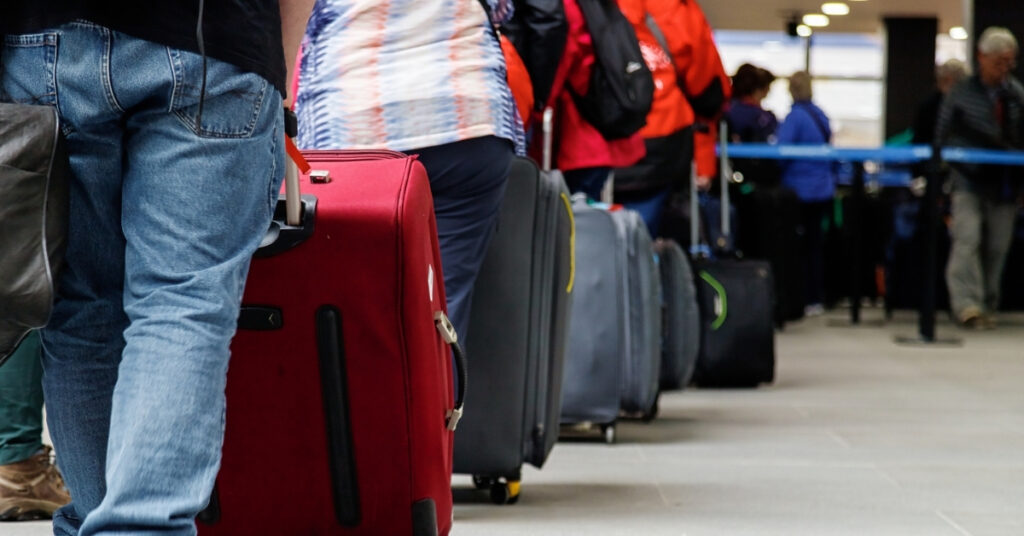
The travel body said that delays have already been reported at passport control across parts of the EU, with queues expected to grow as more passengers are processed under the new system.
Widened border checks
Queues have already formed at several EU airports and ports as the EU Entry/Exit System (EES) expands to more locations.
The biometric border system, which began operating in October 2025, was rolled out to additional airports and ports from 9 January, increasing the number of passengers processed under the new checks.
The EES replaces manual passport stamping for non-EU nationals entering the Schengen Area for short stays.
Travellers are required to register fingerprints and facial images at border control, with the system recording dates of entry and exit and storing the data for up to three years.
Crowds at passport control
ABTA said that passenger experiences during the rollout have been mixed, ranging from relatively smooth journeys to long queues at passport control.
The travel association warned that delays could become more common as the system is introduced at more locations over the coming months.
Mark Tanzer, chief executive of ABTA, said that the expansion increases the likelihood of queues forming. “As more places introduce the system, and more passengers are processed through it, there is a greater risk that people will face queues and delays.”
ABTA said that border authorities have contingency measures available under EU rules to manage disruption during periods of heavy demand. These measures include limiting checks or temporarily standing down the system when queues become excessive.
Calls for contingency measures
The association urged border authorities to make greater use of these options as the rollout continues. Tanzer said that some of the issues seen so far could have been reduced if contingency measures had been applied earlier.
“They have contingency measures at their disposal – such as standing down the system or limiting checks – and we want them to be utilized to help manage the flow of people. Where problems have been experienced so far, some of these could have been avoided if the contingency measures were applied.”
The call comes as EU countries increase the share of non-EU travellers processed through the system. From January, member states are required to register 35% of eligible arrivals, up from 10% during the initial phase.
Pressure at major airports
Airports where the system is already in use have reported longer waiting times at border control during busy periods.
A review by Airports Council International Europe found that processing times at some airports have increased by up to 70%, with waits of up to three hours at peak times.
The review linked the delays to the progressive scaling up of biometric registration for third-country nationals entering the Schengen Area.
Airport operators have said the introduction of new technology alongside existing passenger volumes has added pressure at border checkpoints.
The EU has said that the phased rollout is designed to allow authorities to adjust procedures as the system expands.
During the transition period, some borders operate the new system while others continue to stamp passports, depending on their stage of implementation.

Improved border management
Under the EES, non-EU nationals travelling for short stays of up to 90 days within any 180-day period must provide personal data from their travel document, along with fingerprints and a facial image. The system also records any refused entries.
EU officials have said the system is intended to improve border management, detect overstays and support security checks. The manual stamping of passports at external borders is due to be fully replaced once the rollout is complete.
For now, travellers may encounter different procedures depending on the border they use. Authorities have advised passengers to allow extra time when crossing EU borders during the rollout phase.
Travellers shouldn’t delay
ABTA has advised passengers departing the EU to go directly to passport control after clearing check-in and security, rather than delaying in departure areas.
The association also said that travellers should follow guidance from airlines, ferry operators and rail providers on arrival times.
At juxtaposed borders such as Dover, Folkestone and St Pancras, checks are carried out before departure from the UK. Passengers using these routes are advised to arrive early and follow instructions from their transport provider.
ABTA said that travellers should be prepared for possible delays as the system continues to expand across the EU’s external borders.

New pre-travel screening soon
The rollout of the EES is taking place ahead of the planned launch of the European Travel Information and Authorisation System, known as ETIAS. According to the European Union, ETIAS is expected to start operations in the final quarter of 2026.
Under ETIAS, visa-exempt nationals from 59 countries and territories will need to obtain online travel authorization before entering 30 European countries for short stays.
The authorisation will be linked to a traveller’s passport and remain valid for up to three years or until the passport expires.
The EU has said that no action is required from travellers at this stage and that details of the launch date will be communicated several months in advance.
It has also stated that holding an ETIAS authorisation will not guarantee entry, as border guards will continue to check entry conditions on arrival.
Phased changes at border
EU authorities have confirmed that the EES will continue to be phased in through April 2026. During this period, member states are expected to adjust their processes as passenger volumes increase.
ABTA said that passengers should stay informed about which entry points are operating the system and allow extra time at borders. The association said that it will continue to share guidance with travellers as the rollout progresses.
As more airports and ports come online, border authorities and transport providers are expected to manage the transition while maintaining passenger flow during busy travel periods.