
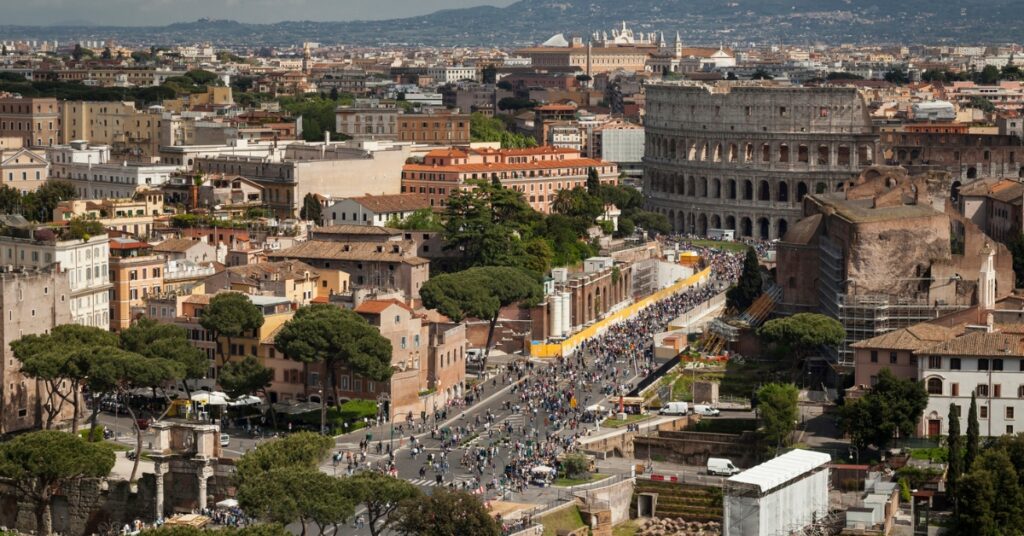
Rome closed 2025 with a new tourism record, drawing 22.9 million visitors and logging nearly 53 million overnight stays.
The figures confirm the Italian capital’s busiest tourism year on record, with arrivals rising above the previous high set in 2024.
City breaks own record
Rome recorded 22.9 million tourist arrivals in 2025, a 3.42% rise from the previous year, according to figures from the Lazio Bilateral Tourism Board. The total number of overnight stays reached 52.92 million, also up by nearly 3% compared to 2024.
Just over half of all visitors—around 12 million—came from outside Italy.
The mayor, Roberto Gualtieri, welcomed the results, calling 2025 “an intense, challenging but very positive year” for the city. He credited the sustained growth to a citywide push to improve services, promote events and manage visitor flow better than in previous years.
Events kept tourists coming
Officials said that a key factor behind the increase was the city’s focus on major cultural and sporting events.
“This wasn’t random growth,” said Alessandro Onorato, councillor for tourism, major events, sport, and fashion. “It’s the result of targeted planning, especially around events that encourage people to stay longer or come back.”
The Jubilee Year, a Catholic celebration hosted by the Vatican every 25 years, ran through 2025 and brought in significant crowds. Pilgrims and religious tourists formed a large part of the international traffic, with Rome acting as a base for wider travel around central Italy.
Aside from religious tourism, Rome also hosted several high-profile exhibitions, concerts, and fashion-related gatherings throughout the year. These were aimed at diversifying the city’s visitor base and encouraging off-season travel.
Tourism fuels local economy
Tourism brought an estimated €13.3 billion into Rome’s economy in 2024, a figure expected to be even higher for 2025 once final calculations are released.
Local businesses—particularly in hospitality, food and retail—benefitted from the steady flow of visitors throughout the year.
Job growth in the tourism sector has also been steady. According to city officials, tourism-related employment increased by 5.5% each year over the last three years. This includes hotel staff, tour guides, transport workers and those in related services.
Growth pressures public spaces
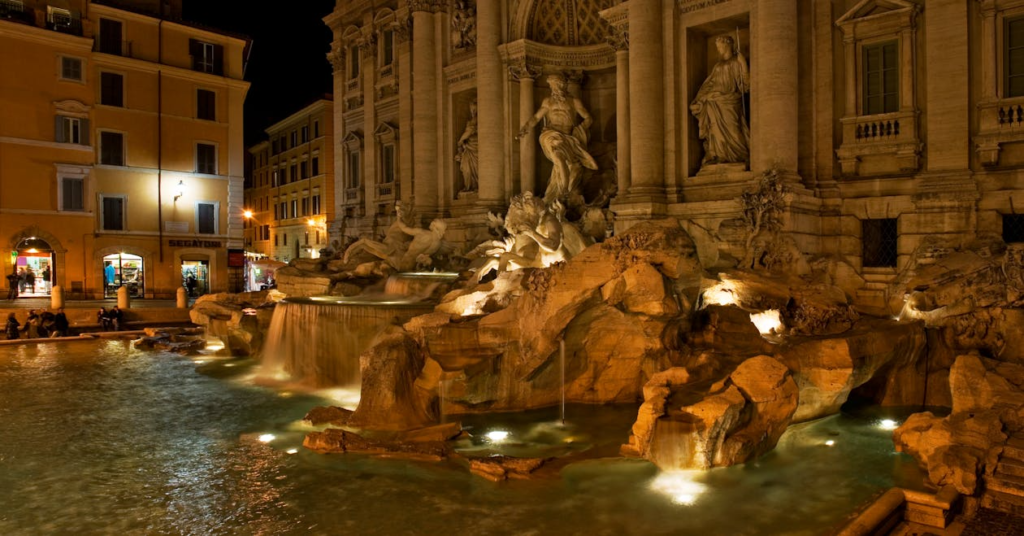
The surge in visitor numbers has put renewed pressure on the city’s infrastructure. Popular sites like the Colosseum, Trevi Fountain and Spanish Steps saw near-constant foot traffic in peak months, raising concerns about sustainability and crowd control.
Rome has responded by piloting new crowd-management tools and digital queueing systems at major attractions.
In 2025, officials also announced that tourists would be charged an entry fee to visit the Trevi Fountain starting the following year, in a bid to manage access and raise maintenance funds.
City leaders have repeatedly said they want to make tourism “compatible with everyday life” for residents. In practice, this means balancing economic benefits with the need to protect public spaces, avoid overcrowding, and reduce noise and waste in residential areas.
Visitors spent more time
Aside from more arrivals, the city also saw a shift in how long tourists stayed. While short weekend trips remained common, there was a marked increase in longer stays, especially from international visitors.
Officials link this trend to improved marketing and bundled experiences, such as museum passes, guided tours and event packages that encourage extended visits.
The availability of better accommodation options—including boutique hotels and regulated rentals—has also played a role.
Younger travellers, in particular, were more likely to combine city sightseeing with local day trips, taking advantage of fast train links to Florence, Naples and the coast.
Rome plans for 2026
Looking ahead, city officials said that they want to continue growing tourism without overloading the city centre.
Plans include expanding public transport access to lesser-known neighbourhoods, offering more digital services in multiple languages and supporting events that bring in visitors outside the peak season.
The city is also preparing for potential rule changes at the EU level. With the expected launch of the European Travel Information and Authorisation System (ETIAS) in 2026, non-EU visitors will need to register before entering the Schengen Area.
Rome officials said that they’re working to make the transition smooth and ensure that the city remains an attractive and accessible destination.
Record year, mixed reaction
While the record-breaking year has been celebrated by city officials, some locals remain sceptical about the long-term impact of growing tourist numbers.
Resident groups in central neighbourhoods have raised concerns about noise, overcrowding and rising costs of living.
At the same time, others have welcomed the return of a strong tourism economy after years of uncertainty.
City leaders have acknowledged the mixed reaction and say future plans will focus on making tourism work “for everyone”—both visitors and those who live in Rome year-round.