
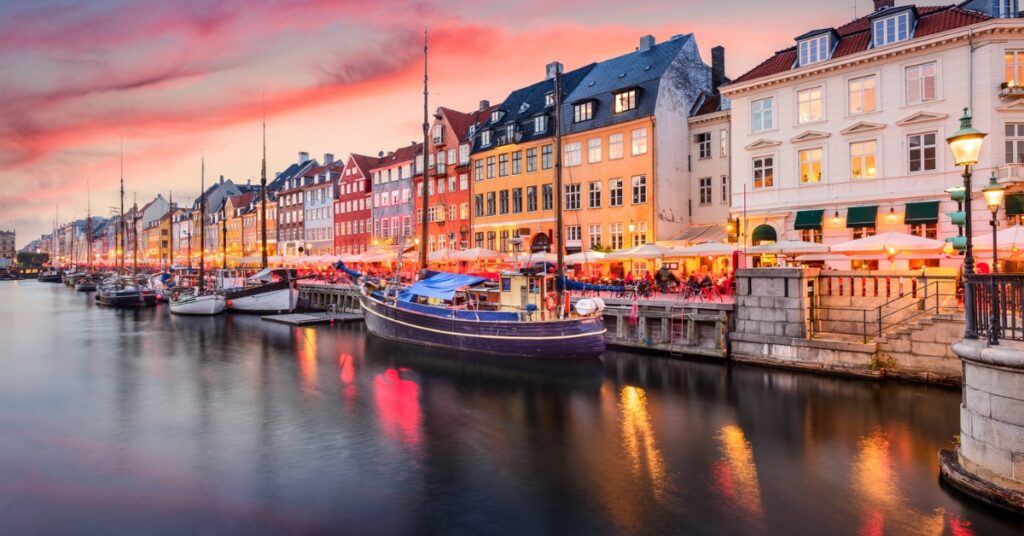
Denmark immigration rules will change from January 2026 after the government approved higher fees, stricter work permit conditions, and tougher salary thresholds for foreign workers.
The updates affect non-EU professionals, students, and healthcare staff as authorities move to tighten entry, work, and residency pathways across Denmark.
Changes start in 2026
The wide package of Denmark’s immigration rule changes took effect last 1 January 2026. The measures apply nationwide and affect foreign workers, non-EU students, healthcare professionals, and employers who sponsor staff from abroad.
The updates cover work permits, residence applications, salary thresholds, fees, and parts of the citizenship process.
Details of the changes have been published by the Danish Agency for International Recruitment and Integration (SIRI) and the Ministry of Immigration and Integration.
Pay thresholds rise
From January 2026, higher minimum salary requirements will apply to several Danish work permit schemes.
Under the Pay Limit Scheme, foreign workers must earn at least DKK 514,000 a year. Under the Supplementary Pay Limit Scheme, the minimum annual salary will be DKK 415,000.
According to SIRI, the revised thresholds apply to all new applications submitted from 2026. Existing permit holders may still apply for extensions if their employment terms remain unchanged, even if their salary is slightly below the new limits.
Salary assessments are used to determine whether pay corresponds to Danish standards, particularly in cases where employment is not covered by a collective agreement.
Application costs increase
Application fees for residence and work permits will increase from the start of 2026. A work-related residence or work permit application will cost DKK 6,330, compared with DKK 6,055 in 2025.
The fee to apply for accompanying family members will rise to DKK 2,385 per person. Applications for fast-track certification of Danish companies will also cost DKK 6,330.
SIRI has stated that all fees are non-refundable and apply to both new applications and extensions.
Medical permits paused
A temporary suspension will apply to certain work permits for foreign doctors and nurses who require Danish professional authorisation. The suspension is scheduled to last until 31 December 2026.
SIRI has stated that the pause applies only to applicants who need Danish authorisation as part of their work permit process. Medical professionals who already hold Danish authorisation, or who qualify under other work permit schemes, are not affected.
Job lists trimmed
Denmark has also updated its Positive List schemes for 2026, reducing the number of eligible job titles. The Positive List for People with a Higher Education now contains 183 roles, compared with 190 in the previous update.
The Positive List for Skilled Work has been reduced to 57 roles, down from 65.
The Positive Lists are updated twice a year and are used to identify professions experiencing labour shortages. Foreign nationals must hold a job offer in a listed occupation to apply for a residence and work permit under these schemes.
Citizenship process tightened
Changes have also been announced to parts of Denmark’s citizenship process. In 2026, only one naturalisation round will take place, which may affect application timelines.
The Ministry of Immigration and Integration has confirmed that the citizenship process for non-EU nationals is under review. This includes consideration of additional checks as part of the application process. Further details have not been specified in the published material.

Limits remain for students
Non-EU students enrolled in institutions that are not state-approved will continue to face limits on work rights, post-study job search permits, and family reunification. These rules remain in place for 2026.
Students enrolled in state-approved institutions are not subject to these restrictions, according to existing Danish immigration rules.
Rules tighten for posted workers
From January 2026, foreign companies posting workers to Denmark will be required to submit additional documentation when completing registration under the Register of Foreign Service Providers (RUT).
The documentation includes copies of work permits, employment contracts, and service agreements.
The Danish Working Environment Authority will carry out more frequent inspections. Authorities have been granted the power to suspend work activities in cases of repeated violations of occupational health and safety rules.
Fines for non-compliance with RUT registration requirements range from DKK 10,000 to DKK 50,000.

Event work exemption added
Denmark has introduced an exemption allowing certain foreign workers to carry out short-term work without a permit at international conferences, trade fairs, and corporate events.
The exemption allows work for up to 10 days per event and applies only to events that are closed to the general public. The rules apply to workers employed by overseas organisers.
EU travel checks expand
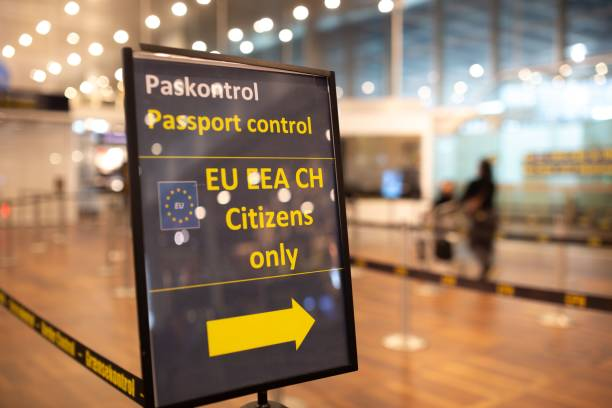
The Danish immigration changes coincide with preparations for the European Travel Information and Authorisation System (ETIAS).
From the last quarter of 2026, travellers from visa-exempt countries will need prior travel authorisation to enter most EU and Schengen countries for short stays.
ETIAS applies to short-term travel of up to 90 days within a 180-day period and does not replace residence or work permits. Travellers must apply online before travelling, and authorisation is linked to their passport.
Officials set expectations
SIRI has published guidance outlining how the 2026 rules will apply to new and existing applications.
The agency has advised applicants to review eligibility requirements, salary thresholds, and documentation before submitting applications.
Preparing for the shift
With the new rules approaching, foreign workers planning to move to Denmark in 2026 may face higher application costs and revised eligibility requirements. Employers sponsoring overseas staff will need to account for updated salary thresholds and fees.
Further operational guidance is expected to be released closer to the implementation date. Applicants are advised to consult official Danish government sources when preparing applications under the revised system.